






 Philippines
Metro Manila
Mayor Isko calls for more public-private partnerships in preserving Manila's architectural heritages
Philippines
Metro Manila
Mayor Isko calls for more public-private partnerships in preserving Manila's architectural heritages
Mayor Isko calls for more public-private partnerships in preserving Manila's architectural heritages


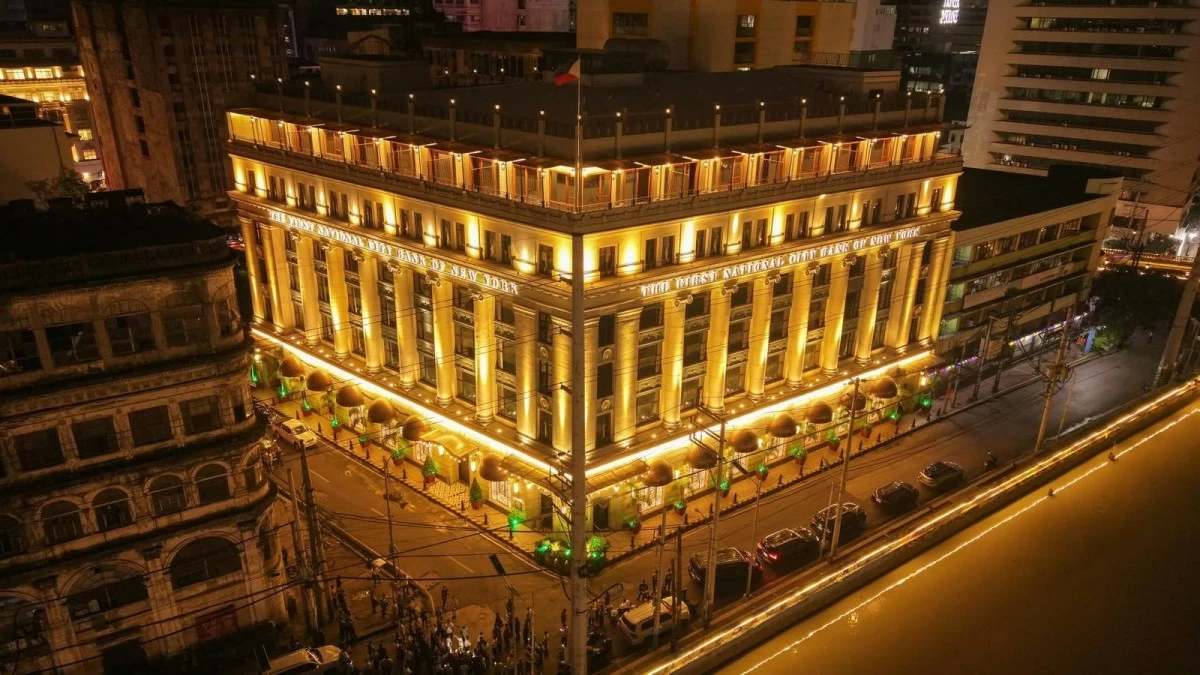
Manila Mayor Francisco "Isko Moreno" Domagoso urged owners of various architectural landmarks and heritage sites in the city to coordinate with the city government in the preservation and rehabilitation of these structures that not only showcase the skills of their builders and designers but have also become a part of Manila's cultural heritage and identity through the years.
Domagoso made the statement during the ceremonial lighting of the restored facade of the historic Juan Luna Building in Binondo on Thursday night, Feb. 19.
Formerly known as the First National City Bank of New York Building and later the Ayala Building, the Juan Luna Building was built in 1922 and remains one of the surviving American-era commercial edifices in the capital’s old business district.
Domagoso explained the five-story building's rehabilitation was carried out through cooperation between private partners and the City Government of Manila.
"Bahagi ito ng tuloy-tuloy na inisyatiba ng inyong pamahalaang lungsod, katuwang ang pribadong sektor, upang muling buhayin at pagandahin ang mga makasaysayang distrito ng Maynila—para higit pang mapalakas ang lokal na turismo at mapaunlad ang ekonomiya ng ating siyudad (This is part of your city government's ongoing initiative, in partnership with the private sector, to revitalize and beautify Manila's historic districts—to further boost local tourism and develop our city's economy)," Domagoso said.
“Sa tulong ng ating mga private partners na patuloy na nagtitiwala sa Pamahalaang Lungsod ng Maynila, sisikapin nating buhayin, pangalagaan, at pagandahin ang mga makasaysayang pook at pasyalan sa kapitolyo ng bansa (With the help of our private partners who continue to trust the City Government of Manila, we will strive to revive, preserve, and beautify the historic sites and attractions in the nation's capitol)," he added.
He had also encouraged owners of other heritage properties in the district to coordinate with the city government for similar lighting initiatives.
“We are encouraging owners of heritage buildings sa Binondo—kabilang ang El Hogar Building at iba pang makasaysayang gusali. Bukas po ang inyong pamahalaang lungsod na makipagtulungan sa inyo upang mapailawan din natin at maipakita ang ganda ng inyong mga istruktura sa gabi (We are encouraging owners of heritage buildings in Binondo—including the El Hogar Building and other historic buildings that your city government is open to working with you so that we can also light up and showcase the beauty of your structures at night)," the mayor noted.
The Juan Luna Building occupies a prominent corner at Juan Luna Street and Muelle de la Industria, within what was once Manila’s premier financial and commercial district during the American colonial period.
Designed in the Beaux-Arts and Neoclassical style by American architects Murphy, McGill, and Hamlin, the structure features classical columns, arched openings, and a rusticated ground floor, architectural elements commonly adopted by international banking firms in the early 20th century to project stability and permanence," the mayor said.
"Originally completed as the Pacific Commercial Company Building and inaugurated on Nov. 13, 1922, it later housed the offices of the First National City Bank of New York during the 1930s and 1940s, reinforcing Binondo and nearby Escolta as the country’s financial center at the time," he added.
The property was eventually acquired by Enrique Zobel from 1940 to 1959 and later became known as the Ayala Building in post-war Manila.
The Juan Luna Building underwent various changes in ownership and use over the decades, including a major renovation in 2007 and subsequent plans for adaptive reuse.
It was later damaged in May 2018 when a fire that started in a nearby building spread and affected portions of its upper floors.
"Today, the restored facade stands as a reminder of Manila’s early 20th-century commercial rise and the enduring architectural legacy of the American period, at a time when Escolta and Binondo served as the heart of banking, trade, and corporate activity in the country," Domagoso stressed.