






Manila Bulletin
 Business
Trade & Industry
Good news for travelers: Airfare surcharges to stay flat in March
Business
Trade & Industry
Good news for travelers: Airfare surcharges to stay flat in March
Business
Trade & Industry
Good news for travelers: Airfare surcharges to stay flat in March
Good news for travelers: Airfare surcharges to stay flat in March
Published Feb 20, 2026 11:16 am
|
Updated Feb 20, 2026 01:25 pm


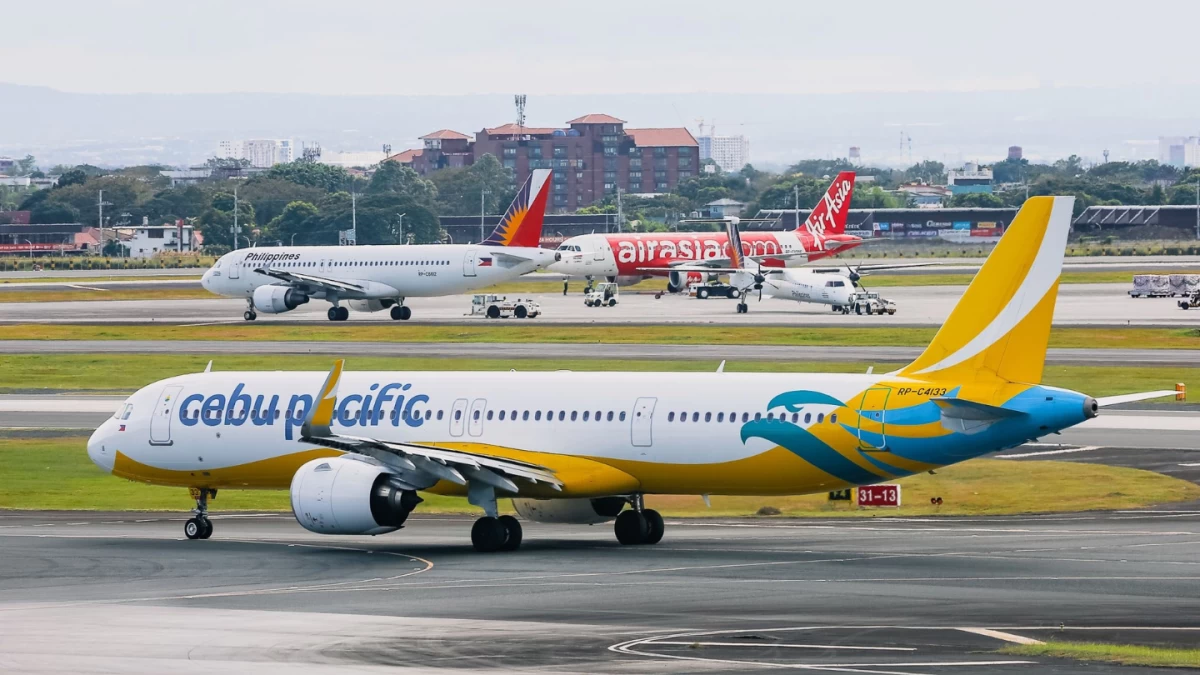
Airfares for summer travelers are expected to remain stable as regulators maintain the existing fuel surcharge for March, shielding passengers from potential price hikes despite the slight uptick in global oil costs.
In an advisory, the Civil Aeronautics Board (CAB) said the surcharge that airlines may impose on passengers will remain at Level 4 next month.
This marks the eighth straight month that the fee has remained steady since August last year.
Under Level 4, CAB said travelers may pay an additional ₱117 to ₱342 for domestic flights, depending on the flight’s distance.
Meanwhile, for international routes, the surcharge ranges between ₱385.70 and ₱2,867.82.
Under CAB policy, the fuel surcharge is an optional fee that airlines may charge to recover losses from higher fuel prices.
It is not included in the basic airfare and may be reduced or removed depending on market jet fuel prices.
The applicable fuel surcharge is determined based on a one-month average of jet fuel Mean of Platts Singapore (MOPS) prices in their peso-per-liter equivalent.
The latest jet fuel price monitor by the International Air Transport Association (IATA) showed that the average global price of jet fuel is $93.88 per barrel as of Feb. 13, up four percent from last month’s prices.
In Asia and Oceania, which includes the Philippines, prices are slightly higher by 4.7 percent to $87.98 per barrel.
CAB said airlines planning to impose or collect a fuel surcharge next month must file their applications on or before March 1.
For fees to be collected in foreign currency, the applicable conversion rate for the coming month is ₱59.11 per US dollar.
The move to keep the fuel surcharge at the same level follows the country’s major carriers' support for proposals to scrap the travel tax.
The Air Carriers Association of the Philippines (ACAP) said removing the tax would directly lower the cost of international travel, thereby spurring greater passenger demand and economic activity.
There is also a renewed push from the government to extend the runways of regional airports to accommodate larger jets, which is seen to lower travel costs to island destinations such as Siargao.
Recently, Acting Transportation Secretary Giovanni Lopez said they would also study the prospect of reducing the passenger service charge (PSC) imposed on tickets booked at government-managed airports.