






Manila Bulletin
 Philippines
National
DFA: Foreign policy statements 'must be taken in full context' amid South China Sea spat
Philippines
National
DFA: Foreign policy statements 'must be taken in full context' amid South China Sea spat
Philippines
National
DFA: Foreign policy statements 'must be taken in full context' amid South China Sea spat
DFA: Foreign policy statements 'must be taken in full context' amid South China Sea spat
Published Feb 20, 2026 04:36 pm


The Department of Foreign Affairs (DFA) has made an appeal to take the Philippines' official statements on foreign policy in their "full and proper context," as it is also now working out to facilitate talks between lawmakers and Chinese diplomats over their recent spats on the South China Sea issue.
But despite retaliation from the Chinese Embassy in Manila, which apparently has time to engage with Filipino agencies and lawmakers over debate, the DFA did not yield to the pressure of silencing local officials.
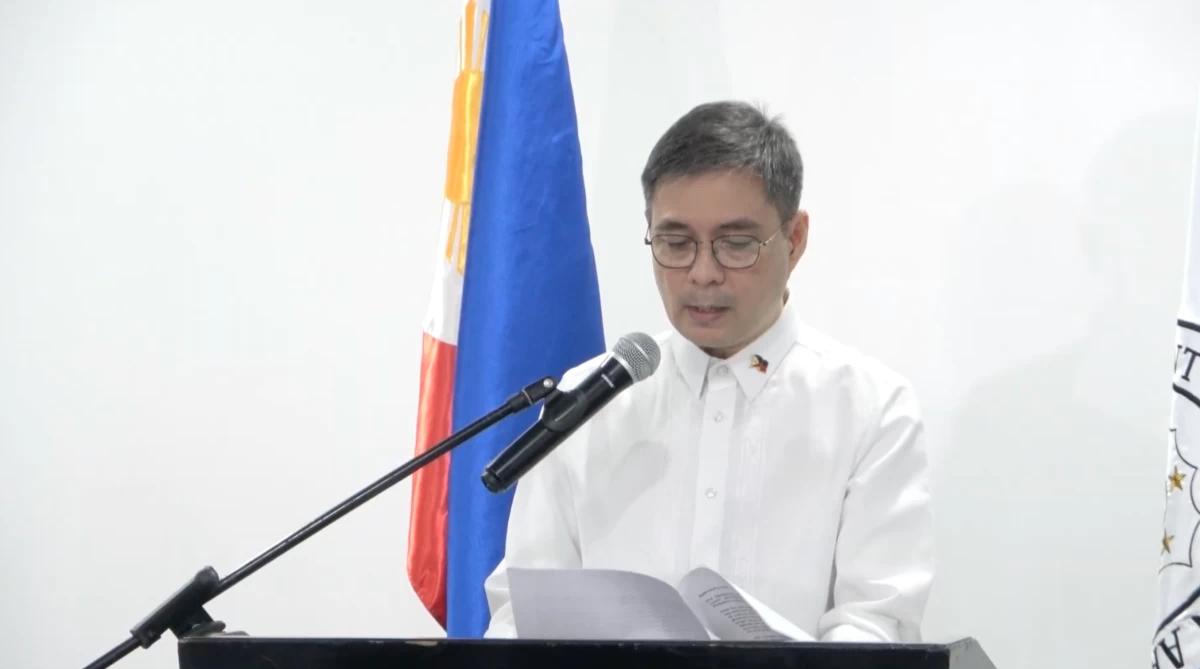
In a media briefing on Friday, Feb. 20, DFA Maritime Affairs spokesman Rogelio Villanueva said the agency "welcomes the diversity of opinion inherent in our democratic tradition" as much as it "encourages that official statements on foreign policy matters be considered in their full and proper context, particularly on issues that directly bear on national interests."
"The DFA calls for constructive engagement that advances the country's shared defense of its position in the West Philippine Sea, consistent with President Marcos' independent foreign policy and in accordance with international law," Villanueva added.
Amid the continued word war between Filipino officials and Chinese diplomats over issues that already extended beyond the South China Sea dispute, Villanueva said it still maintains an open line of communication with the Chinese side "in pursuit of candid, constructive dialogue and practical cooperation."
Villanueva added that the DFA then welcomes the Senate's openness to holding a dialogue with the Chinese embassy in Manila as it views such an interaction "as an opportunity for frank, cordial, and professional discussion," and "one that can candidly address divergent positions while also identifying areas of common understanding."
Territorial sovereignty
Meanwhile, Villanueva once again asserted the Philippines' sovereignty over its archipelago and other territories, including Bajo de Masinloc and the high-tide features of the Kalayaan Island Group, as well as its jurisdiction over maritime entitlements under the United Nations Convention on the Law of the Sea, as clarified by the 2016 Arbitral Award.
He stressed these "are incontrovertible."
"These rights are firmly grounded in international law, established legal principles, effective control, and recognition through international treaties and agreements," he added.
Villanueva said the country's national mapping agency's recent release of the Philippines' map is also "nothing new" but just delineates somes of the country's territories, including Bajo de Masinloc and the Kalayaan Group of Island.
It's also an administrative map that will serve as an important tool for government planning and resource management, according to Villanueva.
"The DFA reaffirms its unwavering commitment to protecting the Philippines' sovereignty, sovereign rights, and jurisdiction, and will continue to champion the country's maritime rights and interests through effective and principled diplomacy," he added.