ADVERTISEMENT

Not all solo parents qualify under expanded law — DSWD

Published Feb 19, 2026 05:23 pm
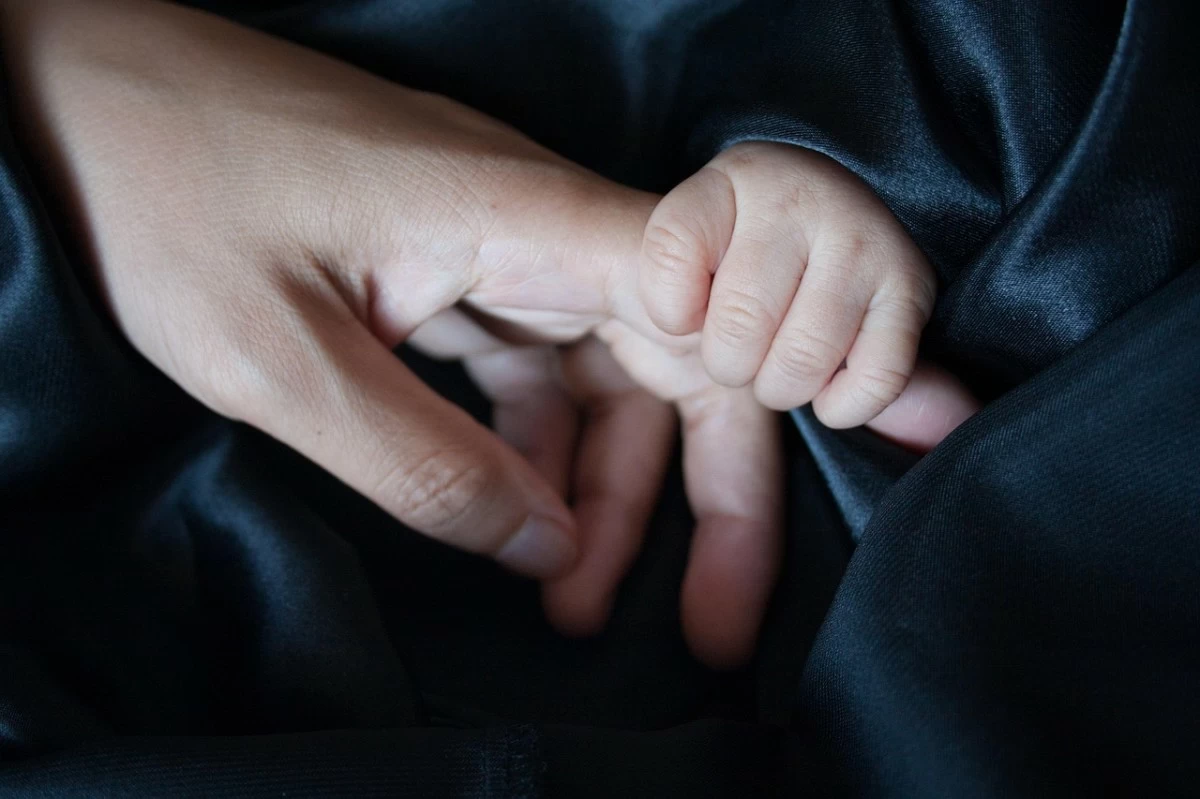
Photo from Pixabay
Photo from Pixabay
The Department of Social Welfare and Development (DSWD) on Thursday, Feb. 19 clarified that not all individuals raising a child alone automatically qualify for benefits under the Expanded Solo Parents Welfare Act, as it reiterated guidelines on who may be issued a Solo Parent Identification Card (SPIC).
Speaking at the agency’s media forum, Social Welfare Officer IV Jocelyn Vince Cruz of the DSWD Protective Services Bureau said misconceptions persist about eligibility under Republic Act (RA) 11861.
Cruz explained that the measure expanded the earlier RA 8972 by broadening both the definition of solo parents and the benefits they may receive.
“That is why it became an expanded law because we had a previous law, Republic Act 8972. The definition of solo parents was broadened, as well as the benefits they can avail of. We follow guidelines in considering who may receive solo parent benefits, so not everyone who is raising a child is automatically considered a solo parent under the law,” Cruz said in Filipino.
Under RA 11861, a solo parent must exercise sole parental care and support of the child, without cohabitation or co-parenting arrangements.
Cruz noted that the provision is often misunderstood by individuals who consider themselves solo parents despite receiving regular financial or caregiving support from a former spouse or relatives.
As of the latest data from the DSWD’s Protective Services Bureau, 260,934 solo parents are registered nationwide, with 291 local government units (LGUs) providing monthly subsidies.
Cruz said eligibility is subject to annual review, as the SPIC must be renewed every year.
“When the status of a solo parent changes, he or she may indeed be disqualified. That is why the SPIC is renewable every year. The LGU checks this. If there is a report, it will be validated by a social worker,” she said.
The law also recognizes legal guardians, adoptive parents and foster parents as solo parents.
Relatives within the fourth degree of consanguinity, such as grandparents, siblings, aunts, uncles and cousins, who assume parental responsibility may also qualify.
Spouses of low- or semi-skilled overseas Filipino workers (OFWs), including domestic workers, cleaners and general laborers abroad, may likewise be considered solo parents, subject to income assessment.
“Those who have OFW spouses may be considered solo parents. These are OFWs who are low- or semi-skilled, such as domestic workers, cleaners or general laborers abroad. The income of the OFW is still being assessed,” Cruz said.
The expanded law also adjusted the age coverage of dependents from 18 to 22 years old, in line with the K–12 program of the Department of Education. To qualify, children must be living with and dependent on the solo parent, unmarried, unemployed and enrolled in school if of school age.
Additional benefits are available to solo parents earning income equal to or below the regional minimum wage. Qualified SPIC holders may receive a monthly subsidy of P1,000, depending on the LGU.
Solo parents earning P250,000 or less annually and with a child aged six and below may also avail of a 10-percent discount and value-added tax exemption on medicines, infant milk, food supplements and medical supplies.
Full premium coverage under PhilHealth and priority in government housing programs are also provided.
On the application process, Cruz said applicants must file forms with their LGU’s solo parents office or, if none exists, the local social welfare and development office.
Applicants are required to attend an orientation and undergo assessment and verification before a SPIC is issued.
“To apply, LGUs have a solo parents office or division. If there is none, applicants may go to the local social welfare and development office. They will submit a filled-out application form there. They will also attend an orientation to understand the benefits they can avail of. Then they will undergo assessment. After verification, and once it is proven that they are indeed a solo parent, the SPIC will be issued to them,” she said.
Cruz added that low registration numbers may be attributed to lack of awareness and failure to meet qualifications.
“One factor may be the awareness of solo parents about these benefits. Another may be the qualifications. They must meet certain requirements to qualify. There are solo parents who do not meet the requirements,” she said.
Meanwhile, the DSWD is finalizing a unified ID system for solo parents.
Pilot testing is ongoing in four LGUs—Mandaluyong, Muntinlupa, Rodriguez and Cainta in Rizal—and is expected to conclude within February.
The department aims to roll out the unified system nationwide in the succeeding quarters of 2026 to cover all eligible solo parents under the program.

Related Tags

DSWD SOLO PARENT
.mb-article-details { position: relative; } .mb-article-details .article-body-preview, .mb-article-details .article-body-summary{ font-size: 17px; line-height: 30px; font-family: "Libre Caslon Text", serif; color: #000; } .mb-article-details .article-body-preview iframe , .mb-article-details .article-body-summary iframe{ width: 100%; margin: auto; } .read-more-background { background: linear-gradient(180deg, color(display-p3 1.000 1.000 1.000 / 0) 13.75%, color(display-p3 1.000 1.000 1.000 / 0.8) 30.79%, color(display-p3 1.000 1.000 1.000) 72.5%); position: absolute; height: 200px; width: 100%; bottom: 0; display: flex; justify-content: center; align-items: center; padding: 0; } .read-more-background a{ color: #000; } .read-more-btn { padding: 17px 45px; font-family: Inter; font-weight: 700; font-size: 18px; line-height: 16px; text-align: center; vertical-align: middle; border: 1px solid black; background-color: white; } .hidden { display: none; }
function initializeAllSwipers() { // Get all hidden inputs with cms_article_id document.querySelectorAll('[id^="cms_article_id_"]').forEach(function (input) { const cmsArticleId = input.value; const articleSelector = '#article-' + cmsArticleId + ' .body_images'; const swiperElement = document.querySelector(articleSelector); if (swiperElement && !swiperElement.classList.contains('swiper-initialized')) { new Swiper(articleSelector, { loop: true, pagination: false, navigation: { nextEl: '#article-' + cmsArticleId + ' .swiper-button-next', prevEl: '#article-' + cmsArticleId + ' .swiper-button-prev', }, }); } }); } setTimeout(initializeAllSwipers, 3000); function showArticleBody(button) { const article = button.closest("article"); const summary = article.querySelector(".article-body-summary"); const body = article.querySelector(".article-body-preview"); const readMoreSection = article.querySelector(".read-more-background"); // Hide summary and read-more section summary.style.display = "none"; readMoreSection.style.display = "none"; // Show the full article body body.classList.remove("hidden"); } document.addEventListener("DOMContentLoaded", () => { let loadCount = 0; // Track how many times articles are loaded const offset = [1, 2, 3, 4, 5, 6, 7, 8, 9, 10]; // Offset values const currentUrl = window.location.pathname.substring(1); let isLoading = false; // Prevent multiple calls if (!currentUrl) { console.log("Current URL is invalid."); return; } const sentinel = document.getElementById("load-more-sentinel"); if (!sentinel) { console.log("Sentinel element not found."); return; } function isSentinelVisible() { const rect = sentinel.getBoundingClientRect(); return ( rect.top < window.innerHeight && rect.bottom >= 0 ); } function onScroll() { console.log('scroll event'); if (isLoading) return; if (isSentinelVisible()) { if (loadCount >= offset.length) { console.log("Maximum load attempts reached."); window.removeEventListener("scroll", onScroll); return; } isLoading = true; const currentOffset = offset[loadCount]; window.loadMoreItems().then((data) => { console.log(data); console.log(this); loadCount++; }).catch(error => { console.error("Error loading more items:", error); }).finally(() => { isLoading = false; }); } } window.addEventListener("scroll", onScroll); }); // Mutation Observer for Newly Loaded Articles const observer = new MutationObserver(() => { console.log("length: ", articles.length); const articles = document.querySelectorAll(".articles-observe"); if (articles.length > 0) { observeArticles(articles); } }); observer.observe(document.body, { childList: true, subtree: true }); let oberservationCount = 0; // Intersection Observer for Updating URL function observeArticles(articles) { const intersectionObserver = new IntersectionObserver( (entries) => { entries.forEach((entry) => { if (entry.isIntersecting) { const newUrl = entry.target.getAttribute("data-url"); if (newUrl && newUrl !== window.location.pathname) { history.pushState(null, null, newUrl); // Extract metadata const section = entry.target.querySelector('.section-info a:first-of-type')?.textContent?.trim() || ''; const author = entry.target.querySelector('.author-section a')?.textContent?.trim() || ''; const title = entry.target.querySelector('h1, h2, h3, .article-title')?.textContent?.trim() || document.title; // Parse URL for Chartbeat path format const parsedUrl = new URL(newUrl, window.location.origin); const cleanUrl = parsedUrl.host + parsedUrl.pathname; // Update Chartbeat configuration if (typeof window._sf_async_config !== 'undefined') { window._sf_async_config.path = cleanUrl; window._sf_async_config.sections = section; window._sf_async_config.authors = author; } // Track virtual page view with Chartbeat if (typeof pSUPERFLY !== 'undefined' && typeof pSUPERFLY.virtualPage === 'function') { pSUPERFLY.virtualPage(cleanUrl, { title: title, sections: section, authors: author }); } // Optional: Update document title if (title && title !== document.title) { document.title = title; } console.log('Chartbeat virtual page tracked:', { url: cleanUrl, section: section, author: author, title: title }); } } }); }, { threshold: 0.1 } ); articles.forEach(article => { console.log(oberservationCount++); intersectionObserver.observe(article) }); }
ADVERTISEMENT
.most-popular .layout-ratio{ padding-bottom: 79.13%; } @media (min-width: 768px) and (max-width: 1024px) { .widget-title { font-size: 15px !important; } }

{{ articles_filter_1561_widget.title }}

.most-popular .layout-ratio{ padding-bottom: 79.13%; } @media (min-width: 768px) and (max-width: 1024px) { .widget-title { font-size: 15px !important; } }

{{ articles_filter_1562_widget.title }}

.most-popular .layout-ratio{ padding-bottom: 79.13%; } @media (min-width: 768px) and (max-width: 1024px) { .widget-title { font-size: 15px !important; } }

{{ articles_filter_1563_widget.title }}

{{ articles_filter_1564_widget.title }}

Sign up by email to receive news.