







Forest loss threatens the Philippine Eagle's future
Published Feb 19, 2026 02:30 pm


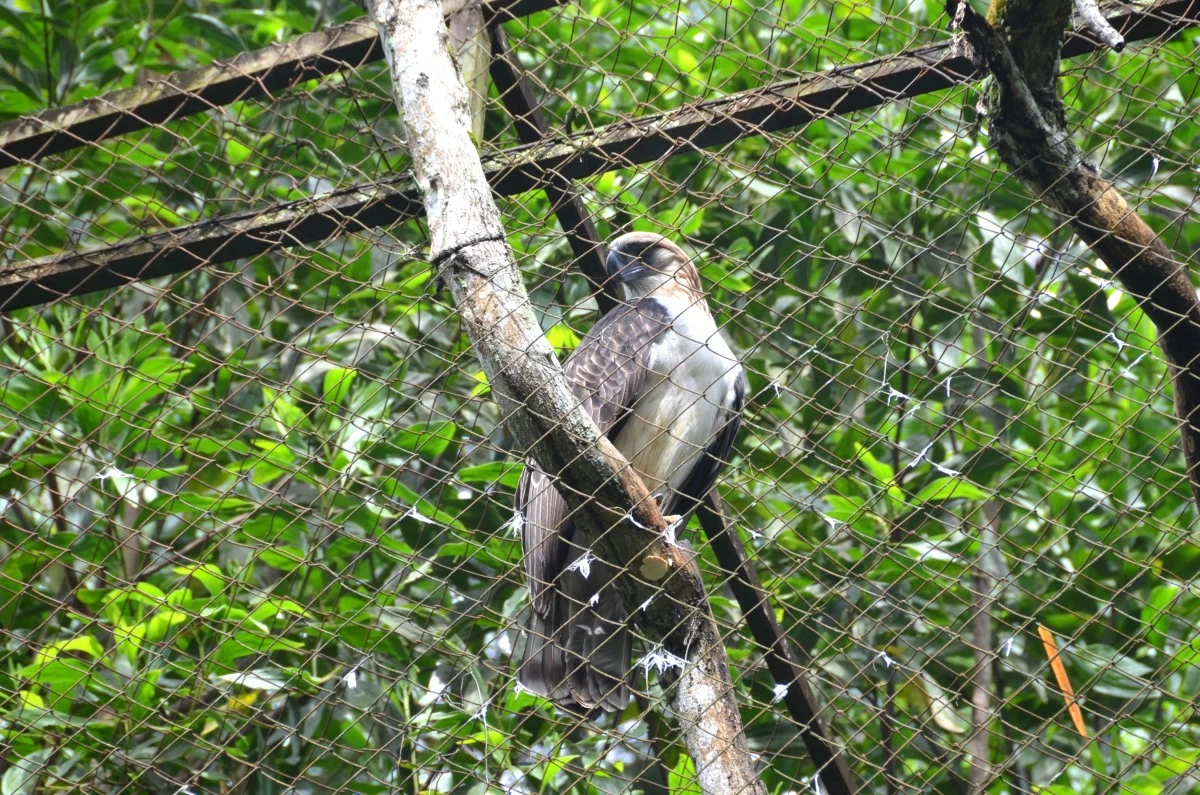
At the Philippine Eagle Center, the endangered bird species are raised in captivity. (Photos by Henrylito Tacio)
The country’s remaining forests can support an average of merely 392 pairs of Philippine eagles, according to the Philippine Eagle Foundation (PEF), a non-governmental organization based in Davao City.
“That’s the average,” Dr. Jayson C. Ibanez, director of PEF’s research and conservation division, said in a text message. “The maximum number of pairs that the estimated suitable forest habitat can potentially accommodate is 447 pairs.”
Nevertheless, Ibanez emphasized that this number represents the upper limit derived from their modeling study. In reality, the actual number of pairs may be considerably lower, “because some of these suitable habitats might have already lost their eagles.”
He cited the forests in Leyte, Zambales, and Mount Banahaw, located on the border of Laguna and Quezon provinces, as examples. “We believe (these areas) may have already lost their eagles, even though the forests still appear to be in good condition,” he pointed out.
The issue came to the fore following the publication of the PEF scientific paper in the journal Animal Conservation, a peer-reviewed publication that focuses on the conservation of animal species and their habitats.
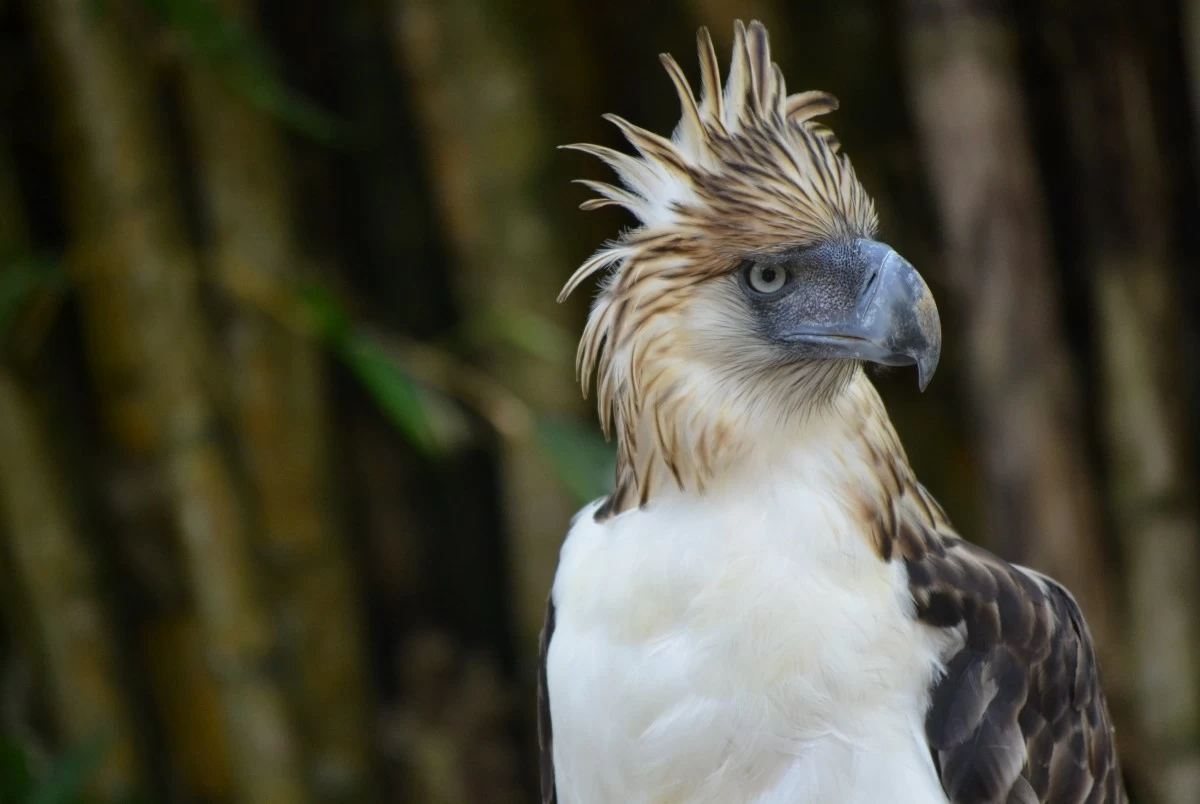
The Philippine eagle is the national bird of the country. (Photos by Henrylito Tacio)
The Swiss-based International Union for the Conservation of Nature (IUCN) has declared the Philippine eagle as “critically endangered.” Deforestation of its habitat and human persecution through shooting and trapping continue to threaten its existence. The serious lack of scientific information required for decision-making also limits the effectiveness of conservation actions.
“Despite being one of the most endangered forest eagles in the world, we still lack fundamental information regarding Philippine eagle distribution and population size,” said Dennis Salvador, executive director of PEF and co-author of the paper.
The paper identified specific habitats that need protection across the country. In Mindanao, priority eagle habitats requiring immediate protection include Mount Hilong-hilong, Mount Kampalili-Puting Bato, the Mount Latian complex, and Mount Busa-Kiamba.
Protected areas could also be extended to the Mount Piagayungan and Butig mountains, as well as the Munai/Tambo Key Biodiversity Areas in east-central Mindanao. In north-central Mindanao, priority areas for protection include the Mount Kaluayan-Kinabalian Complex (also known as the Pantaron Range), along with the adjacent Mount Balatukan and the Mount Tago Range.
Outside Mindanao, the priority eagle habitats on Leyte Island are the Anonang-Lobi Range in Leyte province and Mount Nacolod in Southern Leyte. “Both are highly suitable eagle habitats, but the latest expeditions indicate that eagles might have been lost already in these places,” PEF said. “These habitats can be future sites for eagle reintroductions.”
In Northern Luzon, proposed new protected areas include the Apayao Lowland Forest and the Balbalasang-Balbalan mountains to cover additional high-suitability habitat.
The Zambales Mountains could also be upgraded for protection “if surveys identify a population here.” Otherwise, the mountain range should be prioritized for potential reintroductions.
According to the Department of Environment and Natural Resources (DENR), the Philippines has an estimated 15 million hectares of forested land, of which approximately 7 million hectares have actual forest cover.
However, some sources cite a slightly higher figure of 15,805,325 hectares classified as forest land, with 7,014,152 hectares covered by forest.
Studies conducted by the UN Food and Agriculture Organization (FAO) indicate that a pair of Philippine eagles needs at least 7,000 to 13,000 hectares of forest as nesting territory.
“Because not all types of forests are used by the eagles, it is very important to know which ones are suitable in order to adequately protect resident eagles,” PEF said.
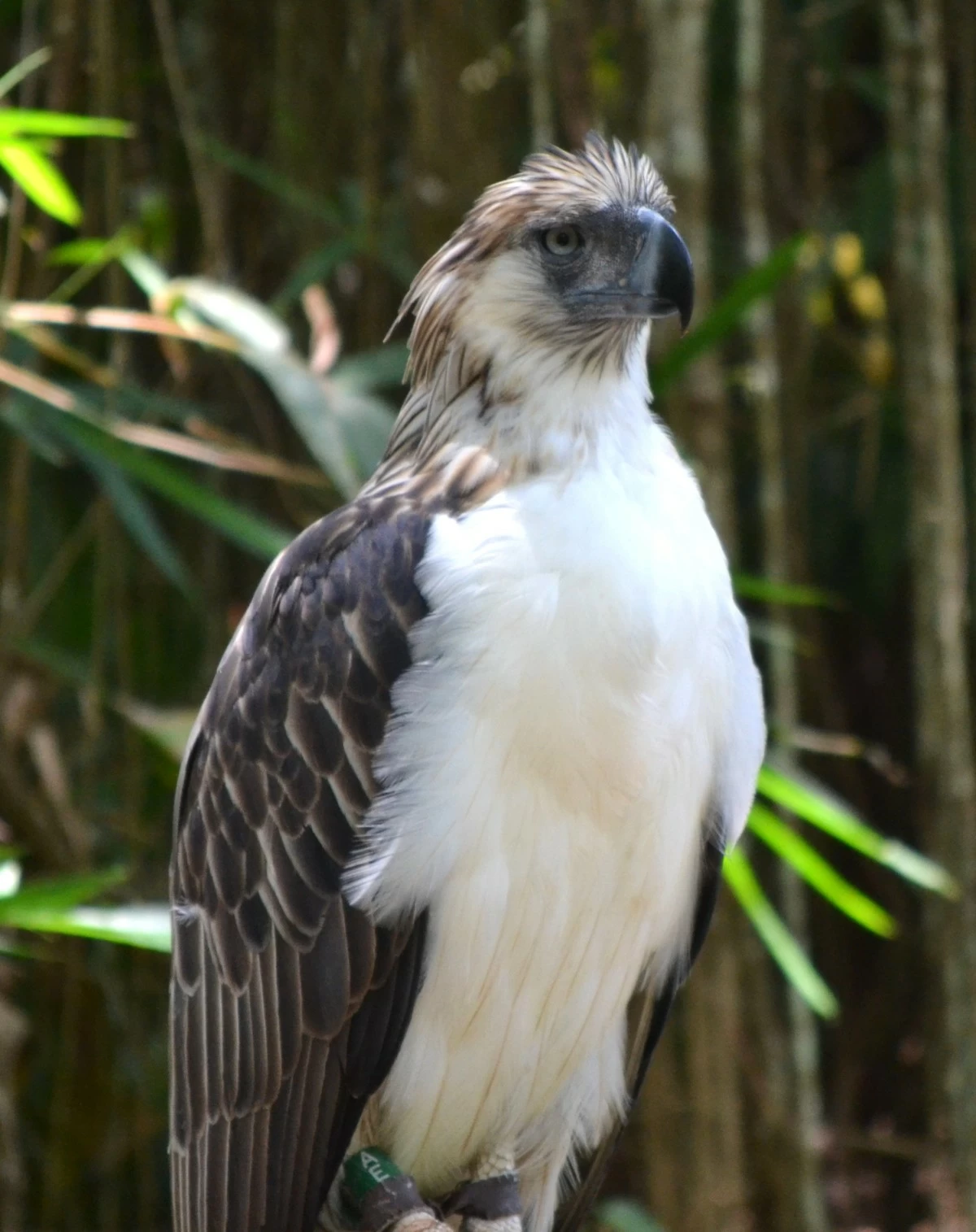
The Philippine eagle is the second-largest eagle in the world, after the harpy eagle. (Photos by Henrylito Tacio)
The Philippine eagle has long served a significant function in the country’s forest ecosystem as an “ecological keystone.” However, despite its strength, the survival of the national bird remains at risk.
The Philippine eagle was first studied in 1896 by the English explorer and naturalist John Whitehead. He observed the bird alongside his servant and collected the first specimen. He sent the bird’s skin to William Robert Ogilvie-Grant in London later that year. Ogilvie-Grant displayed it in a local restaurant and described the species a few weeks later.
The Philippine eagle – which the American aviator Charles Lindbergh referred to as "the world’s noblest flier" – was officially recognized as the national bird by President Fidel V. Ramos, replacing the maya.
In terms of rarity, the Philippine eagle ranks just below the Madagascar sea eagle. In size, it surpasses the American bald eagle, making it the second largest eagle in the world, after the harpy eagle found in Central and South America.
Unlike most animals, Philippine eagles are monogamous and bond for life. Once an eagle reaches sexual maturity – around five years for females and seven years for males – it bonds for life with its mate. They are often seen soaring in pairs..
Efforts to save the Philippine eagle began in 1965 through the initiatives of Jesus A. Alvarez, then director of the Parks and Wildlife Office, and Dioscoro S. Rabor, a pioneer in Philippine conservation efforts.