






Manila Bulletin
 Business
Inclusive financing: How Taguig women entrepreneurs grow their business with fair, accessible loans via GCash Fuse
Business
Inclusive financing: How Taguig women entrepreneurs grow their business with fair, accessible loans via GCash Fuse
Business
Inclusive financing: How Taguig women entrepreneurs grow their business with fair, accessible loans via GCash Fuse
Inclusive financing: How Taguig women entrepreneurs grow their business with fair, accessible loans via GCash Fuse
By MB Business
Published Feb 18, 2026 12:01 pm


At A Glance
- Women entrepreneurs shared they were able to seamlessly secure loans via the GCash lending arm, helping them fund their working capital.
- GCash is simplifying access to loans by cutting down on the usual paperwork required from applicants.

Filipinos have an entrepreneurial spirit, just look at the sheer number of sari-sari stores and carinderia along the busy streets in commercial districts and even within residential areas. This everyday hustle reflects not only creativity and resilience, but also a deep instinct to seize opportunity wherever it arises. Simply put, where there are potential customers, an aspiring entrepreneur emerges.
But a strong mind and determination are not enough. Financing is needed to turn dreams into reality. Unfortunately, this remains an obstacle even for those who established their business already, preventing them from scaling operations and growing profits.
This was not the case, however, for sari-sari store owners Ana Rhea Sarmiento, 41; Irene Villacastin, 60; and Evelyn Ducusin, 56. On the sidelines of the partnership launch of the Asian Development Bank (ADB) and Fuse Financing Inc. in Taguig titled “Driving Inclusive Finance for Filipino MSMEs,” the women entrepreneurs shared they were able to seamlessly secure loans via the GCash lending arm, helping them fund their working capital.
"Yung first loan ko po sa GCash, ginamit ko sa aking maliit na sari-sari store para pang-dagdag ng puhunan, pambili ng stock sa tindahan para sigurado pong hindi ako nauubusan ng bentahin, (I used my first loan from GCash as additional capital for my small sari-sari store—to buy more stock so I could make sure I wouldn’t run out of items to sell.)" Sarmiento recalls.
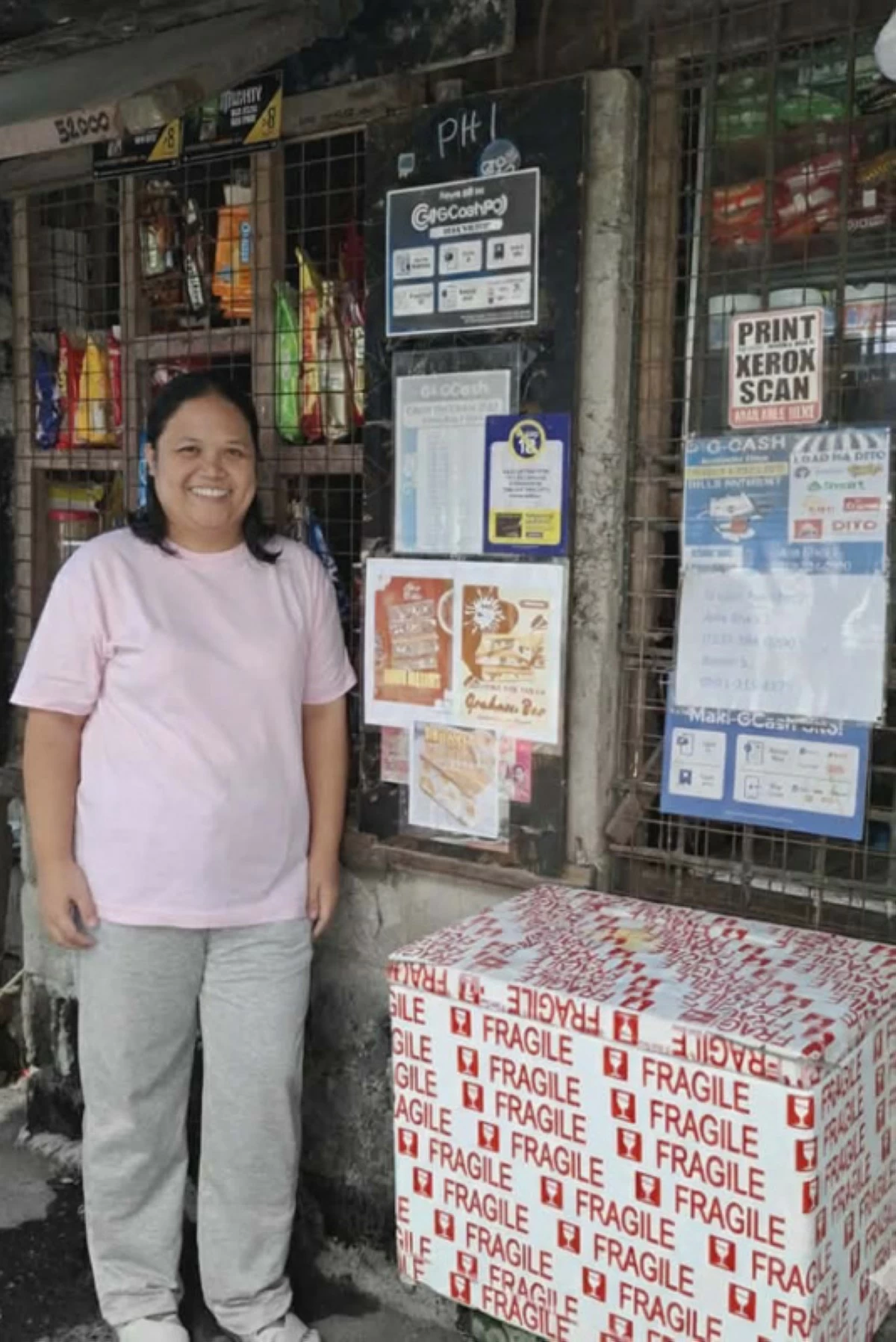
Anna Rhea Sarmiento, 41, runs a sari-sari store that helps support her family.
Villacastin shares that being able to borrow from a reputable lender allowed her business to grow, which in turn, helped her sustain the daily needs of her family.
“Ginamit ko ito sa aking negosyo, syempre pag okay ang negosyo, makakatulong ito sa pamilya, kaya dapat tuloy-tuloy ang negosyo. (I used the funds for my business which in turn helped my family, that’s why we need to keep our business going.)
Ducusin, meanwhile, says she has applied for a loan via GCash multiple times already. Doing so has supported her business expansion.
These women are among the millions of micro, small, and medium enterprises (MSMEs) in the country, driving the Philippine economy forward. Like others, these entrepreneurs have struggles in acquiring loans from traditional banks because of strict documentary requirements and lack of credit history.
GCash, in response, has been doing its part in lifting this barrier, creating a path towards progress for many MSMEs. Most recently, the fintech leader partnered with the ADB to extend the ₱1.75-billion credit facility to millions of MSMEs and women entrepreneurs, especially in high-poverty areas.
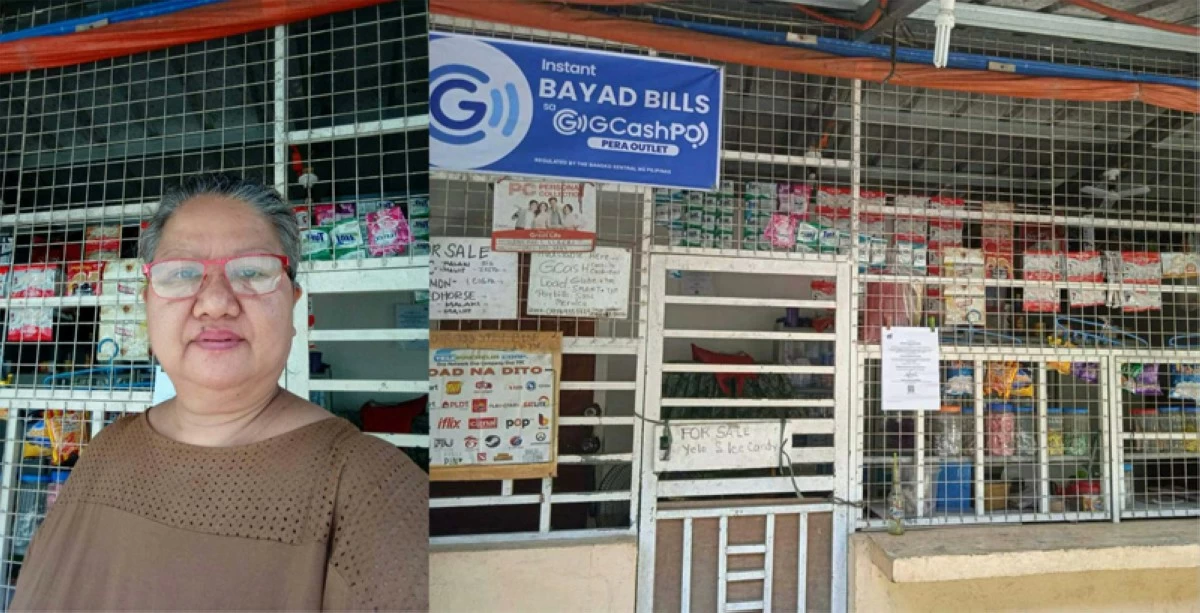
Entrepreneur Evelyn Ducusin, 56, shares how collateral-free loans helped her secure funds quickly for her business.
“This investment enables us to accelerate our support for women entrepreneurs and small businesses in underserved areas, sectors with immense potential to drive the country’s long-term growth,” Fuse Financing Inc. President and CEO Tony Isidro says.
Accessing financing for personal needs
More than their capital working needs, these small entrepreneurs are able to rely on GCash for other financial obligations.
Ducusin, for example, was able to pay for the review center expenses of her child, who took the architecture licensure exam.
"Sobrang nakaka-proud po kasi first take lang niya, nakapasa na po siya, (It’s really something to be proud of, especially because my child passed on the first try.)" the proud mother says.
Sarmiento was also able to avail of credit when her father was brought to the hospital and medical expenses piled up.
"Pasalamat po talaga kami dahil nga sa bilis ng GCash, nabayaran namin agad ang mga kailangan ni tatay. (We’re truly thankful that, with the fast service of GCash, we were able to take care of my father’s needs right away.)" the caring daughter adds.
GCash is simplifying access to loans by cutting down on the usual paperwork required from applicants. Rather than relying solely on traditional credit checks, the platform uses GScore, a digital rating based on users’ financial behavior to determine eligibility.
Apart from GLoan, the flagship loan product of Fuse where small business owners turn to for additional business capital and personal use like emergency funds or tuition needs, Fuse also offers other products like GGives, which is a buy now, pay later solution; and GCredit, a revolving credit line for qualified users.
Borrowing with dignity made easy
At the heart of it all, GCash is more than just a digital wallet—it is a platform that enables Filipinos to borrow with dignity.
Ducusin, in fact, stresses that she feels independent having GCash as a potential source of financing for her needs.
"Magaan po sa feeling talaga na wala kang maririnig na panunumbat kapag sa ibang tao o sa kamag-anak ka naghiram. (It feels really good not to worry about any remarks, unlike when you borrow from family or other people.)" she adds.
For Villacastin, it is stress-free and even rewarding to borrow money without strict requirements.
"Dama mo kasi na pinagkakatiwalaan ka at mas na-eenganyo kang magtrabaho at pagbutihin yung negosyo mo dahil nga suportado ka ng GCash. (You can really feel that you’re trusted, and it makes you more motivated to work hard and improve your business because you know GCash has your back.)" Villacastin adds.
As of the end of 2025, Fuse has disbursed ₱362 billion in loans to 10.5 million unique borrowers. Three out of five borrowers are women, while four out of five come from the masses.