ADVERTISEMENT

Healthcare workers shortage: 56% of students don't make it to the workforce

Published Feb 18, 2026 04:16 pm
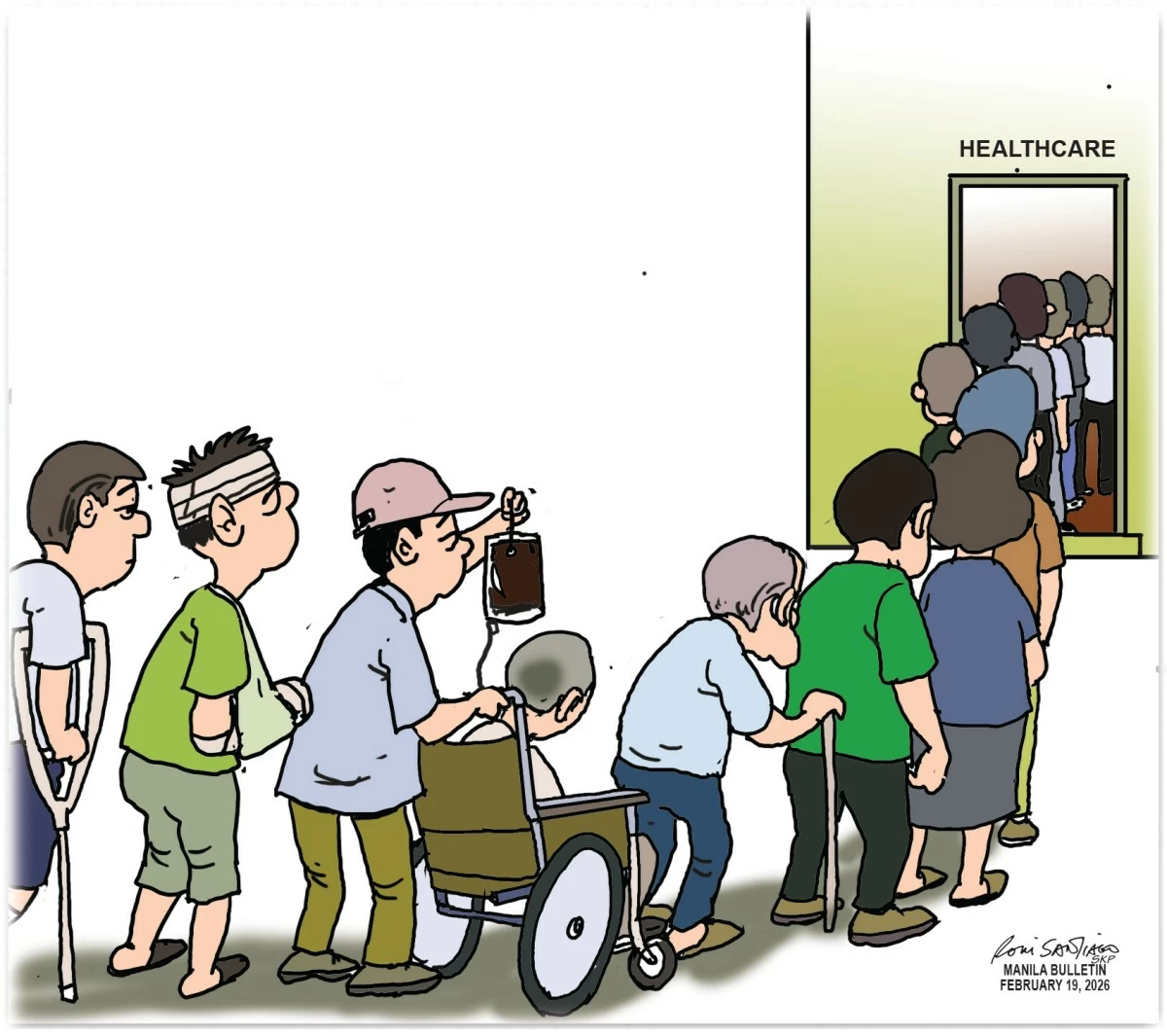
The shortage of healthcare workers in the Philippines is no longer an abstract policy debate. It is visible in overcrowded emergency rooms, months-long wait for specialist appointments, and rural communities without a resident doctor. Behind these realities is a stark statistic: the country needs an additional 290,000 healthcare professionals to adequately serve its population.
According to the Second Congressional Commission on Education (EDCOM II) in its report “Turning Point: A Decade of Necessary Reform 2026–2035,” the Philippines has only 21.2 healthcare workers per 10,000 people—less than half of the 44.5 benchmark recommended by the World Health Organization (WHO). Without urgent reforms, shortages are projected to reach 94,000 doctors, 196,000 nurses, and thousands more midwives and allied health professionals.
Migration is often blamed for the shortage. Nearly 27,000 Filipino healthcare workers leave the country each year for higher compensation and better working conditions.
But focusing solely on migration misses another problem. EDCOM II describes that as the “leaky” healthcare education pipeline, where large numbers of students fail to complete their training or enter professional practice.
Each year, about 59,000 students enroll in healthcare degree programs. Of these, roughly 15,000 drop out before graduation. Another 11,000 complete their degrees but fail licensure examinations. In the end, only 32,000 become licensed professionals. In total, an estimated 56 percent—around 33,000 students annually—never make it into the workforce.
This attrition rate is alarming. It signals financial hardship, uneven academic preparation, inadequate training facilities, and licensure barriers that prevent graduates from serving the public.
Access to education further compounds the crisis. Of the 80 medical schools in the country, only 28 are public institutions, limiting affordable options for students from low-income families. Entire regions, including Region 10 and the Cordillera Administrative Region, have no public medical schools at all. Dental education is even more centralized – of 34 dental schools nationwide, nearly a third are in Metro Manila, while 12 regions have virtually no access to dental education providers.
These geographic and economic disparities reinforce the uneven distribution of healthcare workers. Unsurprisingly, rural health units and government hospitals remain chronically understaffed. EDCOM II noted that 3,300 Department of Health plantilla positions remain unfilled, leaving the poorest Filipinos with the least access to care.
The crisis also has global dimensions. In November 2024, the Philippine-Pacific Health Initiative—launched by the Philippine government with Pacific Island countries and the WHO—underscored that health workforce shortages are a regional and global concern. WHO projects a global shortfall of 10 million health workers by 2030, disproportionately affecting low- and middle-income countries. Health worker shortages weaken health systems and make nations more vulnerable to pandemics and natural disasters.
Domestically, reform must begin with education. EDCOM II’s Workforce Development Plan calls for shifting from a “supply-driven” to a “demand-driven” system aligned with labor market needs. This includes expanding scholarships for medical and allied health students, improving training facilities, revisiting licensure policies to support competent graduates, and strengthening return service requirements.
Programs such as “Doktor Para Sa Bayan,” which fund medical education in exchange for mandatory service in underserved areas, should be expanded. Education agencies are also aligning efforts: the Department of Education is introducing healthcare electives in senior high school; the Technical Education and Skills Development Authority is developing advanced allied health certifications; and the Commission on Higher Education is prioritizing healthcare programs in its scholarships.
The private sector must step up—through scholarships, training partnerships, and investments in provincial medical education—to widen access and keep talent within the country.
The numbers are sobering, but they also offer clarity. Fixing the healthcare workforce shortage means sealing the leaks in the education pipeline, expanding equitable access, and creating conditions that make staying and serving at home a viable, dignified choice.
ADVERTISEMENT
.most-popular .layout-ratio{ padding-bottom: 79.13%; } @media (min-width: 768px) and (max-width: 1024px) { .widget-title { font-size: 15px !important; } }

{{ articles_filter_1561_widget.title }}

.most-popular .layout-ratio{ padding-bottom: 79.13%; } @media (min-width: 768px) and (max-width: 1024px) { .widget-title { font-size: 15px !important; } }

{{ articles_filter_1562_widget.title }}

.most-popular .layout-ratio{ padding-bottom: 79.13%; } @media (min-width: 768px) and (max-width: 1024px) { .widget-title { font-size: 15px !important; } }

{{ articles_filter_1563_widget.title }}

{{ articles_filter_1564_widget.title }}

.mb-article-details { position: relative; } .mb-article-details .article-body-preview, .mb-article-details .article-body-summary{ font-size: 17px; line-height: 30px; font-family: "Libre Caslon Text", serif; color: #000; } .mb-article-details .article-body-preview iframe , .mb-article-details .article-body-summary iframe{ width: 100%; margin: auto; } .read-more-background { background: linear-gradient(180deg, color(display-p3 1.000 1.000 1.000 / 0) 13.75%, color(display-p3 1.000 1.000 1.000 / 0.8) 30.79%, color(display-p3 1.000 1.000 1.000) 72.5%); position: absolute; height: 200px; width: 100%; bottom: 0; display: flex; justify-content: center; align-items: center; padding: 0; } .read-more-background a{ color: #000; } .read-more-btn { padding: 17px 45px; font-family: Inter; font-weight: 700; font-size: 18px; line-height: 16px; text-align: center; vertical-align: middle; border: 1px solid black; background-color: white; } .hidden { display: none; }
function initializeAllSwipers() { // Get all hidden inputs with cms_article_id document.querySelectorAll('[id^="cms_article_id_"]').forEach(function (input) { const cmsArticleId = input.value; const articleSelector = '#article-' + cmsArticleId + ' .body_images'; const swiperElement = document.querySelector(articleSelector); if (swiperElement && !swiperElement.classList.contains('swiper-initialized')) { new Swiper(articleSelector, { loop: true, pagination: false, navigation: { nextEl: '#article-' + cmsArticleId + ' .swiper-button-next', prevEl: '#article-' + cmsArticleId + ' .swiper-button-prev', }, }); } }); } setTimeout(initializeAllSwipers, 3000); const intersectionObserver = new IntersectionObserver( (entries) => { entries.forEach((entry) => { if (entry.isIntersecting) { const newUrl = entry.target.getAttribute("data-url"); if (newUrl) { history.pushState(null, null, newUrl); let article = entry.target; // Extract metadata const author = article.querySelector('.author-section').textContent.replace('By', '').trim(); const section = article.querySelector('.section-info ').textContent.replace(' ', ' '); const title = article.querySelector('.article-title h1').textContent; // Parse URL for Chartbeat path format const parsedUrl = new URL(newUrl, window.location.origin); const cleanUrl = parsedUrl.host + parsedUrl.pathname; // Update Chartbeat configuration if (typeof window._sf_async_config !== 'undefined') { window._sf_async_config.path = cleanUrl; window._sf_async_config.sections = section; window._sf_async_config.authors = author; } // Track virtual page view with Chartbeat if (typeof pSUPERFLY !== 'undefined' && typeof pSUPERFLY.virtualPage === 'function') { try { pSUPERFLY.virtualPage({ path: cleanUrl, title: title, sections: section, authors: author }); } catch (error) { console.error('ping error', error); } } // Optional: Update document title if (title && title !== document.title) { document.title = title; } } } }); }, { threshold: 0.1 } ); function showArticleBody(button) { const article = button.closest("article"); const summary = article.querySelector(".article-body-summary"); const body = article.querySelector(".article-body-preview"); const readMoreSection = article.querySelector(".read-more-background"); // Hide summary and read-more section summary.style.display = "none"; readMoreSection.style.display = "none"; // Show the full article body body.classList.remove("hidden"); } document.addEventListener("DOMContentLoaded", () => { let loadCount = 0; // Track how many times articles are loaded const offset = [1, 2, 3, 4, 5, 6, 7, 8, 9, 10]; // Offset values const currentUrl = window.location.pathname.substring(1); let isLoading = false; // Prevent multiple calls if (!currentUrl) { console.log("Current URL is invalid."); return; } const sentinel = document.getElementById("load-more-sentinel"); if (!sentinel) { console.log("Sentinel element not found."); return; } function isSentinelVisible() { const rect = sentinel.getBoundingClientRect(); return ( rect.top < window.innerHeight && rect.bottom >= 0 ); } function onScroll() { if (isLoading) return; if (isSentinelVisible()) { if (loadCount >= offset.length) { console.log("Maximum load attempts reached."); window.removeEventListener("scroll", onScroll); return; } isLoading = true; const currentOffset = offset[loadCount]; window.loadMoreItems().then(() => { let article = document.querySelector('#widget_1690 > div:nth-last-of-type(2) article'); intersectionObserver.observe(article) loadCount++; }).catch(error => { console.error("Error loading more items:", error); }).finally(() => { isLoading = false; }); } } window.addEventListener("scroll", onScroll); });

Sign up by email to receive news.