






 Business
Banking & Finance
AMLC flags over ₱4 billion in suspicious funds tied to graft, corruption
Business
Banking & Finance
AMLC flags over ₱4 billion in suspicious funds tied to graft, corruption
AMLC flags over ₱4 billion in suspicious funds tied to graft, corruption
By Derco Rosal


At A Glance
- Anti-Money Laundering Council (AMLC), the country's financial intelligence unit, received reports of suspicious fund flows linked to alleged graft and corrupt practices totaling more than ₱4 billion.
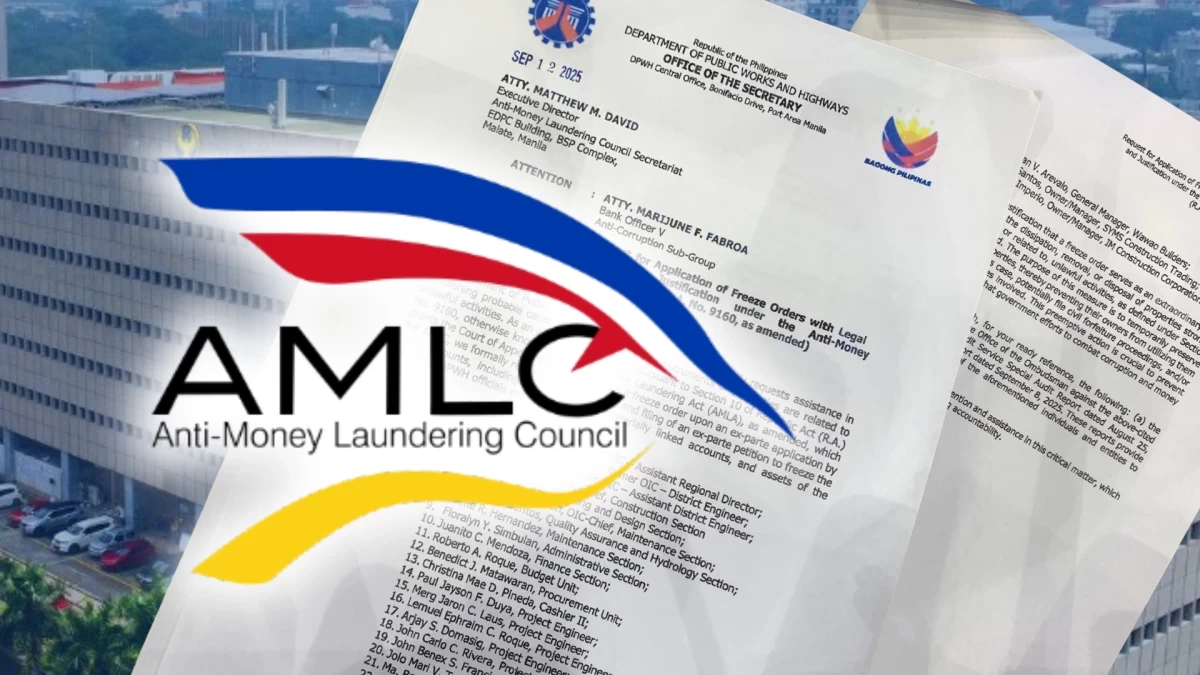
The Anti-Money Laundering Council (AMLC), the country’s financial intelligence unit, received reports of suspicious fund flows linked to alleged graft and corrupt practices totaling more than ₱4 billion.
These reports, according to AMLC’s latest threat assessment, covered nearly 1,800 suspicious transaction reports (STRs) from 2021 to the first half of 2024.
Nearly all transactions related to graft and corruption occurred within the country, accounting for 99.4 percent of total STR volume and 99.8 percent of total STR value.
Nearly all these illicit funds, corresponding to 99.4 percent of total, were funneled through banks.
During the monitored period, seven outward remittance transactions were reported in connection with graft and corruption.
A total of six transactions were recorded in 2023, two of which were remittances sent to an individual in Canada linked to a former government official convicted of four graft charges involving the unlawful transfer of tax credit certificates (TCCs) in 1998.
Meanwhile, four transactions were remittances to the United States (US). These involved an individual under investigation for graft in connection with the anomalous sale of a property owned by a state-run firm in June 2018, where he previously served as a board member.
AMLC also reported that the remaining transaction involved a 2021 remittance potentially bound for Singapore. It originated from an individual allegedly involved in tax evasion. The sender is also linked to a company under investigation for selling overpriced goods to the government.
According to AMLC, the individuals involved are listed as owners of a firm currently under probe following adverse reports related to government contracts during the Covid-19 pandemic.
“Concerns have been raised over how a small company, recently established and with a capitalization of less than a million [pesos], secured these contracts. Allegations of overpricing have also emerged,” the report read.
Nearly the entire aggregate value of domestic fund flows involved amounts ranging from ₱1 million to as much as ₱442.6 million.
In 2024 alone, all reported transactions were domestic. Most transactions by number were channeled through pawnshops, while commercial banks handled the majority of the total transaction value.
For international transactions, the suspected source countries of illicit funds were Hong Kong, China, and the US, with the funds reportedly sent to the US and Canada.
AMLC earlier froze the assets of two additional contractors involved in controversial flood-control projects in Bulacan province, citing suspected graft and the use of “non-existent” infrastructure programs to siphon state funds.
To date, AMLC has frozen a total of ₱24.7 billion in assets since launching a broad investigation into budget leakages within the Department of Public Works and Highways (DPWH).
Overall, the pool of restrained assets includes a diverse range of holdings, from traditional bank deposits and insurance policies to high-value motor vehicles, aircraft, and securities.