






Manila Bulletin
 Philippines
AFP backs increased US missile deployments to Manila for enhanced regional defense posture
Philippines
AFP backs increased US missile deployments to Manila for enhanced regional defense posture
Philippines
AFP backs increased US missile deployments to Manila for enhanced regional defense posture
AFP backs increased US missile deployments to Manila for enhanced regional defense posture
Published Feb 18, 2026 02:51 pm


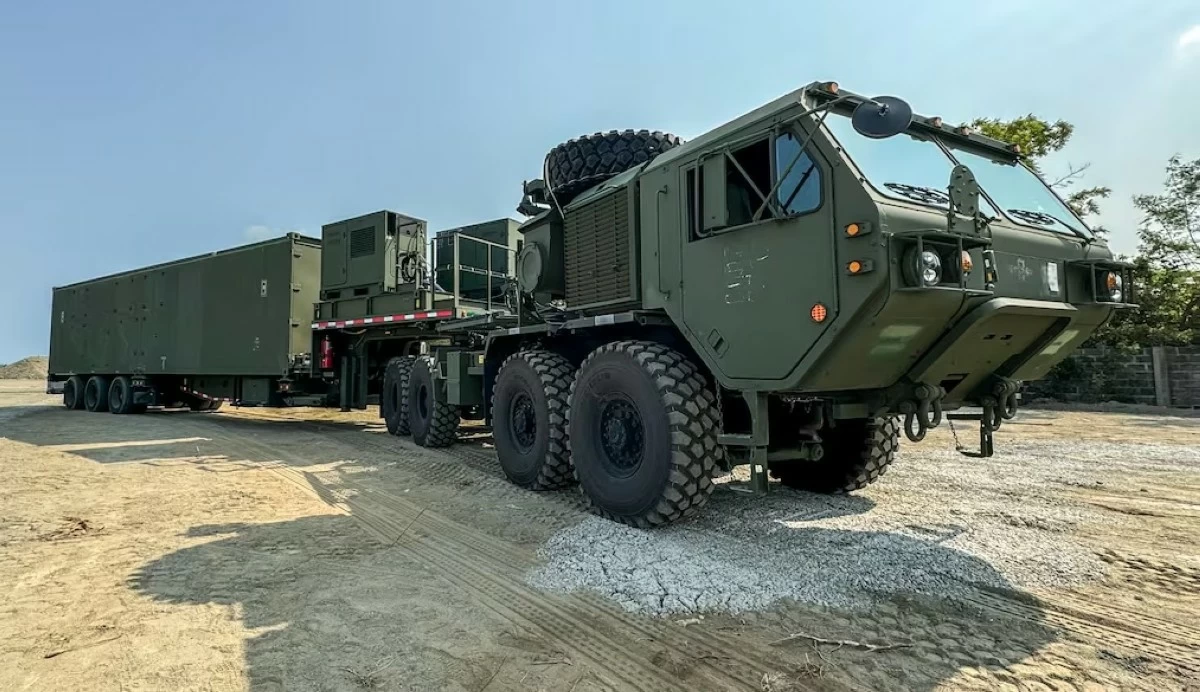
The Typhon mid-range capability launcher arrives in Northern Luzon in April 2024. (Photo: Capt. Ryan DeBooy/US Army)
The Armed Forces of the Philippines (AFP) on Wednesday, Feb. 18, expressed support for increased deployments of United States missile systems to the country following the 12th Philippines-United States Bilateral Strategic Dialogue (BSD) held in Manila.
AFP spokesperson Col. Frances Margareth Padilla said any deployment of allied systems will align with Philippine laws and existing agreements.
She expressed the military’s support behind initiatives agreed upon during the talks, among of which was the increased deployment of US “cutting-edge missile and unmanned systems to the Philippines.”
“The Armed Forces of the Philippines supports initiatives that enhance our defense capability, interoperability, and readiness in accordance with existing agreements and Philippine laws,” she said.
She added that allied deployments were meant to improve training and awareness among Filipino soldiers of emerging technologies and weaponry.
“Any deployment of allied systems is intended to strengthen training, improve domain awareness, and support our collective defense posture,” she noted.
“These efforts contribute to our mission of protecting Philippine sovereignty, securing our national territory, and maintaining peace and stability in the region,” the military spokesperson stated.
Senior officials from Manila and Washington met on Feb. 16 in Manila for the 12th PH-US BSD, the main annual platform for political, security, and economic cooperation between the two treaty allies.
Both sides reaffirmed their commitment to the 1951 Mutual Defense Treaty and reiterated that the treaty covers armed attacks on either country’s armed forces, aircraft, and public vessels, including coast guards, anywhere in the Pacific, including the South China Sea.
The two countries committed in 2026 to increase deployments of US cutting-edge missile and unmanned systems to the Philippines, and agreed to enhance joint capabilities and interoperability, expand cyber defense cooperation, and hold high-level ministerial and maritime dialogues.
Typhon and NMESIS
In an interview with reporters in Taguig City, Philippine Army (PA) Commanding General Lt. Gen. Antonio Nafarrete hinted that the Typhon missile launcher may be used during this year’s iteration of the Balikatan Exercises in April.
“Siguro sa Balikatan ‘yan gagamitin (Maybe it will be used in the Balikatan),” he said. Pressed if the Typhon is still in the country, the Army chief refused to confirm, saying it was an “operational security question.”
The Typhon is a mid-range capability (MRC) that is capable of launching the Standard Missile 6 (SM-6), which is designed for striking air or sea targets over 200 kilometers away, and the Tomahawk Land Attack Missile (TLAM), which is capable of hitting long-distance targets.
The Typhon was first deployed in Northern Luzon on April 7, 2024 for the Salaknib Exercise between the Philippine Army and United States Army Pacific. In January 2025, it was reported that the MRC was relocated to another undisclosed area.
Aside from Typhon, the Philippine Marine Corps (PMC) has also hosted the Navy-Marine Expeditionary Ship Interdiction System (NMESIS), a land-based anti-ship missile launcher deployed by the US Marine Corps.
The NMESIS was deployed in Batanes for the Balikatan Exercises last year, and it was also used during the Kamandag Exercise from May to June 2025.
These missile systems were sent to the country as part of a deterrence strategy against China's increasing presence in the West Philippine Sea (WPS).
During the BSD, both Manila and Washington condemned China’s “illegal, coercive, aggressive, and deceptive activities” in the WPS and underscored support for freedom of navigation and overflight and unimpeded lawful commerce.
PCG acquiring US utility choppers
Amid the developments, the Philippine Coast Guard (PCG) signed the Letter of Offer and Acceptance for the acquisition of three King Air utility aircraft from the United States.
The document was inked during a bilateral meeting between PCG Commandant Adm. Ronnie Gil L. Gavan and US Assistant Secretary of War for Indo-Pacific Security Affairs John Noh in Makati City.
The PCG said the signing “cements a critical upgrade to the PCG’s maritime domain awareness (MDA) and search and rescue (SAR) capability.”
The coast guard said the deal was reached to strengthen its presence in the WPS, as well as better address maritime incidents such as the ones involving MV Devon Bay, a Singaporean-flagged bulk carrier that capsized off Pangasinan on Jan. 23; and MV Trisha Kerstin 3, a ferry that sank off Basilan on Jan. 26.
Gavan stressed that the string of maritime incidents highlighted the need for faster and more efficient search and rescue response.
Gavan and Noh also discussed the Search and Rescue Optimal Planning System Program, a US Coast Guard SAR planning tool that uses environmental data modeling and simulation technology to optimize search planning and increase the chances of locating persons in distress at sea.
The two officials also discussed sustained US support for PCG modernization and coast guard operations in the WPS.