






Manila Bulletin
 Business
Trade & Industry
Dizon plans procurement overhaul to lure 'legitimate' builders back to DPWH
Business
Trade & Industry
Dizon plans procurement overhaul to lure 'legitimate' builders back to DPWH
Business
Trade & Industry
Dizon plans procurement overhaul to lure 'legitimate' builders back to DPWH
Dizon plans procurement overhaul to lure 'legitimate' builders back to DPWH
Published Feb 17, 2026 12:27 pm
|
Updated Feb 17, 2026 03:41 pm


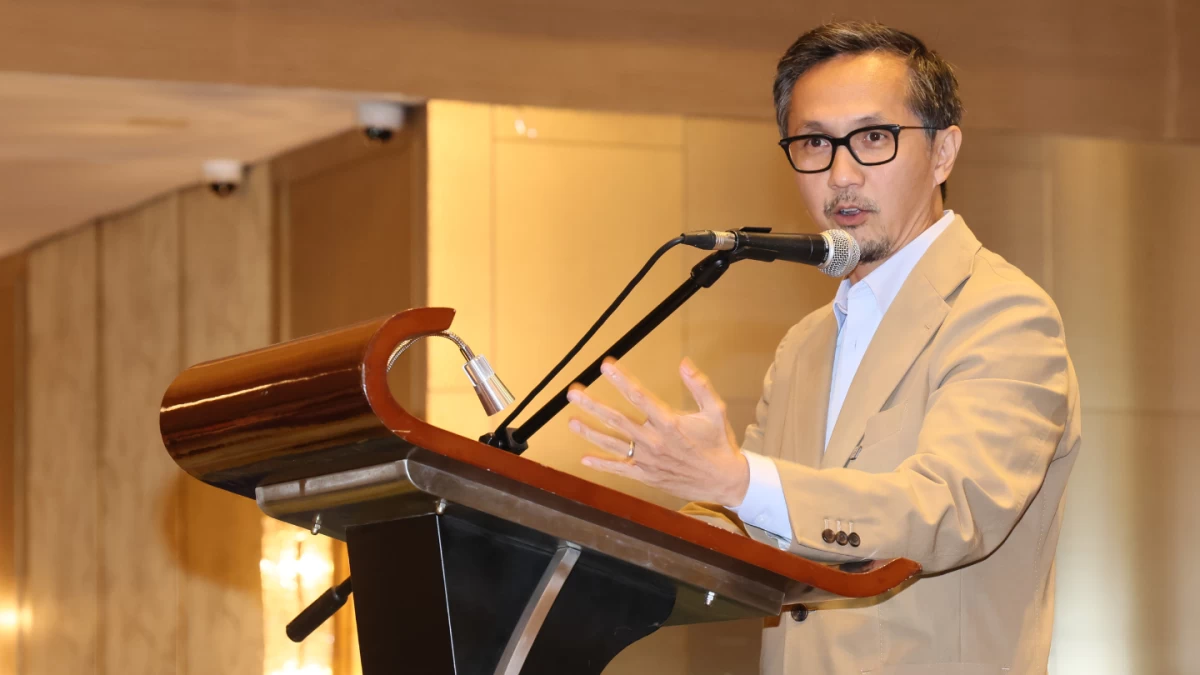
DPWH Secretary Vince Dizon
The Department of Public Works and Highways (DPWH) plans to launch an expedited procurement system modeled after the national “green lane” program, seeking to lure top-tier builders back to government projects following a series of corruption scandals involving flood-control contracts.
During the Philippine Chamber of Commerce and Industry’s (PCCI) general membership meeting on Monday, Feb. 16, DPWH Secretary Vince Dizon said the embattled agency may soon adopt a green lane program to reform its procurement process amid the corruption scandal involving flood control projects.
“There's no reason why we can't do that in the DPWH,” said Dizon.
The green lane, implemented by the Board of Investments (BOI), provides a pathway to expedite, streamline, and automate the processing of permits and licenses for strategic investments.
Embodied under Executive Order (EO) No. 18, the program forms part of the government’s push to improve the ease of doing business in the country and encourage the entry of investments.
Dizon said the objective behind DPWH’s version of the green lane is to facilitate the participation of major construction companies, such as Megawide Construction Corp. and EEI Corp., in government-led projects by speeding up the tedious procurement process and the processing of payments.
“When legitimate contractors join the DWPH, I think this is another step forward in rebuilding trust in the government,” he said.
Through this reform, Dizon said the government could finally stamp out contractors with suspicious backgrounds, many of which are at the forefront of the multibillion-peso corruption mess.
He said this effort will be complemented by reforms at the Philippine Contractors Accreditation Board (PCAB) to ensure that only credible contractors can participate in government projects.
PCCI President Ferdinand Ferrer said the green lane proposal comes at an opportune time after the economic slowdown last year, which was largely attributed to the pause in government spending as many public works projects were halted.
Ferrer said they are ready to work with the BOI and the Philippine Economic Zone Authority (PEZA) to help the DPWH establish its version of the green lane program within the second quarter of the year.
“It took us a year to establish a green lane in BOI. We cannot wait a year. So we want to set it up in three months,” he told reporters.
To ensure greater accountability in government projects, Ferrer said the PCCI will appeal to the Department of Economy, Planning, and Development (DEPDev) to permanently include a member of the private sector in the regional development councils (RDCs).
At present, Ferrer said representatives of businesses and industries can only participate in RDC meetings by invitation. He emphasized that there should be a permanent seat allotted to the private sector to ensure not only transparency but also more cohesive policies.
RDCs serve as the highest policymaking body in the region, coordinating and setting the direction of economic and social development efforts.
“If the government and the private sector decided on this together, that gives us greater confidence,” said Ferrer.
Ferrer said he is scheduled to meet with DEPDev Secretary Arsenio Balisacan on March 5 to raise the proposal.
The PCCI, together with the Catholic Bishops' Conference of the Philippines (CBCP) and the Mayors for Good Governance, is set to sign a memorandum of understanding (MOU) with the DPWH on Feb. 23 for the Integrity Chain initiative.
The Integrity Chain leverages blockchain technology to provide greater monitoring of government projects, covering the start of the procurement process through to completion.