






 Business
The Economy
Customs chief Nepomuceno orders verified registry of cigarette firms to strengthen anti-smuggling crackdown
Business
The Economy
Customs chief Nepomuceno orders verified registry of cigarette firms to strengthen anti-smuggling crackdown
Customs chief Nepomuceno orders verified registry of cigarette firms to strengthen anti-smuggling crackdown
By Derco Rosal


At A Glance
- All district and sub-port collectors have been ordered by the Bureau of Customs (BOC) to submit a comprehensive and verified list of all cigarette and tobacco firms in a bid to combat smuggling.
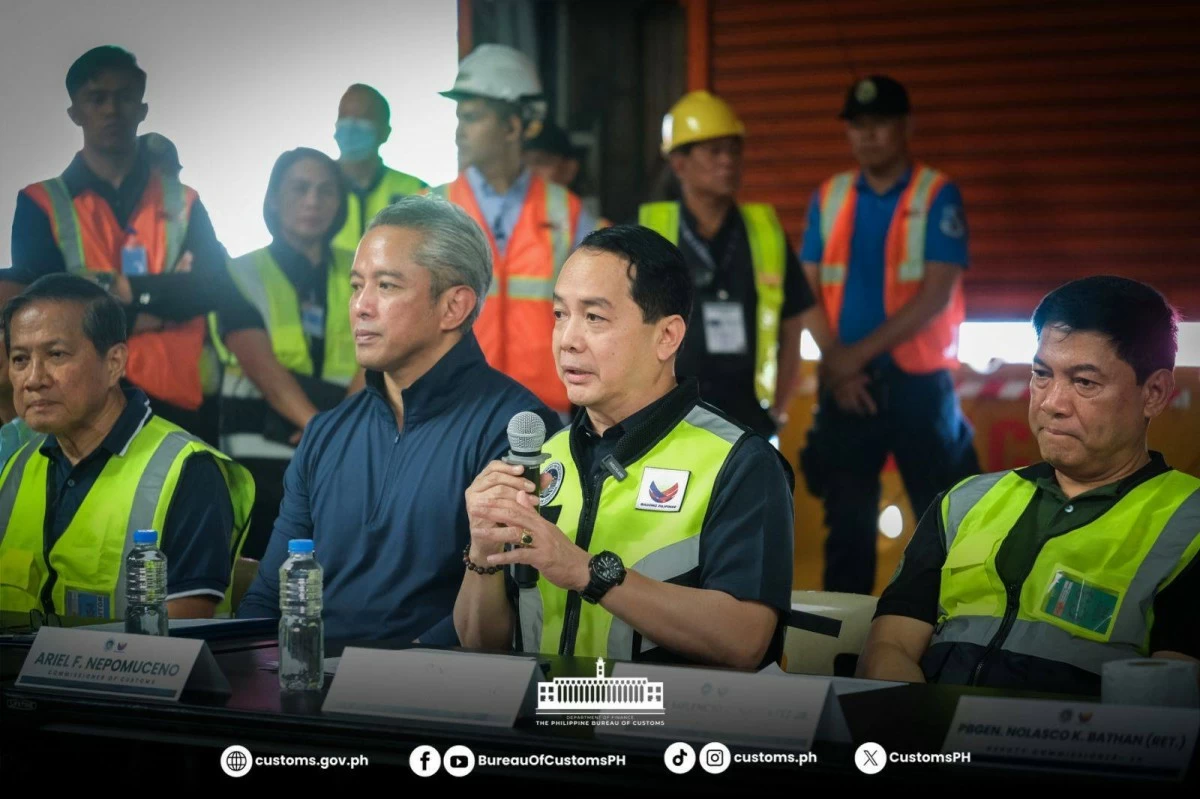
All district and sub-port collectors have been ordered by the Bureau of Customs (BOC) chief to identify all legitimate cigarette and tobacco firms operating inside economic zones in a bid to combat smuggling.
“You are hereby directed to submit a comprehensive and verified list of all Philippine Economic Zone Authority (PEZA) locators within your respective collection districts engaged in the manufacturing and/or processing of cigarettes and other tobacco products,” read the memorandum issued by BOC Commissioner Ariel F. Nepomuceno on Feb. 13.
A PEZA locator is a firm registered with the investment promotion agency (IPA) that operates inside designated ecozones—treated as separate customs territories—and is mainly engaged in manufacturing, information technology (IT), or export-oriented services.
Nepomuceno said his order forms part of the government’s efforts to safeguard revenues collected by the country’s second-largest tax-collection agency. It also aims to strengthen measures that the BOC has put in place to combat illicit flows of tobacco products and other goods.
In the first half of February alone, the total estimated value of seized or condemned cigarette and tobacco products from reported operations exceeded ₱500 million.
Of the total, ₱235 million worth of cigarettes were condemned in the Davao area on Feb. 9, while ₱39.3 million came from smuggled shipments intercepted at Port of Manila on Feb. 12.
The latest haul amounted to ₱275 million from operations in Pampanga province, seized last week during joint operations by the BOC and the Department of the Interior and Local Government (DILG) against illegal tobacco manufacturing. Seized items included cigarettes, production equipment, and raw materials.
These operations, the BOC said, are part of the government’s drive against illicit trade and other illegal activities that threaten legitimate businesses and the national economy.
Meanwhile, since July last year, the BOC has filed 14 criminal cases before the Department of Justice (DOJ) against 40 importers and licensed customs brokers for violations of the Customs Modernization and Tariff Act (CMTA) under Republic Act (RA) No. 10863.
“The cases involve unlawful importation activities, including technical smuggling, misdeclaration, and undervaluation of goods, aimed at evading the correct payment of duties and taxes,” the BOC said.
There have also been four criminal convictions under Nepomuceno’s term, all stemming from smuggling cases filed in previous years.
“By consistently pursuing prosecution, the bureau strengthens deterrence against smuggling schemes that deprive the government of rightful revenue and create unfair competition against legitimate businesses,” the BOC said.
Data showed that the BOC carried out over 1,000 enforcement operations in 2025, seizing smuggled and prohibited goods worth around ₱61.7 billion.
This dropped by 27.6 percent from the ₱85.2 billion worth of seizures recorded in 2024, which involved over 2,100 anti-smuggling operations nationwide. The BOC has yet to report the breakdown of overall seizures last year.
The government had forecast BOC collections to surpass ₱1 trillion in 2025, but actual collections reached only ₱934.4 billion, falling short of the ₱958.7-billion target. This shortfall was blamed on weaker imports, particularly rice shipments, and global price volatility.
For 2026, 2027, and 2028, the BOC is expected to collect ₱1.01 trillion, ₱1.07 trillion, and ₱1.14 trillion, respectively.
Finance Secretary Frederick D. Go earlier said he expects the BOC to cross the historic ₱1-trillion threshold this year, betting that leadership stability and a rebound in trade will end the multi-year streak of narrow misses.
“We have not been able to do it so far—the ₱1-trillion target has been elusive. But I am very confident that this will be the year that we will hit the ₱1-trillion target,” Go said.
Nepomuceno is taking on the ₱1-trillion revenue challenge, banking on higher collections from shipments of agricultural and petroleum products.