







A New Year of more robust Filipino-Chinese friendship
Published Feb 17, 2026 12:05 am
|
Updated Feb 16, 2026 04:29 pm


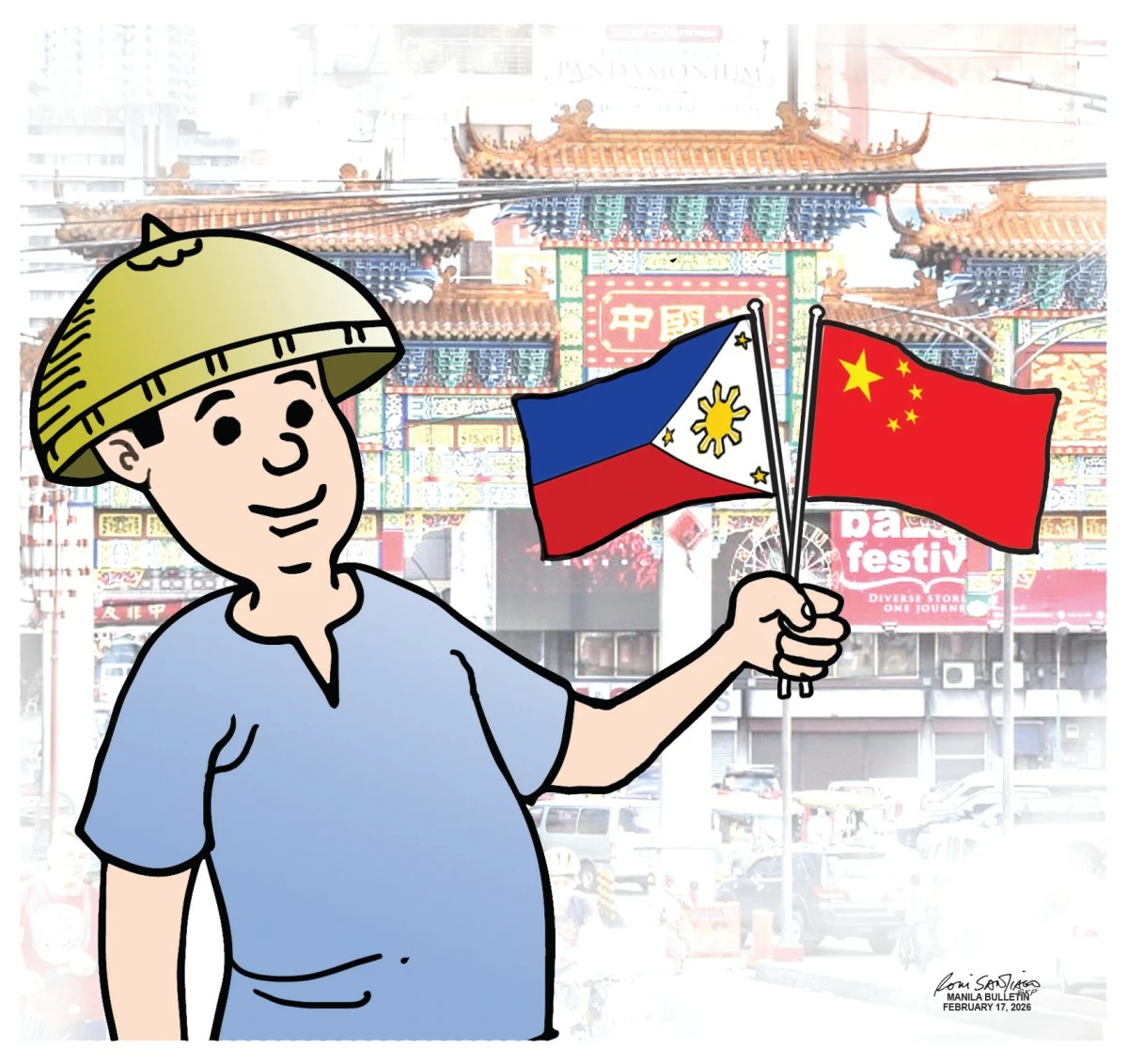
Today we mark the celebration of Chinese New Year. This is “a manifestation of our solidarity with our Chinese-Filipino brethren who have been part of our lives in many respects as a country and as a people," according to then President Benigno S. Aquino III when he issued a proclamation on its observance as a special non-working holiday in the Philippines, for the first time in 2012.
On this occasion, it is well to take stock of key aspects of the relationship between two nations and cultures that have been intertwined for decades.
Over the weekend, President Ferdinand R. Marcos, Jr. welcomed China’s move to open direct flights between Fujian and Cebu, saying the new route could boost exchanges and ties between the Philippines and China. Speaking at the launching of the second phase of Chinatown revitalization in Manila, he thanked Chinese Ambassador Jing Quan for the announcement and expressed optimism about its impact.
The envoy noted that 90 percent of Filipino-Chinese hail from Fujian. Hence, direct flights between Fujian and Cebu that will commence on March 29 would facilitate people-to-people interaction that is the foundation of enduring friendship.
Indeed, Chinese-Filipinos or Tsinoy have been well integrated into the national mainstream; their friendship with native Pinoys has been part of two closely linked cultures.
Long-standing economic and cultural cooperation has been the hallmark of the two countries’ historic relationship. Despite differences arising from geopolitical concerns, China has maintained its position as the Philippines’ top trading partner. It is also a primary market for Philippine agricultural products and minerals, while providing electronics and machinery.
In December 2025, China's exports to the Philippines totaled $5.22 billion, while imports from the Philippines were estimated at $1.42 billion. China’s hefty positive trade balance is accounted for by increased Chinese exports of integrated circuits, cars, and refined petroleum. In turn, the Philippines exports to China agricultural goods such as bananas, pineapples, and durian. Imports from China consist heavily of machinery, electrical equipment, iron, and steel.
China is also a major source of foreign direct investment and official development assistance for the Philippines.
In a recent meeting with Manila Bulletin, Ambassador Jinq Quan emphasized his government’s efforts to strengthen bilateral ties and enhancing friendship among nations in the Asia-Pacific region. He also expressed the need for “constructive communication” in managing maritime differences.
Indeed, there is vast potential for building a more expansive common ground between the Philippines and the People’s Republic of China. Founded on a long history of people-to-people linkages, there is every reason for extending such affinity to the economic and political spheres.
There is every reason to be optimistic that the coming years will witness the flowering of even more robust relations between the Philippines and the People’s Republic of China.
The celebration of Chinese New Year provides a good opportunity for the two nations to renew their commitment to ensuring that their long-standing ties will be strengthened even more.
Gong Xi Fã Cai! Mabuhay! Nawa’y patuloy na yumabong ang pagkakaibigan ng mga Pilipino at Tsino!