






Manila Bulletin
 Business
Trade & Industry
Philippines urged to link data centers directly to green energy hubs
Business
Trade & Industry
Philippines urged to link data centers directly to green energy hubs
Business
Trade & Industry
Philippines urged to link data centers directly to green energy hubs
Philippines urged to link data centers directly to green energy hubs
Published Feb 16, 2026 01:46 pm


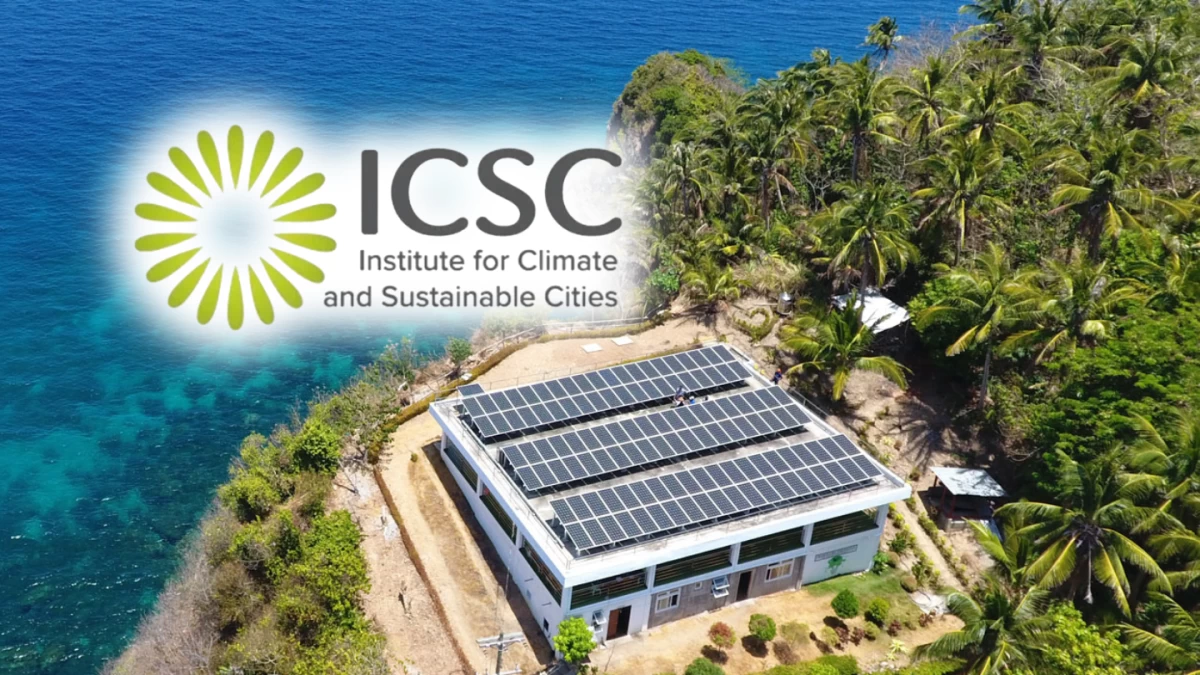
The Institute for Climate and Sustainable Cities (ICSC) is calling on the government to integrate data centers directly into renewable energy (RE) zones, arguing that “synergistic” approach to planning is required to prevent the digital boom from straining the national power grid.
In a statement on Monday, Feb. 16, the think tank urged policymakers to co-locate power-hungry data hubs with clean energy clusters.
The group also recommended mandating green power procurement and incorporating data center requirements into long-term transmission planning. These measures are intended to reduce renewable energy curtailment—where generated power is wasted because the grid cannot transport it—and to avoid stranded generation capacity.
The Philippines must shift from siloed planning to a strategy that treats data centers as strategic assets for the grid rather than mere loads, ICSC said. By anchoring digital demand to renewable energy zones, the country can secure investment and accelerate its energy transition, the group added.
The push comes as the Philippines faces a surge in data center investments, driven by the regional expansion of cloud services and artificial intelligence. These facilities operate around the clock and require massive amounts of electricity, often placing immense pressure on existing transmission corridors.
ICSC warned that if left unmanaged, the rapid growth of data centers could disrupt established manufacturing operations in Metro Manila, particularly energy-intensive sectors such as semiconductor assembly and industrial processing.
For the national industrial strategy to succeed, data center growth must not come at the expense of existing sectors, the group said, emphasizing that proactive site selection and adherence to stringent grid standards are essential.
One proposed solution involves the use of commercial solar rooftop technologies. Citing data from the Solar Power Estimation of Capacities and Tracking Using Machine Learning (SPECTRUM) tool, ICSC noted that the Philippines has significant untapped space on commercial rooftops. Utilizing these for data centers via net-metering programs would allow cities to tap clean energy without requiring the construction of expensive new transmission lines.
The think tank also cited the potential of offshore wind to meet digital demand. Mindoro, which is slated to host a large share of planned offshore wind projects, is scheduled to be connected to the Luzon grid by 2027 through the Batangas-Mindoro Interconnection Project.
While current transmission infrastructure may struggle to accommodate the intermittent nature of offshore wind, ICSC argued that placing large data centers near these landing points would provide a ready market for the electricity and minimize wasted output.