







Peso hits 4-month high before predicted slide to ₱60 on easing
By Derco Rosal


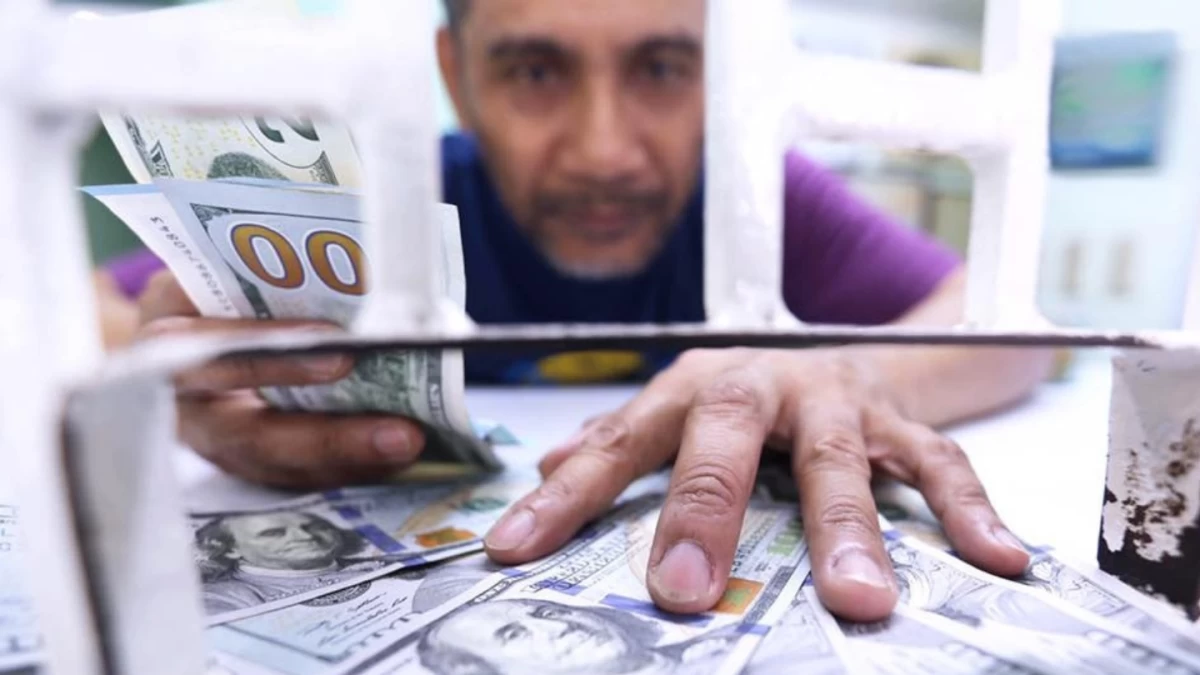
The peso returned to the ₱57:$1 level on Monday, Feb. 16, closing at ₱57.986 from ₱58.02 last Friday, Feb. 13. This marked the highest finish in more than four months since Oct. 8, 2025, when it closed at ₱57.95.
According to the Bankers Association of the Philippines (BAP), the local currency hit an intraday high of ₱57.91 and a low of ₱58.02, after opening at ₱57.95. Total trading volume dropped to $896.5 million from Friday’s $1.338 billion.
Think tank Capital Economics said the Philippine peso was among the best-performing emerging market (EM) currencies last week alongside the South Korean won, Thai baht, Malaysian ringgit, and Israeli new shekel.
Singapore-based United Overseas Bank Ltd. (UOB) also noted that the peso was the only gainer among Asian currencies last Friday.
Despite this winning streak, the highly expected easing by the Bangko Sentral ng Pilipinas (BSP) could weigh on the peso’s momentum.
Japanese banking giant MUFG Bank Ltd. wrote in a Feb. 1 3 commentary that the BSP is likely to proceed with another reduction in the benchmark rate to spur the slowing economy.
“While rate cuts may help support growth, they also reduce the Philippine peso’s carry appeal, leaving the currency potentially vulnerable if [US] dollar strength re-emerges,” MUFG analysts said.
MUFG said the monetary authority could ease the current 4.5-percent benchmark rate to 4.25 percent on Thursday, citing the worse-than-expected economic growth slowdown to three percent in the fourth quarter of 2025. This brought the average gross domestic product (GDP) growth rate to 4.4 percent for the year.
While the BSP signaled that it is nearing the conclusion of its inflation-targeting easing cycle, MUFG still expects deeper easing to four percent by the end of 2026. This could weigh on the peso, as the lender sees the US dollar-peso pair trading at ₱59 in the first quarter and gradually rising to higher levels until it breaches ₱60 by the end of 2026.
“Risks for the US dollar-peso to weaken above ₱60 remain,” said Jonathan L. Ravelas, senior adviser at Reyes Tacandong & Co. He also maintained his bearish outlook on the foreign exchange (forex) market, as, like MUFG, he sees the peso settling at ₱60 by year-end.
He argued that the peso’s recent winning streak against the greenback is likely due to weaker dollar sentiment.
According to the economist, the interest rate differential between the US and the Philippines may remain tight, which could make the peso less attractive to investors relative to the US dollar.
Such downside risks to the peso could be exacerbated by the country’s heavy reliance on imports, successive misses on debt targets, persistent trade gaps, and the US dollar’s function as a dominant safe-haven asset.
Economic think tank Moody’s Analytics expects the BSP to further trim the key interest rate by 25 basis points (bps) on Thursday to prop up the local economy following its disappointing GDP outturn in the fourth quarter of last year.
“A low-inflation environment provides room for monetary easing without jeopardizing price stability,” Moody’s Analytics added. Inflation quickened to two percent in January, returning to the government’s target band of two to four percent.
A trader said the peso continued to trade within a narrow range as Asian currency markets remained subdued due to thin holiday liquidity.
While the local currency was slightly firmer from last week’s highs, the move appeared to be mere consolidation rather than a breakout, the trader said, with market participants awaiting fresh US data and guidance from the BSP for clearer direction.
Rizal Commercial Banking Corp. (RCBC) chief economist Michael L. Ricafort expects the US dollar-peso pair to fluctuate between ₱57 and ₱59, adding that further easing could hurt the local currency.
Meanwhile, UOB—which expects the BSP to hold rates steady until the second quarter of 2026—projects the local currency to swing modestly around the ₱58 level through the third quarter of 2026 before finishing the year on a stronger footing at ₱57.9 per US dollar.