







Manila unveils 10-year garbage reduction roadmap
Published Feb 16, 2026 11:38 am


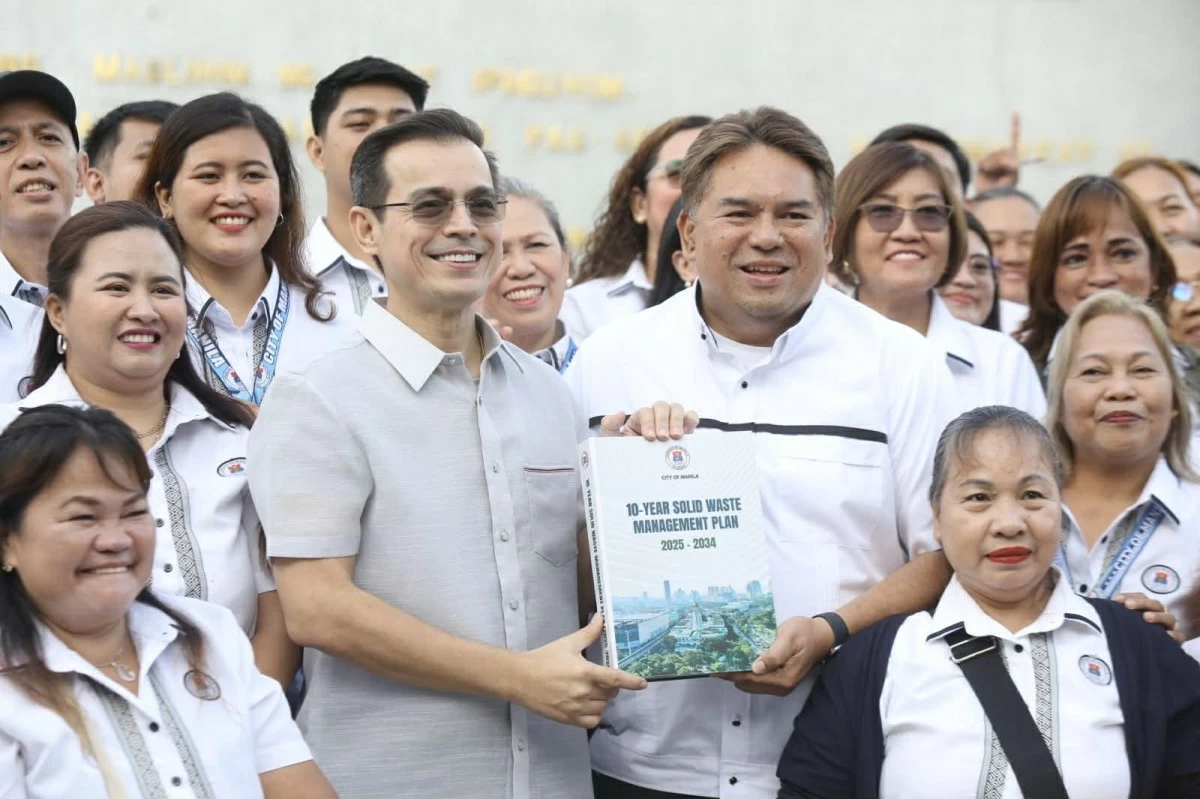
Francisco "Isko Moreno" Domagoso unveils Manila’s updated 10-year Solid Waste Management Plan during the flag-raising ceremony at Manila City Hall on Feb. 16, outlining strengthened waste reduction, segregation, and diversion efforts led by the Department of Environmental and Public Services to address the capital’s growing garbage challenges. (Photo courtesy of Manila Public Information Office)
Manila City Mayor Francisco "Isko Moreno" Domagoso on Monday, Feb. 16, rolled out Manila’s updated 10-year Solid Waste Management Plan, outlining an aggressive strategy to reduce garbage volume, enforce segregation at source, and expand diversion programs amid mounting waste challenges in the capital.
The long-term plan, formally presented during the weekly flag-raising ceremony at Manila City Hall, aims to lessen the city’s reliance on landfills by strengthening recycling, composting, and waste reduction efforts at the household, institutional, and community levels.
Domagoso underscored that maintaining cleanliness is a fundamental responsibility of the local government, regardless of where the waste originates.
“Salamat sa Diyos. Hopefully, mapagtagumpayan natin together, all of us here in the City Government of Manila, ang maaliwalas at panatag na pamumuhay. That's the very least that we can give to our people (Thank God. Hopefully, together, all of us here in the City Government of Manila, we can achieve a clean, orderly, and secure way of life. That’s the very least that we can give to our people),” the mayor said.
“But then again, at the end of the day, whether it came from us or not, what matters most is that we as a City Government, we must do our job. We must fulfill our obligation to our people - kasi wala namang pangalan ng address ang basura. Ang naiintindihan ng tao, may basura sa atin (because garbage does not carry any name or address. What people understand is that there is garbage in our city),” he added.
Domagoso also recognized the Department of Environmental and Public Services (DEPS), including its Estero Rangers and Manila Bay cleanup teams, who conduct daily clearing operations in waterways and coastal areas to prevent waste buildup and flooding.
DEPS Director Kenneth Amurao said the updated plan focuses on concrete measures to curb waste generation and prevent excessive landfill dependence.
“Yung ating updated or new 10-year solid waste management plan is naka-focus ngayon sa plans and programs natin for solid waste. Ang main goal natin is waste reduction through segregation from source, sa mga bahay o opisina pa lang natin, mga nabubulok at di nabubulok (Our updated or new 10-year solid waste management plan is now focused on our plans and programs for solid waste. Our main goal is waste reduction through segregation at source, right in our homes or offices, separating biodegradable and non-biodegradable waste),” Amurao said.
He noted that Manila is expanding composting operations in city-run Materials Recovery Facilities (MRFs), allowing biodegradable waste to be processed locally instead of being transported to landfills. The city has also strengthened partnerships with private companies to collect recyclables and improve waste diversion.
Amurao warned that rising waste generation remains a serious concern, with daily per capita waste output increasing from about 0.6 kilograms to nearly 1 kilogram per person.
“Instead of all garbage sa landfill, now may sariling composting small-scale sa mga MRF na city-operated. At the same time, may private partnership tayo with private companies. 'Yun ang nilalaman ng updated 10-year plan (Instead of sending all garbage to the landfill, we now have our own small-scale composting operations in city-operated MRFs. At the same time, we have partnerships with private companies. These are part of the updated 10-year plan),” he said.
He added that the plan is designed to remain adaptable, allowing updates every two years to incorporate new technologies and policies, including the potential adoption of waste-to-energy systems.
“We have a chance to update every two years again. In the coming two years, we also have to consider the waste-to-energy technology,” Amurao said.
The rollout comes following the permanent closure of the Navotas Sanitary Landfill in August 2025, which forced Manila to redirect its garbage to the New San Mateo Sanitary Landfill in Rizal.
The shift has increased hauling distances, operational costs, and turnaround times for garbage trucks, highlighting the urgent need to reduce waste volume at its source.
City officials said the updated plan represents Manila’s long-term commitment to sustainable waste management, environmental protection, and improving the quality of life for residents through a cleaner and more livable city.