






Manila Bulletin
 Business
The Economy
Filipino remittances hit record $35 billion in 2025 on holiday surge
Business
The Economy
Filipino remittances hit record $35 billion in 2025 on holiday surge
Business
The Economy
Filipino remittances hit record $35 billion in 2025 on holiday surge
Filipino remittances hit record $35 billion in 2025 on holiday surge
By Derco Rosal
Published Feb 16, 2026 12:34 pm
|
Updated Feb 16, 2026 04:13 pm


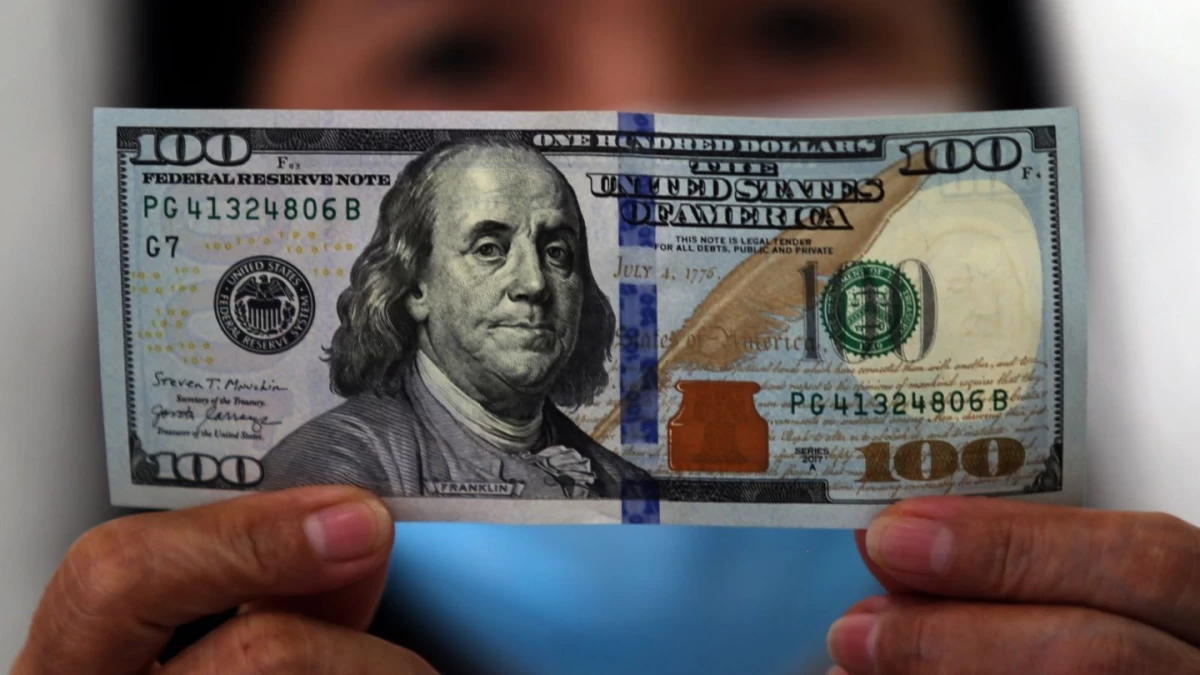
Filipinos working abroad sent home a record amount of cash in 2025, buoyed by year-end bonuses and holiday spending that pushed annual inflows beyond the central bank’s official expectations.
According to the Bangko Sentral ng Pilipinas (BSP), total cash remittances in December 2025 hit a record high of $3.52 billion, 4.2 percent higher than the $3.38 billion recorded in December 2024.
Consequently, full-year cash remittances for 2025 reached an all-time high of $35.63 billion, representing a 3.3 percent increase from the $34.49 billion recorded in 2024.
Notably, these figures represent the highest annual inflows on record.
It also bears noting that this full-year total surpassed the central bank’s remittance forecast for 2025.
As of the fourth quarter of 2025, the BSP projected that cash remittances would grow by three percent annually, with a 2026 forecast of $36.6 billion.
Cash remittances for the full year 2025 were predominantly from the US, which accounted for 39.7 percent of the total, followed by Singapore at 7.3 percent, Saudi Arabia at 6.6 percent, Japan at 5.0 percent, and the United Kingdom (UK) at 4.6 percent.
Reyes Tacandong & Co. senior adviser Jonathan L. Ravelas said the December surge, which drove a full-year record high, was mainly fueled by year-end bonuses and holiday spending.
Ravelas noted that the record-breaking figure indicatesd resilient Filipino employment overseas despite global uncertainty.
According to the economist, remittances likely boosted the country’s output, as measured by gross domestic product (GDP), by around 50 basis points (bps). The 2025 cash remittances accounted for 7.3 percent of the country’s GDP and 6.4 percent of gross national income (GNI).
This supported consumption, housing, and services, even as actual economic growth in 2025 slowed to 4.4 percent.
For Ravelas, the one-percent tax on remittances from the US is the main headwind to upward momentum. “It won’t derail flows overnight, but higher costs could slow formal transfers and weigh on momentum over time,” he said.
Meanwhile, Domini S. Velasquez, group chief economist at China Banking Corp., said the outsized jump posted in December was propelled by seasonal gains, an improving global condition, and “possible front-loading ahead of the implementation of the ‘One Big Beautiful Act’ in January.”
Velasquez also noted that the weakening of the peso in December likely boosted flows “as overseas Filipinos took advantage of more favorable exchange rates to remit.”
“However, we are seeing changes in the composition of inflows. Notably, remittances from Europe and Oceania have been rising more than usual since April last year, indicating stronger labor markets and income gains for overseas Filipinos in these regions,” she said.
Philippine Institute for Development Studies (PIDS) senior research fellow John Paolo Rivera agrees with Ravelas and Velasquez on the seasonal factors driving the inflows. In addition, Rivera said the December record “also signals resilient overseas employment and steady demand for OFWs, particularly in healthcare, maritime, and services.”
This strong full-year remittance expansion provides a buffer for the economy as it offsets waning investment and constrained spending by supporting household consumption.
“However, any proposed US remittance tax could temper this momentum over time by raising transfer costs and potentially reducing the net amount sent home, which may slightly dampen consumption and peso support, although the impact will likely be gradual given the structural dependence of many households on remittance inflows,” he added.
Several money transfer centers in countries abroad send money through partner banks, known as correspondent banks, most of which are based in the US, the central bank noted.
It added that remittances sent through money couriers are recorded under the country where their main offices are based—often the US—rather than the actual country of origin.
“Therefore, the US would appear to be the main source of OF remittances because banks attribute the origin of funds to the most immediate source,” the BSP explained.
Higher cash remittances were also a key driver of the increase in personal remittances, which include cash sent through banks and informal channels, along with remittances in kind.
Personal remittances rose to a record $3.89 billion in December 2025, a 4.2 percent increase from the $3.73 billion seen in December 2024.
Personal remittances for the full year 2025 climbed by 3.3 percent to an all-time high of $39.62 billion, up from $38.34 billion in 2024.