






Manila Bulletin
 Business
The Economy
End of travel tax? Study sees 1 million more trips, ₱43-billion economic surge
Business
The Economy
End of travel tax? Study sees 1 million more trips, ₱43-billion economic surge
Business
The Economy
End of travel tax? Study sees 1 million more trips, ₱43-billion economic surge
End of travel tax? Study sees 1 million more trips, ₱43-billion economic surge
By Derco Rosal
Published Feb 16, 2026 03:00 pm
|
Updated Feb 16, 2026 02:22 pm


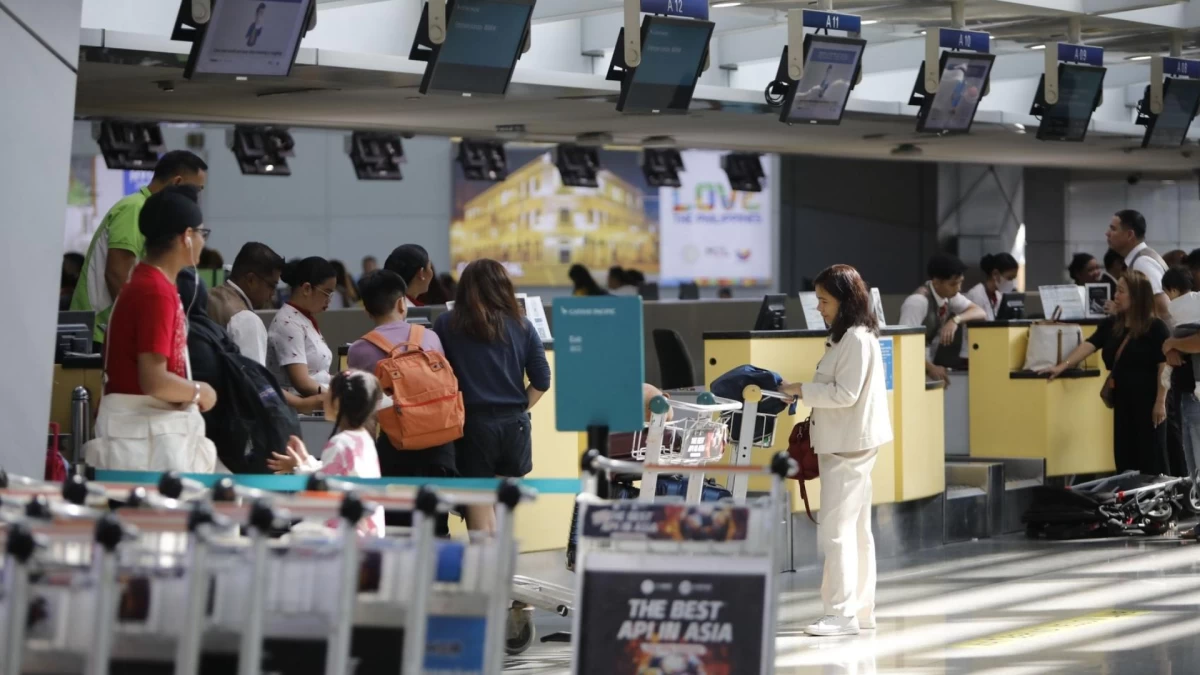
(NNIC photo)
Abolishing the domestic travel tax could trigger an additional 1 million trips and inject ₱43.6 billion into the national economy, according to a study by Manila-based think tank Institute for Risk and Strategic Studies Inc., also known as Salceda Research.
Joey S. Salceda, chair of the research group, said the proposal to scrap the levy is rooted in its redundancy and the need to bolster the country’s regional competitiveness. Filipinos currently face some of the highest travel-related taxes in Southeast Asia, the study found.
According to the think tank, the proposed measure is expected to boost travel by 891,000 trips, generating ₱43.6 billion in economic activity and adding ₱19.6 billion in value to the economy.
If adopted, trade and commerce are projected to gain the largest share of value added, at approximately ₱4.3 billion, accounting for about a fifth of the total impact.
Salceda Research’s analysis also showed that abolishing the travel tax would generate enough economic activity to more than offset the revenue loss, even assuming a conservative response to the reform.
According to the study, the government could lose ₱8.9 billion in travel tax revenues, which it currently collects.
“The travel tax is now redundant — the government already collects far more from airport operations than from the travel tax,” Salceda Research said.
It noted that the government already earns significantly from airport operations. The think tank reported that the government collected ₱48.3 billion in the first year of the NAIA concession, far exceeding its annual travel tax revenue.
Salceda also argued that the Philippines is among “the few countries in the region that still impose a departure tax on their own citizens, and it does so at one of the highest rates.”
He said the travel tax no longer fits today’s economy, asserting that the original argument for the travel tax was that it was progressive. However, given that the average middle-class Filipino also travels, this argument no longer holds.
If lawmakers intend to preserve a progressive element in the travel tax, Salceda said the levy should only be imposed on first-class seats.
“What could be retained, if you want to maintain progressivity, is the travel tax on first-class seats. Airlines could serve as withholding agents for a fee, making collection much easier,” Salceda said.
Otherwise, the economist said, the think tank fully supports abolishing the travel tax.
Last week, the Legislative-Executive Development Advisory Council (LEDAC) approved the inclusion of the Travel Tax Abolition bill among the 21 key legislative measures of the government to lower travel costs and stimulate tourism. These measures are expected to pass by midyear.