ADVERTISEMENT

Board of peace

Published Feb 16, 2026 12:05 am  |  Updated Feb 15, 2026 03:37 pm
PEACE BY PEACE
When I learned that United States President Donald Trump had sent a personal letter to President Ferdinand R. Marcos Jr. inviting the Philippines to be part of the proposed Board of Peace, I felt a profound sense of pride.
I told myself that our country’s experiences in peacebuilding is not only being noticed but recognized by no less than the American president, who is currently leading global efforts to build a coalition of nations that will rehabilitate Gaza.
In particular, the Board of Peace aims to serve as an international peace-building, stabilization, and reconstruction body in Gaza, as well as to promote stability, restore lawful governance, and secure enduring peace in areas affected or threatened by conflict. The Board of Peace was launched in Davos, Switzerland, during the World Economic Forum on Jan. 22.
As of this writing, the Philippine government has not yet officially responded to President Trump’s invitation. But as Ambassador Jose Manuel “Babe” Romualdez has explained, the Marcos Jr. administration is studying carefully how best to contribute to this body.
We believe that there are compelling reasons why President Trump, who successfully brokered a ceasefire agreement between the Israeli government and Hamas, chose the Philippines to participate in this collective undertaking.
The Philippine experience has shown that peacebuilding does not end with the signing of agreements. This is only just the start. And the most challenging part is not only the physical reconstruction but, most importantly, helping people rise up and rebuild their lives.
These are among the key lessons that the national government has learned over the past decades in its quest to build long-lasting peace and could share to the world if it does eventually become a member of the Board of Peace.
This is why the Bangsamoro peace process has become one of the centerpieces of the Marcos Administration’s peace agenda, which he has proudly highlighted during his many trips abroad and meetings with the international diplomatic corps and development community.
As someone who has been involved in this remarkable peace journey, I have witnessed how open dialogue, utmost patience, and mutual respect between parties can transform former adversaries into trusted allies and, eventually, steadfast partners in nation-building.
Through the Government of the Philippines’ sustained engagement with both the Moro Islamic Liberation Front (MILF) and the Moro National Liberation Front (MNLF), the guns of war were finally silenced.
The establishment of the Bangsamoro Autonomous Region in Muslim Mindanao (BARMM) government fulfilled the long-standing desire of the people to determine the future of their cherished homeland, following the conclusion of decades of armed conflict.
The Comprehensive Agreement on the Bangsamoro’s Normalization Track has enabled former MILF combatants to gradually return to mainstream society as peaceful and productive members of society.
Today, former MILF leaders serve as public officials, while their members have laid down their arms and are now using ploughshares, fishnets, and calculators to uplift their lives, families, and communities.
The Bangsamoro peace process is a story of a people who did not let their past define their future, a story that armed struggle and violence will not resolve their grievances but can be addressed through their collective will, strength and determination.
These are the learnings that the Philippines could offer to Gaza and the rest of the world: how to effectively mediate conflicts, foster community-driven solutions, and sustain reconciliation through inclusive and moral governance.
While we understand that financial commitments are needed for permanent membership in the Board of Peace, I agree with Ambassador Romualdez that our nation can offer something equally valuable, such as expertise, experience, and a tested model of peacebuilding that prioritizes dialogue, trust, and human dignity.
As President Ferdinand R. Marcos Jr. has underscored time and again, peace and development are intertwined and must be pursued simultaneously. The foundations of peace must be continuously nurtured and strengthened in order to firmly take root and flourish.
As we weigh this invitation, we do so with the firm conviction that our journey from conflict to reconciliation can serve as a light for others navigating their own path toward stability. The Philippines will always welcome any initiative that will promote and advance global peace sustainably.
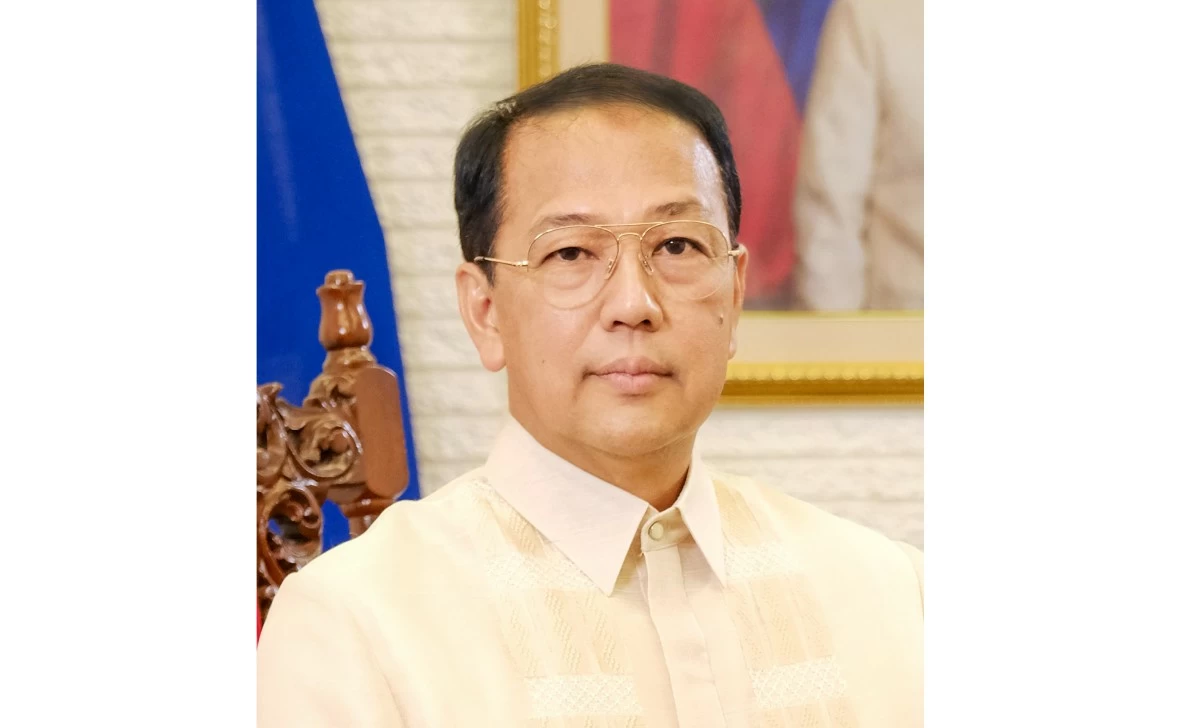
(Secretary Carlito G. Galvez, Jr. is the presidential adviser on peace, reconciliation, and unity.)
ADVERTISEMENT
.most-popular .layout-ratio{ padding-bottom: 79.13%; } @media (min-width: 768px) and (max-width: 1024px) { .widget-title { font-size: 15px !important; } }

{{ articles_filter_1561_widget.title }}

.most-popular .layout-ratio{ padding-bottom: 79.13%; } @media (min-width: 768px) and (max-width: 1024px) { .widget-title { font-size: 15px !important; } }

{{ articles_filter_1562_widget.title }}

.most-popular .layout-ratio{ padding-bottom: 79.13%; } @media (min-width: 768px) and (max-width: 1024px) { .widget-title { font-size: 15px !important; } }

{{ articles_filter_1563_widget.title }}

{{ articles_filter_1564_widget.title }}

.mb-article-details { position: relative; } .mb-article-details .article-body-preview, .mb-article-details .article-body-summary{ font-size: 17px; line-height: 30px; font-family: "Libre Caslon Text", serif; color: #000; } .mb-article-details .article-body-preview iframe , .mb-article-details .article-body-summary iframe{ width: 100%; margin: auto; } .read-more-background { background: linear-gradient(180deg, color(display-p3 1.000 1.000 1.000 / 0) 13.75%, color(display-p3 1.000 1.000 1.000 / 0.8) 30.79%, color(display-p3 1.000 1.000 1.000) 72.5%); position: absolute; height: 200px; width: 100%; bottom: 0; display: flex; justify-content: center; align-items: center; padding: 0; } .read-more-background a{ color: #000; } .read-more-btn { padding: 17px 45px; font-family: Inter; font-weight: 700; font-size: 18px; line-height: 16px; text-align: center; vertical-align: middle; border: 1px solid black; background-color: white; } .hidden { display: none; }
function initializeAllSwipers() { // Get all hidden inputs with cms_article_id document.querySelectorAll('[id^="cms_article_id_"]').forEach(function (input) { const cmsArticleId = input.value; const articleSelector = '#article-' + cmsArticleId + ' .body_images'; const swiperElement = document.querySelector(articleSelector); if (swiperElement && !swiperElement.classList.contains('swiper-initialized')) { new Swiper(articleSelector, { loop: true, pagination: false, navigation: { nextEl: '#article-' + cmsArticleId + ' .swiper-button-next', prevEl: '#article-' + cmsArticleId + ' .swiper-button-prev', }, }); } }); } setTimeout(initializeAllSwipers, 3000); const intersectionObserver = new IntersectionObserver( (entries) => { entries.forEach((entry) => { if (entry.isIntersecting) { const newUrl = entry.target.getAttribute("data-url"); if (newUrl) { history.pushState(null, null, newUrl); let article = entry.target; // Extract metadata const author = article.querySelector('.author-section').textContent.replace('By', '').trim(); const section = article.querySelector('.section-info ').textContent.replace(' ', ' '); const title = article.querySelector('.article-title h1').textContent; // Parse URL for Chartbeat path format const parsedUrl = new URL(newUrl, window.location.origin); const cleanUrl = parsedUrl.host + parsedUrl.pathname; // Update Chartbeat configuration if (typeof window._sf_async_config !== 'undefined') { window._sf_async_config.path = cleanUrl; window._sf_async_config.sections = section; window._sf_async_config.authors = author; } // Track virtual page view with Chartbeat if (typeof pSUPERFLY !== 'undefined' && typeof pSUPERFLY.virtualPage === 'function') { try { pSUPERFLY.virtualPage({ path: cleanUrl, title: title, sections: section, authors: author }); } catch (error) { console.error('ping error', error); } } // Optional: Update document title if (title && title !== document.title) { document.title = title; } } } }); }, { threshold: 0.1 } ); function showArticleBody(button) { const article = button.closest("article"); const summary = article.querySelector(".article-body-summary"); const body = article.querySelector(".article-body-preview"); const readMoreSection = article.querySelector(".read-more-background"); // Hide summary and read-more section summary.style.display = "none"; readMoreSection.style.display = "none"; // Show the full article body body.classList.remove("hidden"); } document.addEventListener("DOMContentLoaded", () => { let loadCount = 0; // Track how many times articles are loaded const offset = [1, 2, 3, 4, 5, 6, 7, 8, 9, 10]; // Offset values const currentUrl = window.location.pathname.substring(1); let isLoading = false; // Prevent multiple calls if (!currentUrl) { console.log("Current URL is invalid."); return; } const sentinel = document.getElementById("load-more-sentinel"); if (!sentinel) { console.log("Sentinel element not found."); return; } function isSentinelVisible() { const rect = sentinel.getBoundingClientRect(); return ( rect.top < window.innerHeight && rect.bottom >= 0 ); } function onScroll() { if (isLoading) return; if (isSentinelVisible()) { if (loadCount >= offset.length) { console.log("Maximum load attempts reached."); window.removeEventListener("scroll", onScroll); return; } isLoading = true; const currentOffset = offset[loadCount]; window.loadMoreItems().then(() => { let article = document.querySelector('#widget_1690 > div:nth-last-of-type(2) article'); intersectionObserver.observe(article) loadCount++; }).catch(error => { console.error("Error loading more items:", error); }).finally(() => { isLoading = false; }); } } window.addEventListener("scroll", onScroll); });

Sign up by email to receive news.