






 Business
Banking & Finance
AUB profit climbs to record ₱12.7 billion in 2025 on commercial lending growth
Business
Banking & Finance
AUB profit climbs to record ₱12.7 billion in 2025 on commercial lending growth
AUB profit climbs to record ₱12.7 billion in 2025 on commercial lending growth


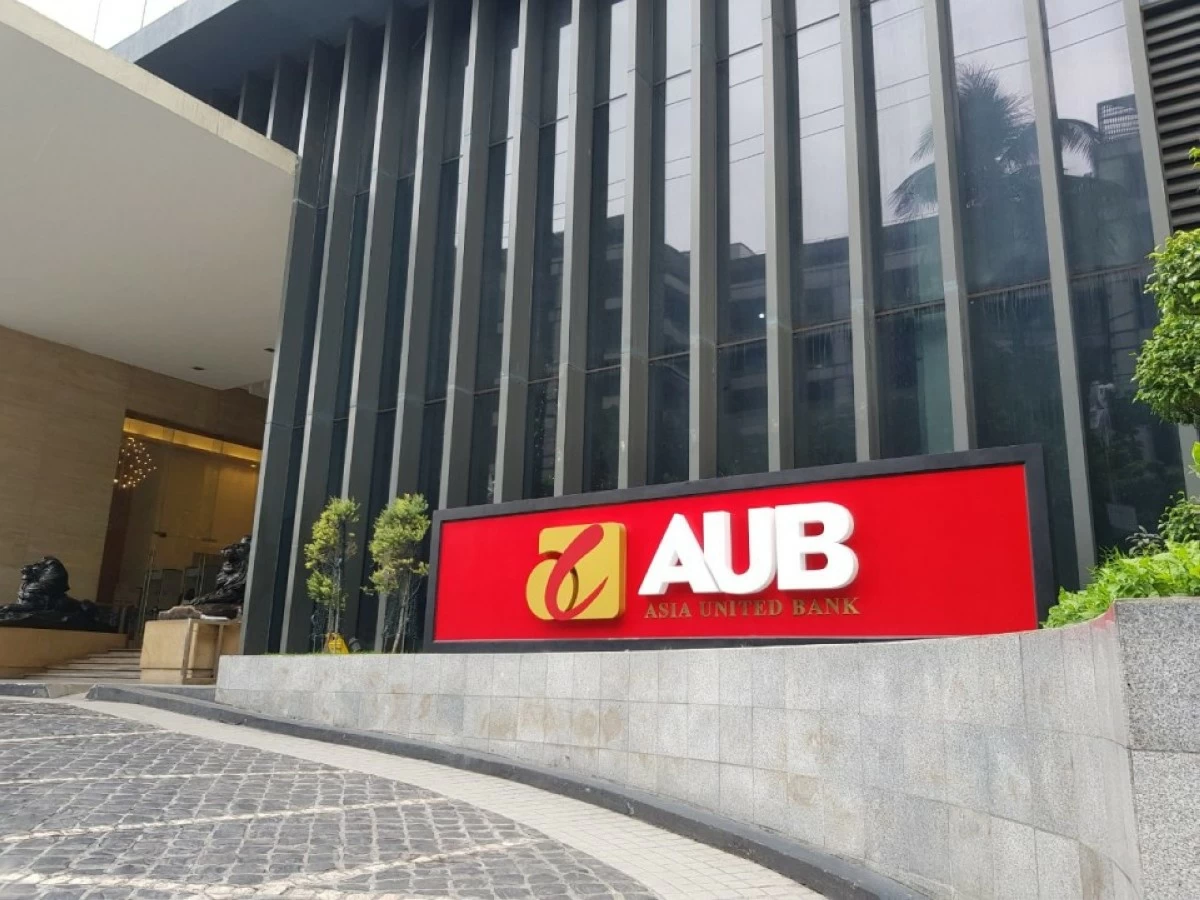
Asia United Bank (AUB) reported a 12-percent growth in unaudited consolidated net income to a record ₱12.7 billion last year, up from ₱11.4 billion in 2024, on the back of a more robust commercial lending portfolio combined with improved operational efficiency.
The bank said in a disclosure to the Philippine Stock Exchange (PSE) on Monday, Feb. 16, that this was primarily driven by a significant expansion in its combined commercial loan portfolio.
“Even as we continue to post record growth, we remain cautiously optimistic as the entire banking industry faces more intense competition from fintechs, artificial intelligence (AI) adoption, and more complex cyber threats. In addition, there are still mounting cost pressures and continuing geopolitical instability,” said AUB President Manuel A. Gomez.
He noted, however, that “growth opportunities abound for AUB, particularly in digital partnerships. It is through this that we can stay ahead of the curve by revolutionizing cross-border digital payment solutions.”
Reflecting success in deploying capital efficiently while maintaining a clean balance sheet, the bank sustained a return on equity (ROE) of 20 percent, while return on assets (ROA) stood at 3.1 percent.
Total operating income improved by nine percent to ₱23.2 billion, anchored on a 13-percent increase in total loan portfolio, which stood at ₱276 billion in 2025.
The bank saw a surge in loan availments as business confidence returned to pre-pandemic levels in 2025. This lending activity drove net interest income to ₱18.4 billion, up 10 percent from the previous year.
Low-cost current account and savings account (CASA) deposits grew 25 percent to ₱279 billion, cushioning the bank from higher funding costs and enabling it to keep its net interest margin (NIM) steady at 4.8 percent.
CASA deposits comprised 71 percent of AUB’s total deposits of ₱349 billion, which grew by 12 percent year-on-year.
Complementing its lending business, AUB’s other income increased eight percent to ₱4.8 billion, led by higher fee-based income from operational activities such as its digital payment and e-wallet services, remittance, trust, and credit card businesses.
Credit costs remained well-contained, with a non-performing loan (NPL) ratio of 0.38 percent and an NPL coverage ratio of 115 percent.
This reflects the bank’s disciplined underwriting and high-quality asset base, which further bolstered its strong income performance.
This also ensures the bank is fully prepared to absorb potential volatility, even as provisioning requirements normalize due to improved borrower behavior.
Total assets reached ₱435 billion, 13 percent higher than in 2024. Capital ratios remained robust, with common equity tier 1 (CET1) at 18.4 percent and total capital adequacy ratio (CAR) at 19.1 percent.