







The Jose de Venecia I knew
Published Feb 15, 2026 12:05 am
|
Updated Feb 14, 2026 03:56 pm


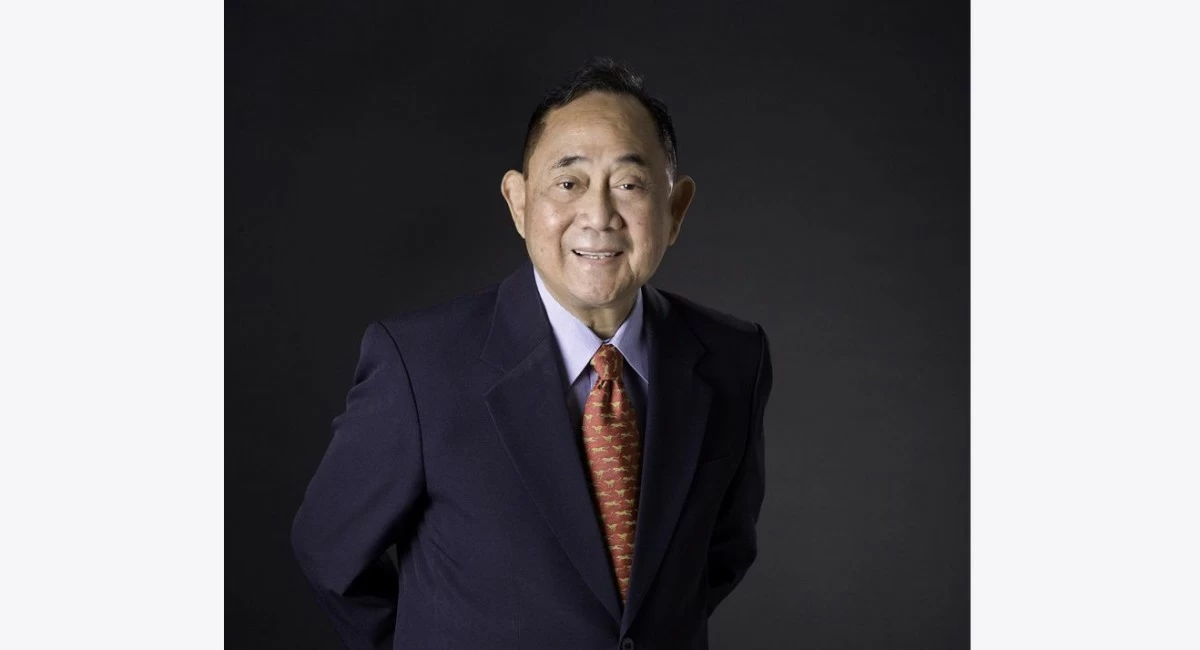
There are men whose names fill history books, and there are men whose presence fills a room. He was both. To the world, he was a statesman of stature — a five-time Speaker, a diplomat who moved among presidents, prime ministers, and royalty with ease. But to those of us who walked beside him, he was something far rarer — a man whose greatness was never loud, never self-conscious, never in need of applause.
In an age that often mistakes power for importance, he carried his influence with a kind of sacred restraint. Authority rested on his shoulders, yet it never hardened his heart. He possessed the rare gift of making others feel that they mattered — not as an obligation, but as an instinct.
It took me years to understand that what I was witnessing was not merely leadership, but character. Not performance, but principle. And it was in the smallest, most human moments — far from podiums and plenary halls — that I came to see the true measure of the man I was privileged to serve and to love like a father.
Wherever we went — before presidents, prime ministers, even royalty — he would always introduce me. He never allowed me to fade into the background. In rooms heavy with power, he made me feel seen. Not because I was important — but because, to him, every person was.
That was his quiet revolution.
He carried immense authority, yet he never made others feel small. He walked among leaders, yet he never forgot the human being beside him. From him I learned that true stature is not measured by how high you stand, but by how many you lift as you rise.
Sixteen years ago, he told me he had been invited to co-chair an international organization based in New York and Beijing devoted to combating climate change. I told him gently that climate science was not really our field. His life had been devoted to legislation, diplomacy, peace negotiations.
He listened, as he always did, without interruption. Then he said, quietly but firmly, “You are correct, Aldwin. Climate science is not our expertise. But this threatens the survival of our planet — and the human race itself.”
He paused. And I could see that familiar fire behind his calm.“When the danger is clear and present,” he continued, “you do not ask whether it is your specialization. You ask whether you can help.”
That was JDV.
He never confined himself to comfort. If humanity was at risk, he felt personally summoned. Leadership, for him, was not about titles. It was about responsibility. It was about answering the call, even when the call was heavy.
I remember a breakfast in Bangkok during the launching of the Asian Peace and Reconciliation Council, which he co-founded. Around the table were remarkable individuals — a prime minister who had once led the World Bank, a European president, a Harvard professor. Someone asked him, half in admiration and half in disbelief, whether he ever grew tired of pursuing peace at 75.
He smiled — that gentle, almost boyish smile.“Yes,” he admitted. “I do grow tired.”He spoke of the long flights, the endless meetings, the weight of negotiations that stretched into the night.
Then he said something I will never forget.“If I reach 88,” he said softly, “I would be happy to go. By then, I think I would have done my part — made at least a modest difference in the world.”
Not a grand claim. Not the language of a hero. Just a man quietly asking himself: Have I helped? Have I served? Have I loved this world enough?
On Feb. 10, 2026, he passed peacefully at 89.
When I received the news, my mind returned to that morning in Bangkok. He had said 88. He stayed one year more. It felt as though he lingered. As if he was not quite finished loving us. As if he wanted one more Christmas, one more conversation, one more embrace.
He left this world not in noise, not in spectacle, but in grace. There was no bitterness in him at the end. No fear. Only acceptance. Only peace. It was as though he had completed his work and gently set it down.
Perhaps that is the final lesson he leaves us—that a life well-lived does not beg for eternity. It simply gives, and gives, and gives, until it is time to rest.
Several years ago in Moscow, after an evening that included a dinner hosted by President Vladimir Putin and meetings with world leaders whose decisions shaped continents, we sat quietly in his hotel suite reflecting on the day.
Then his voice changed.“Aldwin,” he said softly, “years from now, I will be gone. I only have one request from you.”I tried to lighten the moment. “What is it, Sir?”
He looked at me with a seriousness that pierced my heart.“Please don’t forget to visit me in my grave.”I forced a smile. “Sir, you will live to be a hundred.”
He chuckled. But in his eyes, I saw something deeper. He was not afraid of death. Perhaps only of being forgotten.
Sir, you will never be forgotten.
History will remember the five-time Speaker. The diplomat. The bridge-builder across nations and faiths. The man who carried the Philippines onto the global stage.
But I will remember the man who believed that when humanity is in danger, you step forward, even if you are not the expert. The man who grew tired yet never stopped.
You once asked me not to forget to visit you. I will come, Sir. Not only with candles and flowers, but with stories. With gratitude. With tears. With the certainty that your life was not merely long — it was luminous.
For those of us who truly knew you, you will never be just a chapter in history. You will remain a presence in our conscience, a whisper in our better moments, a reminder that greatness is kindness, that leadership is service, and that the bravest thing a man can do is to care deeply for a world that may never fully repay him.
That is the Jose de Venecia I knew.
And I miss him already.
(The author served as a staff member — and later as special assistant — to former five-time Speaker Jose de Venecia, beginning in 1995 at the age of 20. For nearly three decades, until 2022, he accompanied and assisted Speaker De Venecia in his meetings and speaking engagements throughout the Philippines and abroad.)