






Manila Bulletin
 Business
Trade & Industry
How standardized pay is reversing the Philippine brain drain
Business
Trade & Industry
How standardized pay is reversing the Philippine brain drain
Business
Trade & Industry
How standardized pay is reversing the Philippine brain drain
How standardized pay is reversing the Philippine brain drain
Published Feb 14, 2026 07:37 am


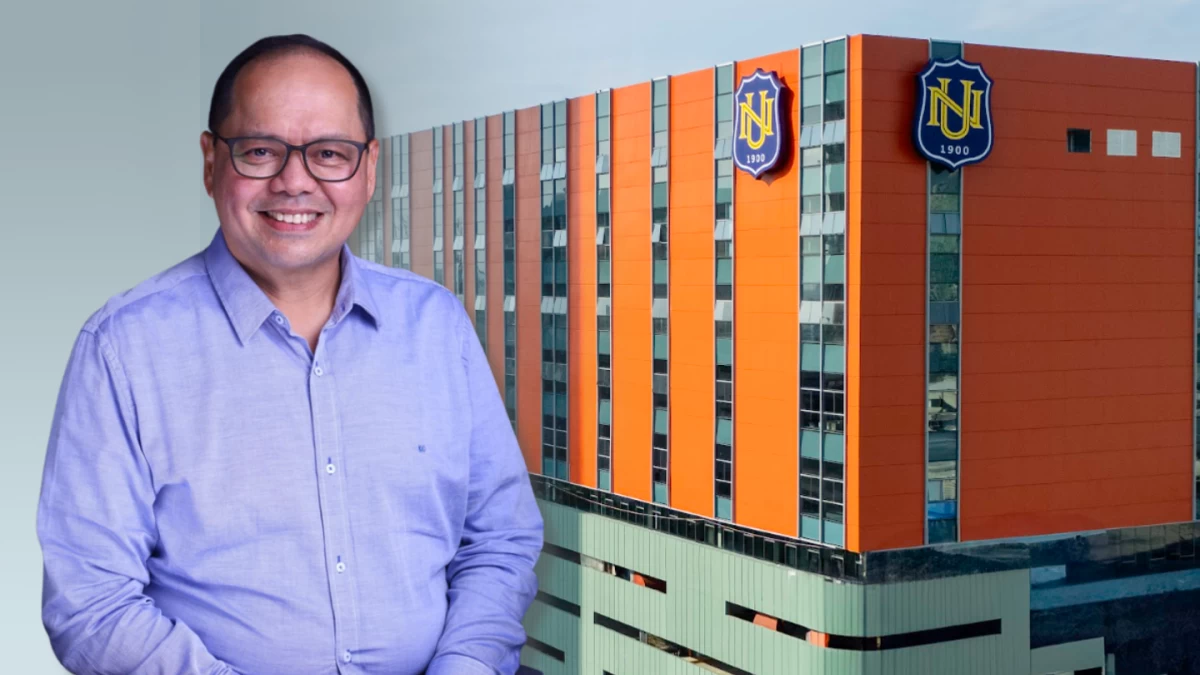
National University President and CEO Dr. Renato Carlos H. Ermita Jr. is challenging the urban-rural wage gap by implementing a standardized salary matrix across all provincial campuses. By offering capital-city compensation in regional hubs, Ermita is positioning NU as a primary catalyst for talent retention in the Philippines.
For a century and a quarter, the narrative of Philippine success followed a predictable, often exhausting map. To “make it,” the ambitious youth of the provinces—the students of Cebu, the scholars of Batangas, and the dreamers of Negros—were funneled toward the magnetic pull of Metro Manila.
This internal migration created a chronic imbalance: a capital city bursting at the seams with overpopulation and congestion, while regional centers suffered a persistent “brain drain,” losing their most educated and capable citizens to the high-rises of Makati and Taguig.
However, a shift is occurring in the architectural and economic landscape of Philippine higher education. National University (NU), an institution celebrating its quasquicentennial year, is aggressively rewriting this script.
Under the leadership of NU President and CEO Dr. Renato Carlos H. Ermita Jr., the university is not merely expanding its footprint; it is attempting to decentralize the very concept of professional opportunity. By establishing seven major campuses outside the national capital region, NU is betting that the future of the Philippine economy lies in empowering the local economy rather than further enriching the center.
A social equalizer
The core of NU’s provincial strategy is a bold departure from traditional human resource models. Typically, salary scales are adjusted downward for provincial assignments, reflecting lower cost of living. This practice, while fiscally conservative for corporations, often traps provincial talent in a cycle of lower earning potential, eventually driving them back toward Manila in search of higher wages.
NU has dismantled this barrier by implementing a standardized compensation package across its entire network. Whether an educator is standing in a classroom in the heart of Manila or in the newly minted halls of NU Bacolod, the salary matrix remains the same. This policy is a direct strike against the economic disparity that fuels regional migration.
“We bring talent back to the provinces,” Dr. Ermita explains. “NU offers a standardized salary matrix applicable to all our employees across the country. This approach has helped NU make our recruitment more appealing to applicants in provincial regions. We are not just offering a job; we are offering a career that respects the value of their expertise regardless of their geography.”
By offering “Manila rates” in cities like Lipa, Clark, and Dasmariñas, NU is doing more than just hiring; it is injecting high-velocity capital into local economies. When a professor in Laguna earns the same as their counterpart in the capital, their purchasing power within their local community is significantly higher. This creates a secondary economic boom, as that income is spent on local housing, services, and retail, reinforcing the very communities the university serves.
Statistics of localization
The success of this “hyper-local” hiring model is reflected in the university’s employment data. In NU Cebu, which opened its doors this academic year, the commitment to local talent is absolute, boasting a 100 percent local hire rate. This isn’t an anomaly but a consistent pattern across the institution’s expansion. NU Laguna maintains a 99 percent local employee base, followed closely by NU Baliwag at 98 percent and NU Lipa at 98 percent. Even in highly competitive corridors like Clark and Bacolod, the figures remain staggering at 97 percent and 96 percent, respectively.
These numbers represent a reversal of the decades-long trend of talent exportation. In the past, a top-tier academic from Bacolod would have viewed a move to Manila as a mandatory step for career advancement. Today, the 96 percent local workforce at NU Bacolod—with the remaining four percent consisting of internal transferees who chose to relocate to the Visayas—suggests that the university has become a magnet for talent that previously would have fled.
Education meets infra
National University’s expansion is inextricably linked to the broader vision of SM Prime Holdings. The university functions as a critical component of SM’s corporate social responsibility and its vision for responsible community development. Most NU campuses are located within or adjacent to SM mall complexes, a move that solves the logistical nightmares often associated with provincial education.
The integration into the SM ecosystem provides more than a physical space; it offers a prebuilt infrastructure for safety, accessibility, and convenience. Most of these mall-based campuses are situated near major transportation hubs, ensuring that students and faculty can commute safely and efficiently. This “mall-campus” hybrid model creates a secure environment that mirrors the lifestyle and safety standards of the capital while remaining deeply rooted in the provincial soil.
“NU is part of SM’s corporate social responsibility,” Dr. Ermita says. “By allowing the campus to be a part of the SM community, accessibility is achieved and affordability is maintained. It ensures that the transition to high-quality education doesn't come with the hidden costs of poor infrastructure or unsafe environments.”
Emotional economy of coming home
The economic data, while impressive, often fails to capture the human element of this decentralization. For many of NU’s leaders and faculty, the expansion has facilitated a “reverse migration.” Johanna Minglana, the Executive Director of NU Cebu, embodies this “full circle” journey. After decades of building a career in Manila while NU Cebu was still a blueprint, she returned to her birthplace to lead the new campus.
Her story is echoed by her staff. Of the 100 percent local hires in Cebu, several are “returnees” from the Manila campus, s a shift in the Filipino professional psyche. For these educators, working at NU Cebu isn’t just a job; it is an act of nation-building that keeps them rooted in the culture and values of their hometown.
“They shared how working at NU Cebu has allowed them to pursue meaningful careers without having to leave their families or communities,” Minglana says. “They speak of a better sense of purpose—being able to contribute to the development of their hometown. It’s a privilege to be part of a transformative journey that uplifts not just individuals, but entire communities.”
The university's presence acts as a catalyst for a local “micro-economy.” Beyond the faculty, the influx of thousands of students stimulates demand for boarding houses, food establishments, and retail services. The vibrancy of the local economy is heightened by the daily activities of a campus population that is ”life-ready” and competitive.