






Manila Bulletin
 Philippines
National
Electricity subsidy, solar net-metering now easier for households—Marcos
Philippines
National
Electricity subsidy, solar net-metering now easier for households—Marcos
Philippines
National
Electricity subsidy, solar net-metering now easier for households—Marcos
Electricity subsidy, solar net-metering now easier for households—Marcos
Published Feb 14, 2026 01:15 pm


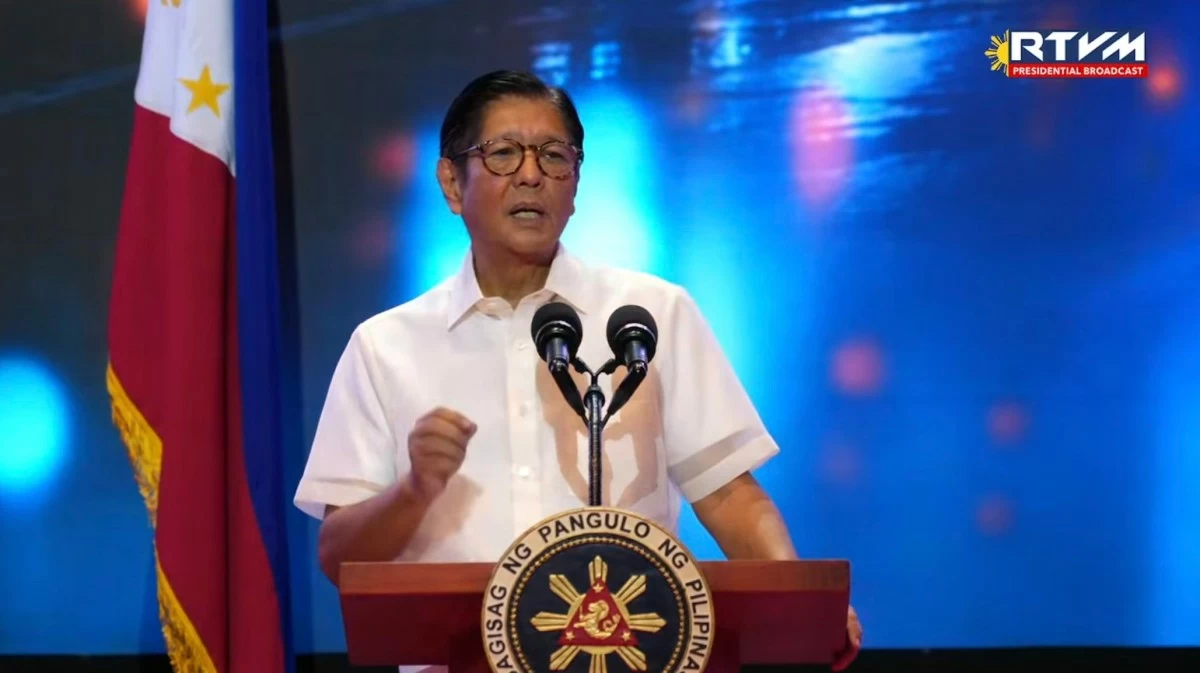
President Ferdinand 'Bongbong' Marcos Jr. (RTVM)
President Marcos announced simplified rules that will make electricity subsidies more accessible to poor households and streamline the application process for solar net-metering, allowing families to install panels and sell excess power to the grid more easily.
Speaking at the “Collective Response to Presidential Commitments in the Energy Sector” at the Meralco Theater in Ortigas on Saturday, Feb. 14, the President said the government has clarified policies and shortened procedures to ease the burden on consumers.
“Sa madaling salita: mas malinaw ang patakaran at mas mabilis ang proseso (In short: the rules are clearer and the process is faster),” he said.
“This Administration will continue to work hard and hand in hand with the private sector in crafting processes and policies that make electricity accessible, affordable, and reliable,” he added.
Automatic enrollment for 4Ps beneficiaries
The President said the Lifeline Rate Subsidy Program (LRSP), intended for low-income and marginalized households struggling to pay full electricity rates, had long been underutilized due to complicated requirements.
As of November 2025, only about 334,000 consumers were registered under the LRSP—roughly 11 percent of the estimated three million beneficiaries of the Pantawid Pamilyang Pilipino Program (4Ps).
“Ngayong buwan, ipatutupad natin, kasama ng distribution utilities o DU, ang automatic registration ng lahat ng benepisyaryo ng 4Ps sa ilalim ng LRSP (This month, together with distribution utilities, we will implement the automatic registration of all 4Ps beneficiaries under the LRSP),” Marcos declared.
“Ito ang uri ng pamahalaang ating itinataguyod. Hindi dapat ang Pilipino ang naghahabol sa tulong. Ang tulong ang dapat ang lumapit sa mga Pilipino (This is the kind of government we promote. Filipinos should not be chasing assistance. Assistance should be the one reaching out to Filipinos),” he added.
Under the revised lifeline threshold, 4Ps beneficiaries consuming 50 kilowatt-hours (kWh) or less per month will receive a 100-percent discount on their electricity bills.
Low-income households not covered by 4Ps but falling below the poverty threshold and with minimal electricity consumption may also register under the LRSP.
Faster solar net-metering process
Marcos also announced reforms to the Net-Metering Program, which allows households and businesses to install renewable energy systems, such as solar panels, and sell surplus electricity back to the grid.
Citing his personal experience, the President said the program, though in place for more than a decade, had been difficult to access due to unclear rules and limited capacity among electric cooperatives.
“Now, after sitting down with the Department of Energy (DOE) and the ERC (Energy Regulatory Commission), we have found a way to make it easier for our people to participate in the Net-Metering program,” he said.
To speed up applications, the DOE, Department of the Interior and Local Government (DILG), and Department of Public Works and Highways (DPWH) signed a Joint Memorandum Circular mandating standardized application forms and turnaround times for local government units.
The ERC also directed distribution utilities to complete the interconnection process within 20 working days from the acceptance of a letter of interest.
Meanwhile, the President said he was encouraged by the cooperation between the government and key stakeholders such as the Manila Electric Company (Meralco) in expanding electrification coverage, boosting capacity, and lowering electricity costs.
He cited projects such as the Terra Solar Project, which aims to expand renewable capacity through large-scale solar and battery storage, as well as initiatives to electrify remote communities and support net-metering and lifeline programs.