







A 1950s Pinoy ramblin' wreck
Life as a Filipino student in the US
Published Feb 14, 2026 08:43 am


At A Glance
- With stopovers in Guam, Wake Island, Honolulu, and San Francisco, it took 30-plus hours to reach Washington, DC.
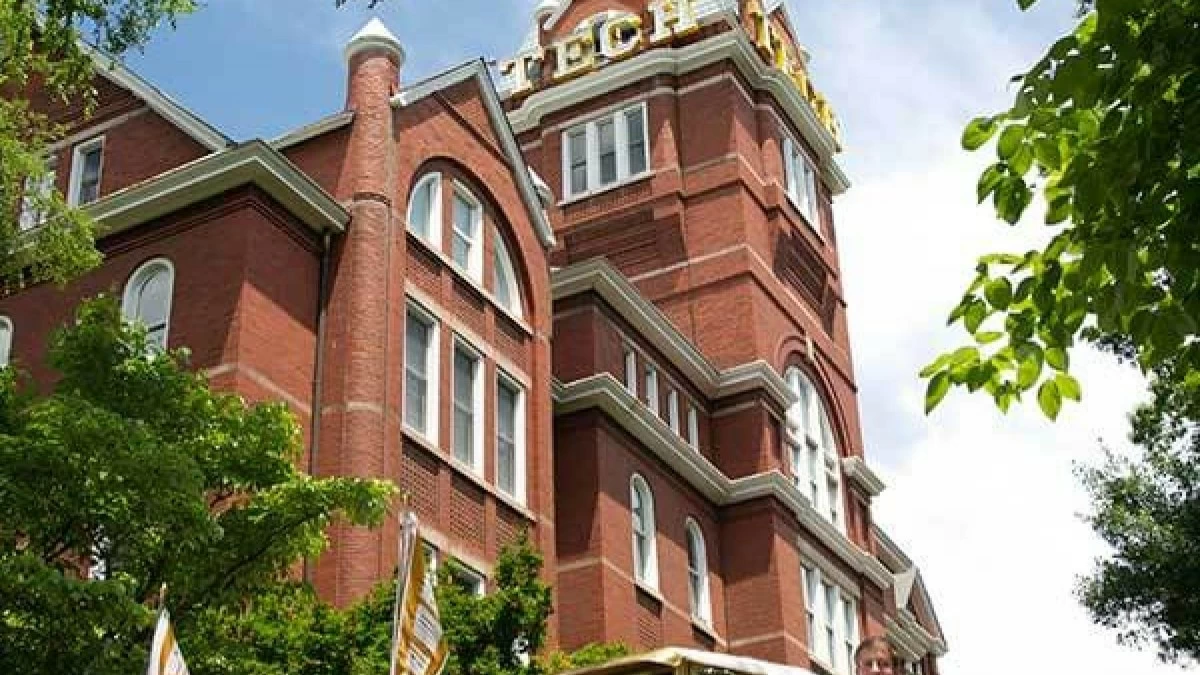
PROGRESS AND SERVICE Georgia Institute of Technology was established in 1885
Atlanta is a beautiful city, with pink and white dogwood trees in bloom and purple wisteria festooning trees during springtime. Coca-Cola and the Georgia Institute of Technology are its pride and joy, the former with its headquarters across the street from the latter, the highly regarded engineering school where Jimmy Carter, the 39th US President, studied for a couple of years.
I was a University of the Philippines (UP) assistant instructor in Business Administration in 1959 when Dean Jose E. Velmonte nominated me for a US Mutual Security Agency (MSA) training grant. I was to work for an MS in Industrial Management at Georgia Tech.
So in August 1959, I took off on a PanAm plane that still flew on propellers. With stopovers in Guam, Wake Island, Honolulu, and San Francisco, it took 30-plus hours to reach Washington, DC. MSA offices were in temporary buildings on the National Mall, where, half asleep from jet lag, I joined other grantees on an orientation program that included tours of the Capitol, White House, and Mount Vernon. Then off to Atlanta.
It took a bit of adjusting. Southern American English and Caucasian faces were new. I couldn’t understand Southern drawl, and to my innocent self, everyone looked alike, I suppose in the same way that a US Southerner who had never seen a Pinoy probably can’t tell Pedro from Juan. Anyway, I got over those and eventually mastered “y’all,” “heah,” and “hurry back.” I didn’t even try Geechee, though.
I had a small room to myself in Harrison Dorm, next door to a large room with eight massive football players. One of them warned me to keep my door locked on Friday and Saturday nights when they would return in the wee hours in spirits high enough to practice tackles with beds and lockers.
It took a while to get used to racial norms. Whites and Blacks had separate CRs. In buses, Whites were to sit in the front and Blacks in the rear. I felt awkward, of course, and played it safe, going to the Men’s Room-Colored and rear seats in buses. Both Whites and Blacks would point me to Whites-only areas. Racism was not necessarily overt or even conscious, but it ran deep. There were little slights—being ignored, treated impolitely. One just had to get used to it, keeping one's mouth shut while thinking, “White Trash.” A friend proposed me for membership at Newman House, where Catholic students could hear Mass, learn more about the faith, and meet fellow Catholics. I was rejected.
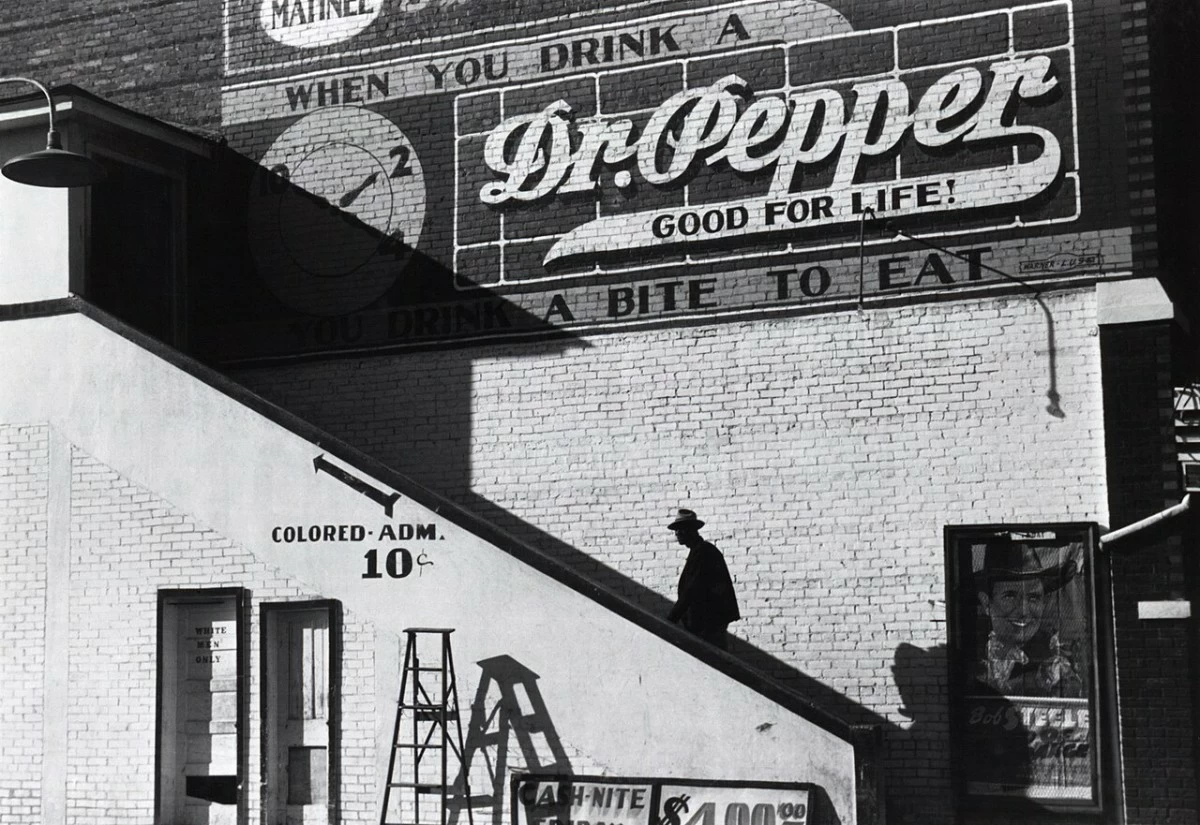
DARK PAST Segregation among white and colored people was rampant at the time
I didn’t see any Black students at Georgia Tech. A Korean and an Indian were the only foreign students I got to know. In fact, the only Filipinos I met the entire year I was in Georgia were the Rodrigos, a retired military family that lived in Athens, another city.
I too was probably a novelty to my classmates and made good friends with quite a few. Marshall Keen took me up to 3,000 feet in his two-seater plane. We also trailed the Tiger Woods of the time at the Masters Golf Tournament in Augusta. Watching balls going straight down fairways, I said to myself, “How easy,” until I couldn’t even hit the ball and broke a club on my first and only lesson. We also went fishing with small red worms. Picking one out of a cup, slimy and wriggly, and sticking a hook through the poor thing was not for me. Anyway, I didn’t catch anything.
Foreign travel was a super event in those days. I said to myself, I may never leave Quezon City again, and therefore made the most of school breaks.
For Thanksgiving weekend, family friend Joseph Slay sent me a plane ticket inviting me to visit him in San Antonio, Texas. Among other places, we went to Spanish mission churches, including the Alamo, where I learned that Texas was once called Nueva Filipinas. I returned to Atlanta via New Orleans, where I spent the day wandering around the French Quarter. A Greyhound brought me back to Atlanta, where streets were fairy caves with ice stalactites. There had been a snowfall followed by a freeze after the snow started melting. The result was magical.
I spent the year-end holidays in New York. A classmate, Peter Martelotto, invited me to ride with him to New York, where he was spending the holidays with his folks. We left Atlanta one morning and arrived at his Brooklyn home close to midnight. It was snowing. That was the first time I saw the white stuff and threw a snowball. Everything was new, skyscrapers, subway, Horn and Hardart fast food, and all the sights that I’d read about—the Statue of Liberty, the Empire State Building, the Rockefller Center, the museums on my wish list, and Times Square on New Year’s Eve where in a statistical miracle, I felt a tap on my shoulder just before the famous ball proclaimed it was 1960. It was my UP Economics professor and by then UPBA colleague, Amado A. Castro.
During spring break, I went to Chicago, passing by Indiana University in Bloomington, which my father attended the year before I was born. I had more energy than money, so the trip to and fro was again by overnight Greyhound bus.
The New York Metropolitan Opera went on tours and performed Bizet’s “Carmen” in a palatial Art Deco movie house on Peachtree Street. I thought I was being clever by signing up as an usher, but it turned out that ushers had to be in a tux. I had to rent one and could watch only while sitting in an aisle. Economizing does not always work, although I did manage to save about two grand out of a $300 monthly stipend.
As a prerequisite to graduation, I had to take science courses to make up for subjects that UP didn’t think accountants had to know. I therefore had to spend the summer term on physics. Mechanics and electricity were okay, but I got lost in thermodynamics and waves. It must have shown because on the way back to my dorm after the final exam, a passerby asked, “Who died, Buddy?” Happily, I got a C.
After all the goodbyes, I returned to Washington for exit interviews, then back to Manila and the unknown future, no longer on propellers, already on a jet.
Notes: (a) “I’m a ramblin’ wreck from Georgia Tech” is the school’s fighting song. (b) Joseph Slay was a GI who fought in the February 1945 Battle of Manila. Quarters were evidently short, and Joselph Slay stayed with us in Santa Cruz, Manila, for a while. My parents kept in touch with him long after.
Comments are cordially invited, addressed to [email protected]