







The world is running out of water, and time
Published Feb 13, 2026 01:21 pm


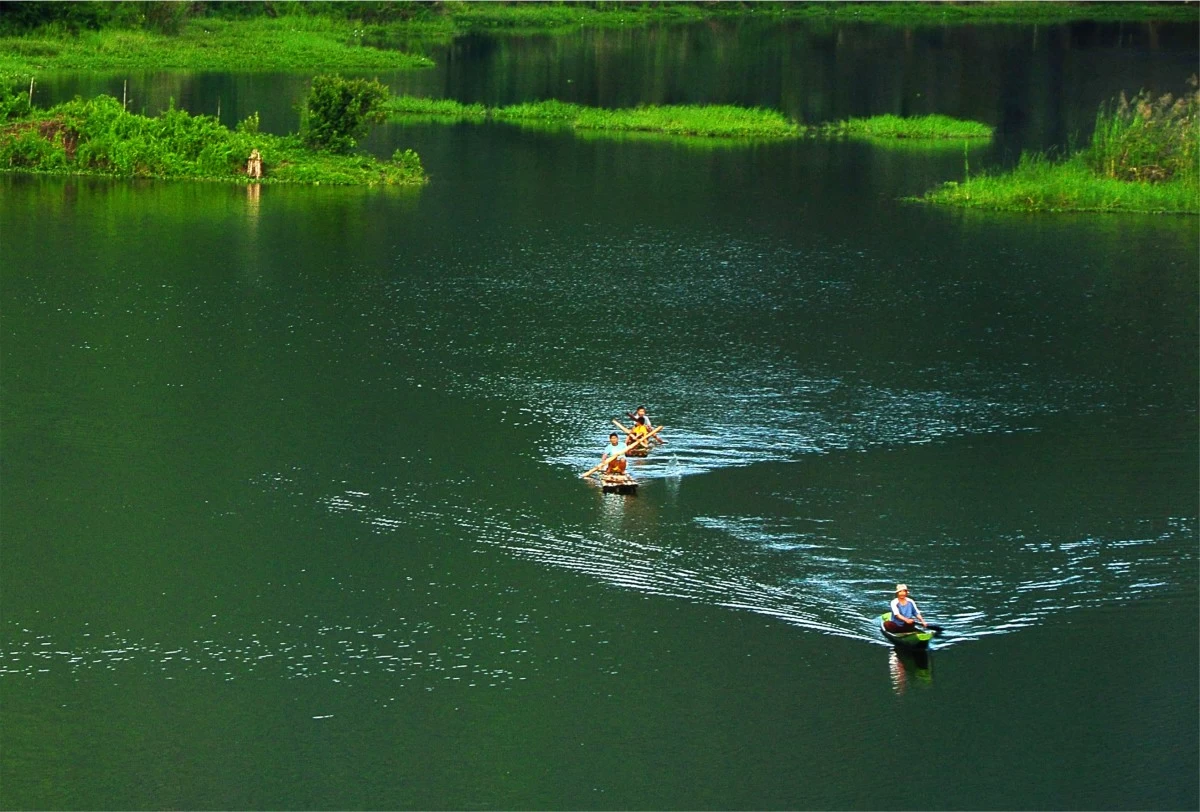
Lakes continue to recede as the dry season takes hold.
For many years, scientists, policymakers, and the media have cautioned about a “global water crisis,” suggesting a temporary disruption followed by a return to normalcy. However, what is becoming evident in numerous areas is a lasting scarcity, where water systems can no longer feasibly revert to their historical norms.
“For much of the world, ‘normal’ is gone,” said Kaveh Madani, Director of the UN University Institute for Water, Environment and Health. “This is not to kill hope but to encourage action and an honest admission of failure today to protect and enable tomorrow,” he told a press briefing in New York recently.
A new flagship report from the United Nations suggests that the world is entering a phase of global “water bankruptcy,” a situation in which water systems cannot recover from irreversible harm and depletion, typically resulting from overexploitation and environmental deterioration.
This situation, according to the UN, is marked by insolvency (withdrawing and polluting water beyond renewable inflows and safe depletion limits) and irreversibility (damage to key parts of water-related natural capital, such as wetlands and lakes, that makes restoration of the system to its initial conditions infeasible).
The world is swiftly exhausting its natural “water savings accounts,” the study indicated. Since the early 1990s, over half of the world’s large lakes have experienced a decline, while approximately 35 percent of natural wetlands have disappeared since 1970, according to Madani.
The impact on human life is already considerable, the UN study said. Almost 75 percent of the global population resides in nations categorized as water-insecure or critically water-insecure.
Approximately four billion individuals face extreme water scarcity for at least one month each year, and the financial repercussions of drought are estimated to reach $307 billion annually, the UN said.
“If we persist in treating these failures as temporary ‘crises’ with short-term solutions, we will merely exacerbate the ecological harm and incite social conflict,” Madani cautioned.
In Asia, the water crisis is more pronounced than in other continents. “Asia has 60 percent of the world’s population, but only 36 percent of the renewable water supply,” said Sandra Postel, director of the Massachusetts-based Global Water Policy Project, a group seeking to conserve fresh water.
A case in point is the Philippines, home to more than 100 million people. Although the country is surrounded by water, the water crisis is already evident, especially during summer and during droughts caused by the El Niño phenomenon.
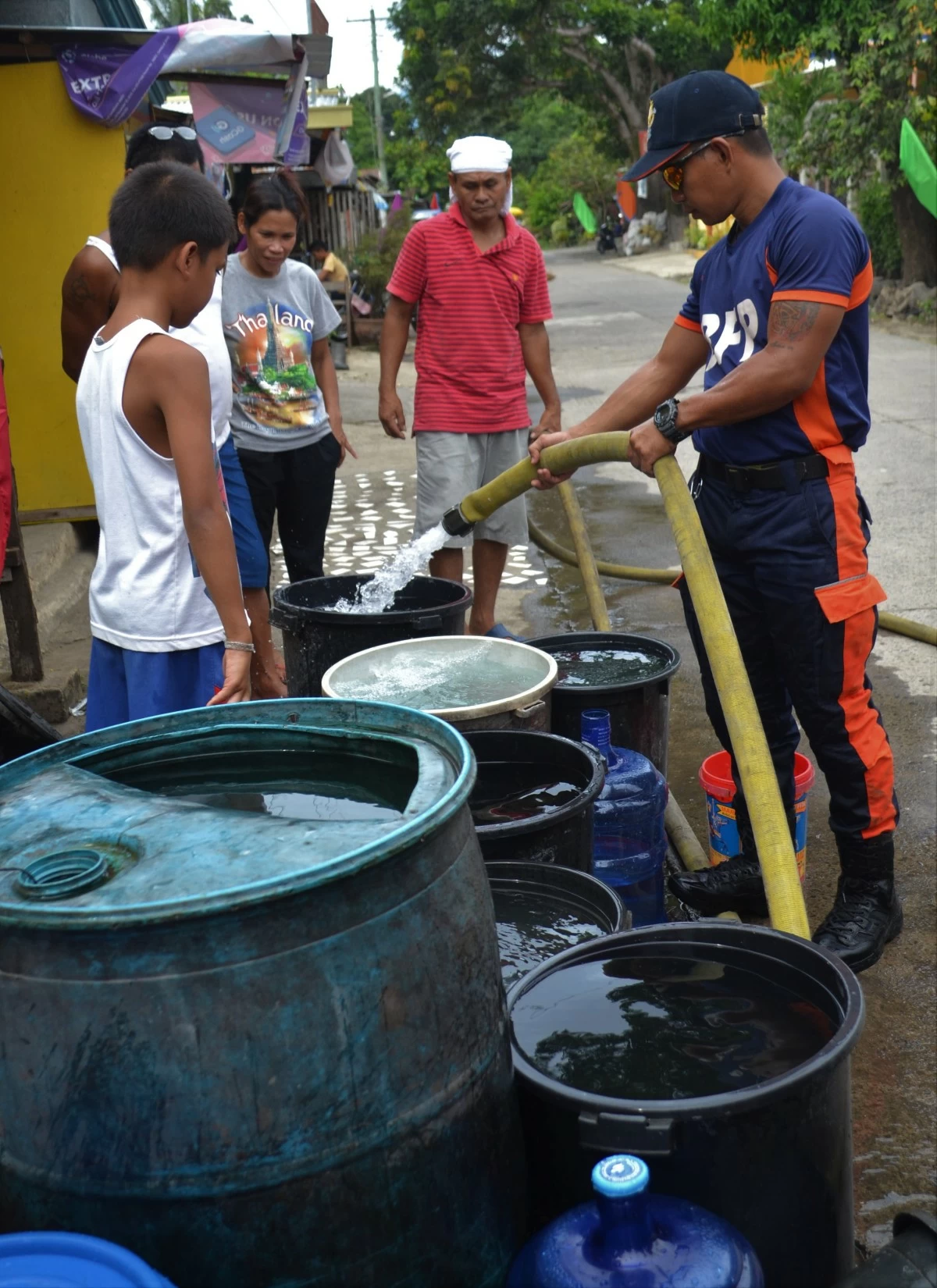
With no water coming from faucets, rationing becomes the only option.
Take the case of Metro Manila. On March 6, 2019, about 10,000 households across Metro Manila started to lose their water supply. Five days later, the water level in La Mesa Dam – which supplies most of the water needs of the metropolis – reached 68.93 meters above sea level (masl), below its critical level of 69 masl.
“For many residents in Metro Manila, coping with a ‘water supply crisis’ has been part of their daily woes for years,” stated the IBON Foundation, a non-profit research, education, and information development institution.
Even when water is available, a crucial question remains: Is it safe to drink? Once the water coming out of the faucet is discolored, it’s not fit to drink. A study by the Department of Science and Technology revealed that some spring water sources are not potable because they contain coliforms, Escherichia coli, and other bacteria.
Detractors of mineral water say it is not safe for drinking because “it may block the vascular system of the body.” As for distilled water, it is also “not good to drink” because “it may cause cancer,” according to a mineral water manufacturer.
“The Philippines will likely experience severe water shortage by 2040 due to the combined impact of rapid population growth and climate change,” predicted the Washington, D.C.-based World Resources Institute (WRI).
Of the 167 countries surveyed by WRI, the Philippines ranked 57th among those highly vulnerable to severe water shortage. In Southeast Asia, the Philippines ranked second lowest in terms of per capita water availability per year, with only 1,907 cubic meters.
Most of those affected are in highly urbanized areas. Even before the WRI survey, a study conducted by the Japan International Cooperation Agency identified at least nine major cities as “water-critical areas.” These were Metro Manila, Metro Cebu, Baguio, Angeles, Bacolod, Iloilo, Cagayan de Oro, Davao, and Zamboanga.
The situation is nothing new. At the beginning of the 21st century, the world was already facing a serious water crisis. All signs suggest it is getting worse and will continue to do so unless corrective action is taken soon.
“Today, we withdraw water far faster than it can be recharged – unsustainably mining what was once a renewable resource,” said Janet Abramovitz, a researcher at the Washington, D.C.-based Worldwatch Institute.
“Water, not oil, is the most precious fluid in our lives, the substance from which all life on Earth has sprung and continues to depend,” wrote Maryann Bird in a Time feature.
Water is even more expensive than gold. “Water is worth more than gold and necessary for survival above all other resources on Earth,” a feature in South Review pointed out.
If the world runs out of oil and other fossil fuels, there are alternative energy sources. People can live without gold. But without water, the world is doomed.
“I do not want to be called the Prophet of Doom, but it pays to listen to concerned quarters who have been warning us that one of the fiercest battles in the future is over water,” said then-Senator Franklin M. Drillon during the First International River Summit held in Iloilo City in 2012.
Although water is a renewable resource, it is also finite. Less than three percent of the world’s water is fresh, and more than 75 percent of this is frozen – mainly at the North and South Poles. Of the remaining freshwater available for human use, 98 percent lies underground.
“Put in another way, if all the Earth’s water were to fit in a gallon jug (4 liters), the available freshwater would be just over one tablespoon,” explains the UN Food and Agriculture Organization (FAO).
Water is finite. “World demand for water doubles every 21 years, but the volume available is the same as it was in Roman times,” observes Sir Crispin Tickell, former British ambassador to the United Nations and one of the organizers of the 1992 Earth Summit. “Something has got to give.”
Around the globe, water tables are falling, underground aquifers are being depleted, lakes are shrinking, and wetlands crucial to the survival of plants and wildlife are drying up. Despite all these, the international community has largely ignored the signs.
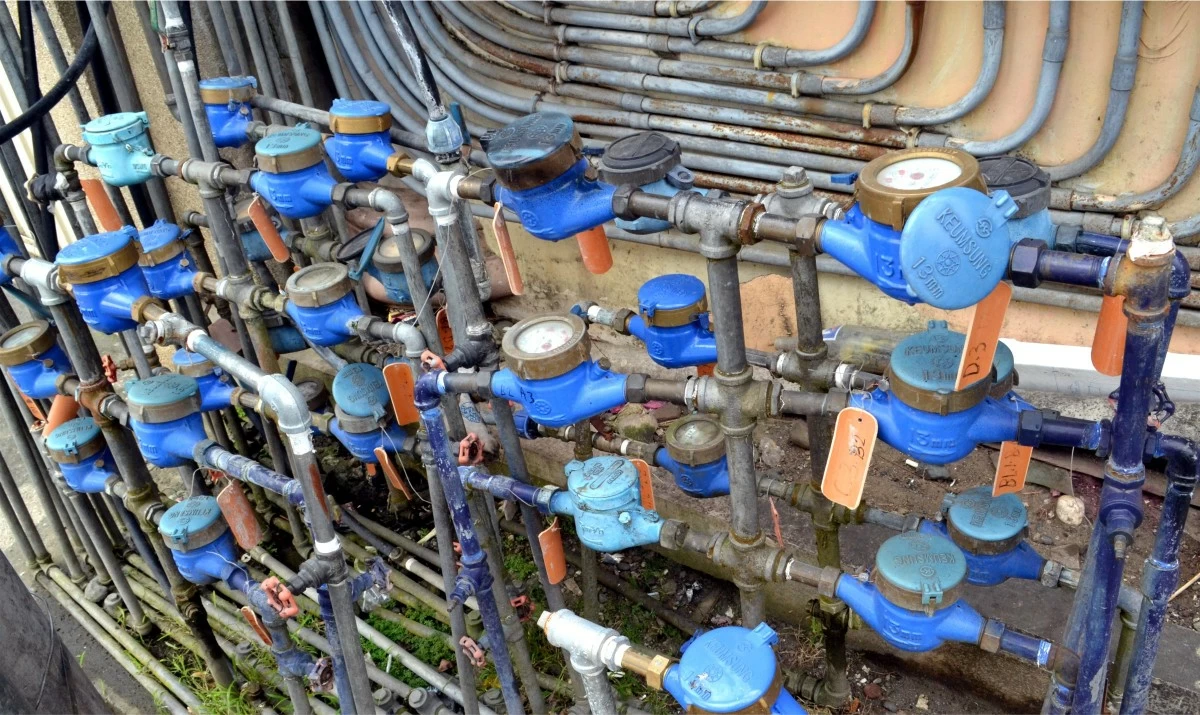
More water meters, but is there enough water to fill them?
Water is used in different ways. Domestically, it is utilized by households for drinking, washing, bathing, cooking, watering gardens, and other household needs. A household of five needs at least 120 liters of water per day to meet basic needs, the Worldwatch Institute said.
“A person can survive only three to five days without water; in some cases, people have survived for an average of one week,” says the website thewaterpage.com. “Once the body is deprived of fluids, the cells and organs begin to deteriorate. The presence of water in the body could mean the difference between life and death.”
“No water, no life,” writes Dr. Willie T. Ong in his book, How to Live Longer. “Our bodies are made up mostly of water. The brain contains 74 percent water; blood contains 83 percent; lean muscle has 75 percent, and bone has 22 percent.”
Water is also used for industrial purposes – in factories, industrial plants, and mines, including as an ingredient in finished products. It is likewise needed for recreational activities such as swimming pools, water skiing, golf courses, and similar facilities in resorts.
Agriculture, however, is the biggest consumer of water. “The challenge is not to get enough water to drink, but to get enough water to produce food,” said Lester R. Brown, president of the Washington, D.C.-based Earth Policy Institute. “We drink, in one form or another, perhaps four liters of water per day. But the food we consume each day requires 2,000 liters of water to produce — 500 times as much.”
Data presented by former Agriculture Secretary William Dar during a World Water Day summit showed agriculture accounts for 80 percent of water usage in the country. By 2025, water demand may increase to 72,973 million cubic meters.
For domestic and municipal uses, water demand by 2025 is expected to reach 8,573 million cubic meters, while industrial demand is projected at 4,997 million cubic meters.
Back in 1746, American statesman Benjamin Franklin said: “When the well’s dry, we know the worth of water.”