ADVERTISEMENT

DepEd textbook delivery faces regional gaps; experts call for local publishing expansion

Geographic imbalance in the Philippines' publishing industry delays textbooks for millions of students

Published Feb 13, 2026 05:08 pm
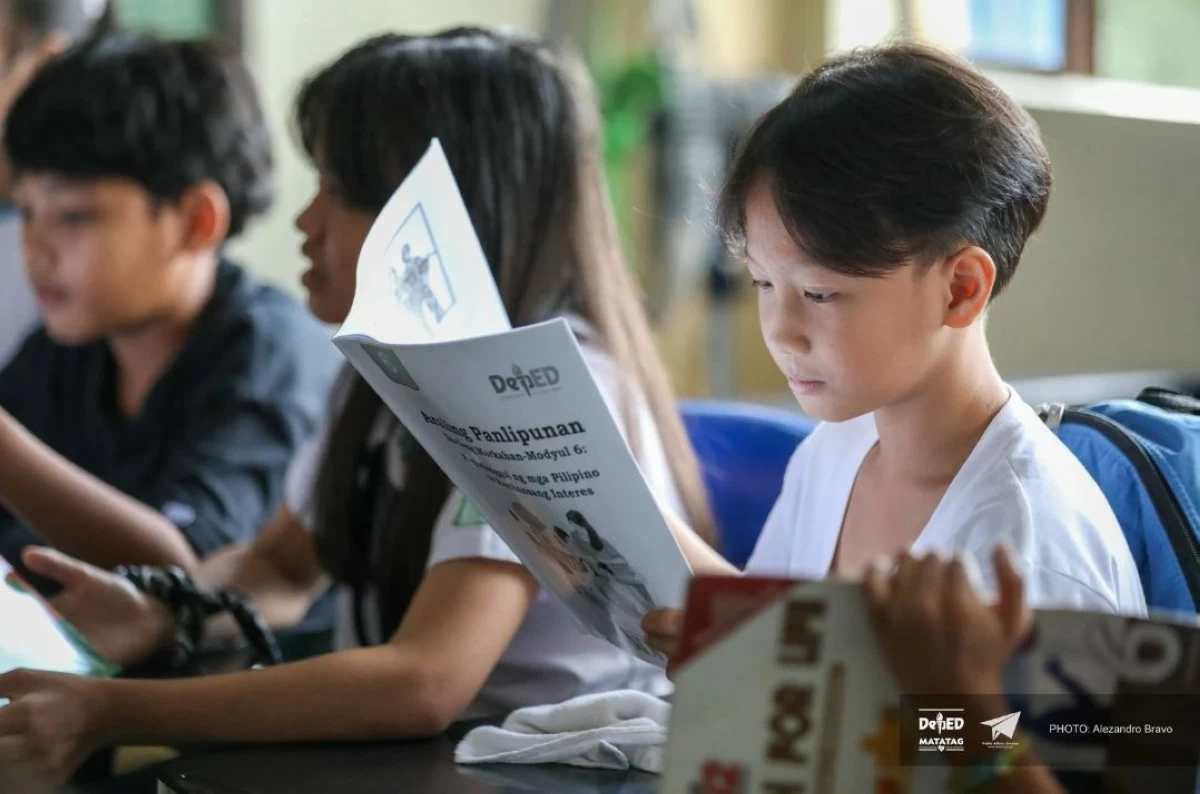
Experts call for expanded local publishing to guarantee every Filipino student receives textbooks, highlighting regional solutions to support the reforms of the Department of Education (DepEd). (DepEd file photo)
The Department of Education (DepEd) faces delays in delivering textbooks to millions of students due to regional gaps in the Philippines’ publishing industry, prompting experts to call for expanded local publishing.
In a statement released on Friday, February 13, the Second Congressional Commission on Education (EDCOM II) highlighted a “critical geographic imbalance” in the nation’s publishing industry, which continues to delay the distribution of learning materials to millions of students and risks undermining recent administrative gains in the education sector.
Geographic imbalance in publishing highlighted
EDCOM II commended DepEd for breaking the decade-long gridlock in textbook procurement.
In 2024 alone, DepEd delivered over 87 million textbooks and procured more than 100 new titles—a stark contrast to the 27 titles procured over the entire preceding decade.
Early Procurement Activities (EPA) reforms also reduced the procurement timeline from 210 to just 60 days.
Yet a study by the Philippine Institute for Development Studies (PIDS), “DepEd’s Book Supply Chain: Issues, Challenges, and Ways Forward,” cautioned that further reforms are needed to address gaps in the supply chain.
As cited by EDCOM II, the study highlights that textbook production remains heavily concentrated in Luzon, leaving vast areas of the Visayas and Mindanao with virtually no local publishing capacity.
Most northern Visayas provinces have zero publishing enterprises, while the entire Mindanao region hosts only a handful of publishers and printers, the study added.
Legal mandates and structural challenges
Under Republic Act 8047, the National Book Development Board (NBDB) was created to develop and support a robust local publishing industry.
Despite this, EDCOM II pointed out that nearly 30 years later, the industry remains concentrated: in the latest DepEd bidding, only 10 publishers won all 60 lots, revealing structural barriers to broader participation.
EDCOM II also noted that the lack of regional capacity forces textbooks through long, multi-stage logistics chains, often crossing multiple islands and becoming vulnerable to weather and port delays.
A 2024 EDCOM II-commissioned study also found that delivery times could stretch from 10 months to as long as 14 months in some cases.
EDCOM II Executive Director Dr. Karol Mark Yee emphasized that fulfilling the mandates of RA 8047 is essential for functional literacy.
“The role of NBDB in helping us address this literacy crisis is fundamental: first, in ensuring that all Filipinos have ‘adequate, affordable, and accessible supply of books,’ and second, that we are able to support ‘indigenous authorship and of translations among various language groups in the country’ — these two mandates are essential so that our learners not only have access to quality books, but especially for our youngest children, are in their mother tongues,” Yee said.
Toward a 1:1 Textbook-to-student ratio
EDCOM II’s National Education Plan (NatPlan) targets a 1:1 textbook-to-student ratio for all elementary learners by 2028, covering the projected 14.7 million students, and sustaining this standard through 2031 and 2035.
The plan also ensures that updated materials are delivered according to DepEd’s five-year cycle, with regional publishing hubs playing a central role in meeting these goals.
EDCOM II urges NBDB to work closely with DepEd to prioritize learner needs, streamline book supply chains, and support quality local publishers, ensuring textbooks are accessible nationwide.
“Moving forward, we urge the NBDB to work closely with DepEd, so that learner needs are prioritized strategically, book supply chains are fixed, and quality local books and publishers are supported and are accessible in every part of our country,” Yee said. 

Related Tags

DepEd DepEd textbook delivery local publishing Philippines textbook shortages regional education gaps Philippine education reform EDCOM II
ADVERTISEMENT
.most-popular .layout-ratio{ padding-bottom: 79.13%; } @media (min-width: 768px) and (max-width: 1024px) { .widget-title { font-size: 15px !important; } }

{{ articles_filter_1561_widget.title }}

.most-popular .layout-ratio{ padding-bottom: 79.13%; } @media (min-width: 768px) and (max-width: 1024px) { .widget-title { font-size: 15px !important; } }

{{ articles_filter_1562_widget.title }}

.most-popular .layout-ratio{ padding-bottom: 79.13%; } @media (min-width: 768px) and (max-width: 1024px) { .widget-title { font-size: 15px !important; } }

{{ articles_filter_1563_widget.title }}

{{ articles_filter_1564_widget.title }}

.mb-article-details { position: relative; } .mb-article-details .article-body-preview, .mb-article-details .article-body-summary{ font-size: 17px; line-height: 30px; font-family: "Libre Caslon Text", serif; color: #000; } .mb-article-details .article-body-preview iframe , .mb-article-details .article-body-summary iframe{ width: 100%; margin: auto; } .read-more-background { background: linear-gradient(180deg, color(display-p3 1.000 1.000 1.000 / 0) 13.75%, color(display-p3 1.000 1.000 1.000 / 0.8) 30.79%, color(display-p3 1.000 1.000 1.000) 72.5%); position: absolute; height: 200px; width: 100%; bottom: 0; display: flex; justify-content: center; align-items: center; padding: 0; } .read-more-background a{ color: #000; } .read-more-btn { padding: 17px 45px; font-family: Inter; font-weight: 700; font-size: 18px; line-height: 16px; text-align: center; vertical-align: middle; border: 1px solid black; background-color: white; } .hidden { display: none; }
function initializeAllSwipers() { // Get all hidden inputs with cms_article_id document.querySelectorAll('[id^="cms_article_id_"]').forEach(function (input) { const cmsArticleId = input.value; const articleSelector = '#article-' + cmsArticleId + ' .body_images'; const swiperElement = document.querySelector(articleSelector); if (swiperElement && !swiperElement.classList.contains('swiper-initialized')) { new Swiper(articleSelector, { loop: true, pagination: false, navigation: { nextEl: '#article-' + cmsArticleId + ' .swiper-button-next', prevEl: '#article-' + cmsArticleId + ' .swiper-button-prev', }, }); } }); } setTimeout(initializeAllSwipers, 3000); const intersectionObserver = new IntersectionObserver( (entries) => { entries.forEach((entry) => { if (entry.isIntersecting) { const newUrl = entry.target.getAttribute("data-url"); if (newUrl) { history.pushState(null, null, newUrl); let article = entry.target; // Extract metadata const author = article.querySelector('.author-section').textContent.replace('By', '').trim(); const section = article.querySelector('.section-info ').textContent.replace(' ', ' '); const title = article.querySelector('.article-title h1').textContent; // Parse URL for Chartbeat path format const parsedUrl = new URL(newUrl, window.location.origin); const cleanUrl = parsedUrl.host + parsedUrl.pathname; // Update Chartbeat configuration if (typeof window._sf_async_config !== 'undefined') { window._sf_async_config.path = cleanUrl; window._sf_async_config.sections = section; window._sf_async_config.authors = author; } // Track virtual page view with Chartbeat if (typeof pSUPERFLY !== 'undefined' && typeof pSUPERFLY.virtualPage === 'function') { try { pSUPERFLY.virtualPage({ path: cleanUrl, title: title, sections: section, authors: author }); } catch (error) { console.error('ping error', error); } } // Optional: Update document title if (title && title !== document.title) { document.title = title; } } } }); }, { threshold: 0.1 } ); function showArticleBody(button) { const article = button.closest("article"); const summary = article.querySelector(".article-body-summary"); const body = article.querySelector(".article-body-preview"); const readMoreSection = article.querySelector(".read-more-background"); // Hide summary and read-more section summary.style.display = "none"; readMoreSection.style.display = "none"; // Show the full article body body.classList.remove("hidden"); } document.addEventListener("DOMContentLoaded", () => { let loadCount = 0; // Track how many times articles are loaded const offset = [1, 2, 3, 4, 5, 6, 7, 8, 9, 10]; // Offset values const currentUrl = window.location.pathname.substring(1); let isLoading = false; // Prevent multiple calls if (!currentUrl) { console.log("Current URL is invalid."); return; } const sentinel = document.getElementById("load-more-sentinel"); if (!sentinel) { console.log("Sentinel element not found."); return; } function isSentinelVisible() { const rect = sentinel.getBoundingClientRect(); return ( rect.top < window.innerHeight && rect.bottom >= 0 ); } function onScroll() { if (isLoading) return; if (isSentinelVisible()) { if (loadCount >= offset.length) { console.log("Maximum load attempts reached."); window.removeEventListener("scroll", onScroll); return; } isLoading = true; const currentOffset = offset[loadCount]; window.loadMoreItems().then(() => { let article = document.querySelector('#widget_1690 > div:nth-last-of-type(2) article'); intersectionObserver.observe(article) loadCount++; }).catch(error => { console.error("Error loading more items:", error); }).finally(() => { isLoading = false; }); } } window.addEventListener("scroll", onScroll); });

Sign up by email to receive news.