






Manila Bulletin
 Philippines
National
Anti-Political Dynasty Law needs poll campaign finance reforms to succeed--Adiong
Philippines
National
Anti-Political Dynasty Law needs poll campaign finance reforms to succeed--Adiong
Philippines
National
Anti-Political Dynasty Law needs poll campaign finance reforms to succeed--Adiong
Anti-Political Dynasty Law needs poll campaign finance reforms to succeed--Adiong
Published Feb 13, 2026 10:12 am


At A Glance
- CARMONA CiTY, Cavite--Lanao del Sur 1st district Rep. Zia Alonto Adiong says that election campaign finance reforms are needed to achieve the broader purpose of the Anti-Political Dynasty Law, which is to widen political participation among Filipinos.
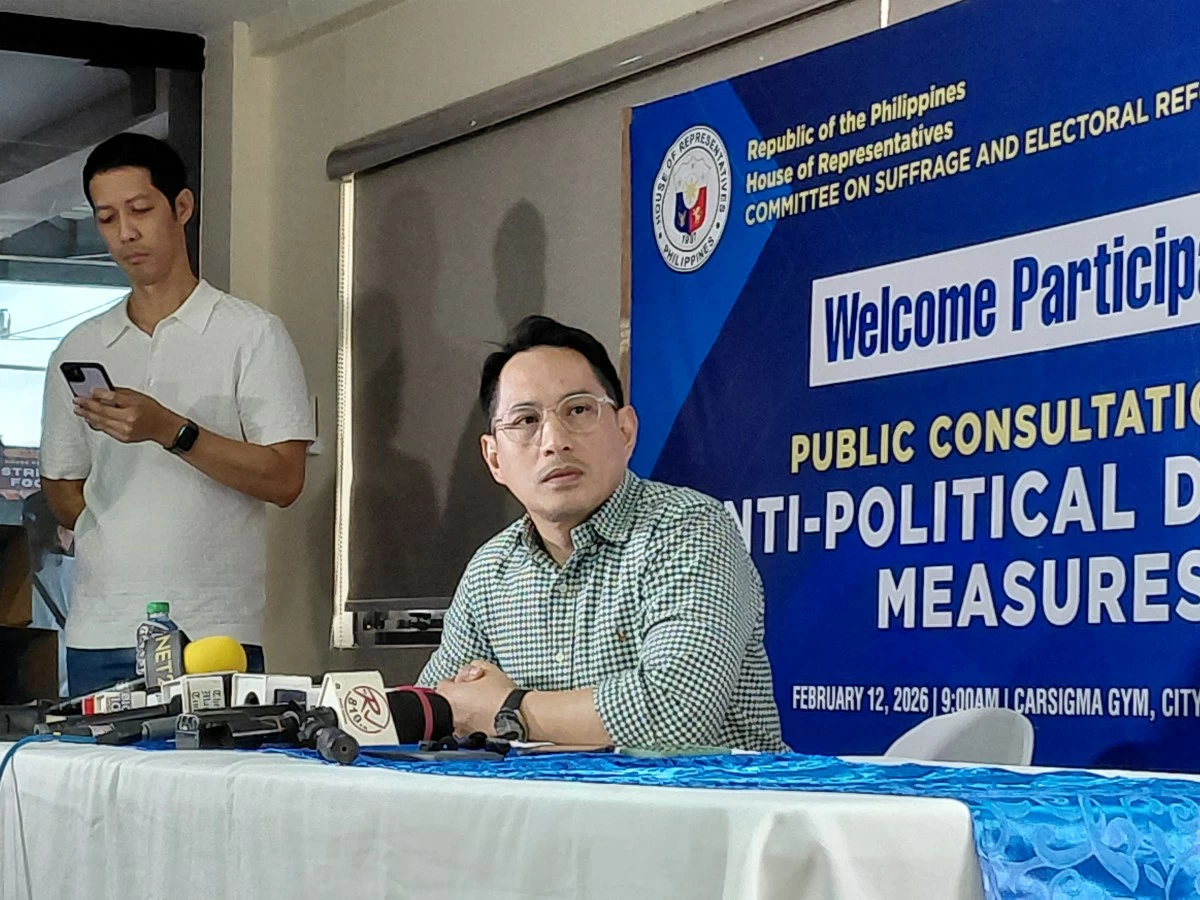
Lanao del Sur 1st district Rep. Zia Alonto Adiong (Ellson Quismorio/ MANILA BULLETIN)
CARMONA CiTY, Cavite--Lanao del Sur 1st district Rep. Zia Alonto Adiong says that election campaign finance reforms are needed to achieve the broader purpose of the Anti-Political Dynasty Law, which is to widen political participation among Filipinos.
Speaking in a press conference Thursday afternoon, Feb. 12 following the conduct of public consultations here, Adiong said that banning political dynasties is only “one step” toward improving the country’s political system.
“The anti-political dynasty [bill] is not a stand-alone solution if we talk about widening the access for political participation. It should be paired with campaign finance," Adiong said.
"We should also review our campaign finance because we are talking of resources that would give due advantage to a certain politician who has so many resources over that of a candidate with no resources at all,” he explained.
Adiong said reforming campaign finance rules was crucial to leveling the playing field, as he noted that access to resources often determines who can realistically run for office.
He said that if the country wants a more mature political system, lawmakers must revisit other laws to improve not only the electoral process but also the overall quality of politics, including strengthening electoral education, improving civic maturity and reinforcing the party system.
Adiong said Congress must also take up other reform measures, including proposals under the Legislative-Executive Development Advisory Council (LEDAC) such as amendments to the Party-list Act and the proposed Anti-Turncoatism Act.
Moreover, Adiong said the legislature should also revisit the decades-old Omnibus Election Code to modernize election rules.
“I think it is also high time we visit ‘yung Omnibus Election Code. We have to update the electoral system and that also includes our campaign financing,” he said.
The event here marked the first of three regional consultations on 24 anti-political dynasty bills filed in the 20th Congress and referred to the Committee on Suffrage and Electoral Reforms. Adiong chairs the committee.
Adiong said the committee heard various positions from stakeholders and organizations during what he described as a “lively discussion" during the discourse at Carsigma Gym here.
“Definitely, they would be part of our basis to approach on how we provide legal definition on what really constitute political dynasty in this country,” Adiong said.
Adiong said lawmakers must determine the degree of civil relationship to be covered in order to strike a balance between concerns that some local governments are effectively run by certain political families and the constitutional mandate to prohibit political dynasties during elections.
He said the debate now centers on how far the prohibition should extend in terms of consanguinity.
“I guess the way to settle it to probably define and determine the degree of civil relationship,” Adiong pointed out.
“Now, the debate boils down to the issue of whether anti-political dynasty provision in the Constitution would translate to fourth degree. Would that be a fourth degree prohibition or would that be only second degree prohibition? I think that’s the way to balance that out.”