ADVERTISEMENT

Italy approves new migration bill including powers to impose 'naval blockades' on migrant ships

Published Feb 12, 2026 12:21 pm
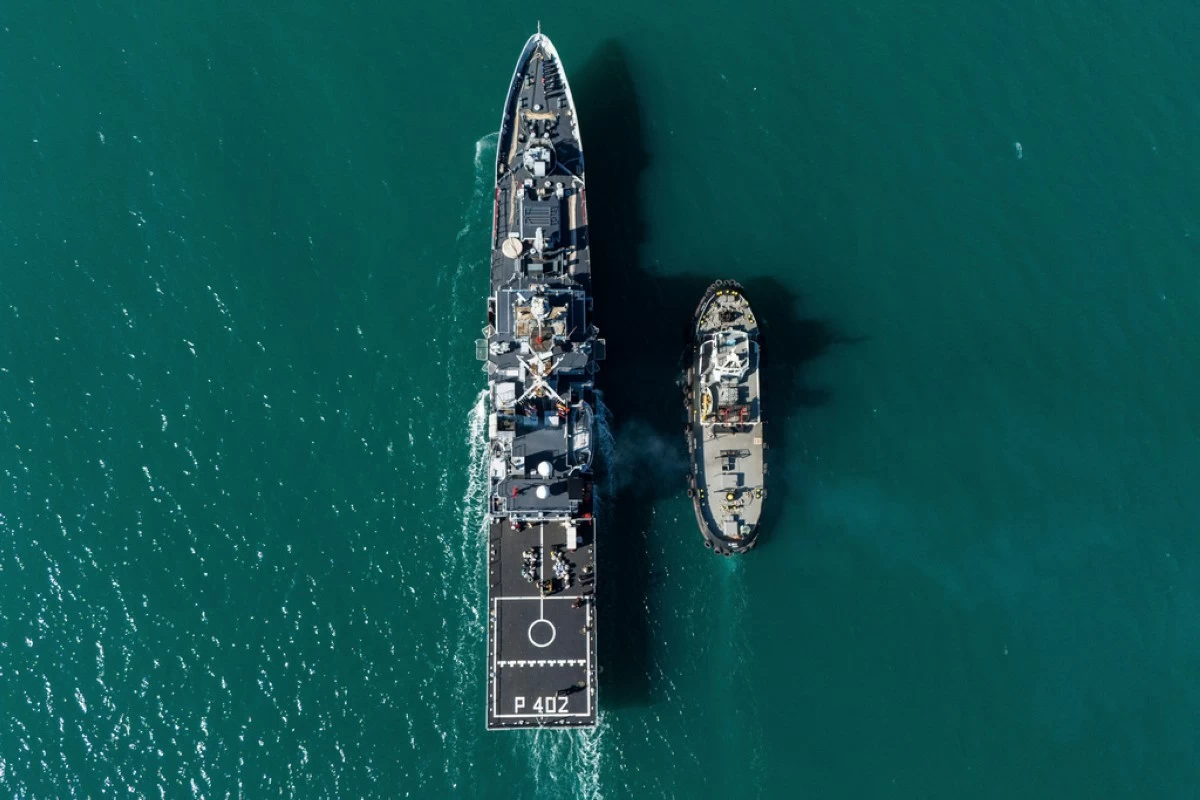
The Italian navy ship Libra approaches port as Italian authorities transfer 40 migrants with no permission to remain in the country to Italian-run migration detention centers in Albania, in Shengjin, Albania, April 11, 2025. (AP Photo/Vlasov Sulaj, File)
ROME (AP) — Italy’s conservative government led by Premier Giorgia Meloni on Wednesday approved a bill introducing new measures aimed at fighting illegal immigration, including a so-called “naval blockade” for migrant ships trying to reach Italian shores.
A cabinet meeting in the late afternoon gave the go-ahead to the bill, which now needs to be discussed and approved in both chambers of parliament before becoming effective.
Italy’s new migration package — which also includes stricter surveillance at borders and cooperation with European agencies — comes a day after the approval of the new EU pact on migration and asylum, which Rome plans to implement swiftly.
The package includes new powers that would enable Italian authorities to impose a naval blockade on migrant ships trying to enter Italy’s territorial waters, under certain conditions.
Authorities can ban the crossing into Italian waters for up to 30 days, in cases in which the migrant ship poses “serious threats to public order or national security,” as in the concrete risk of terrorist acts or terrorist infiltration, the bill says. The blockade is extendable up to a maximum of six months.
It would also be possible to stop the ships from entering Italian waters in the case of a drastic influx in migrants that could jeopardize the secure management of borders.
Those violating the rules would face fines of up to 50,000 euros ($59,400) and would see their boats confiscated in the case of repeated violations, a measure that seems to target humanitarian rescue ships.
In those cases, the intercepted migrants could be “transported to third countries other than their country of origin, with which Italy has entered into specific agreements,” the bill says.
Under those rules, the Meloni government aims at restarting offshore processing hubs similar to the two controversial ones created in Albania, which have been substantially inactive for about two years due to legal hurdles.
These centers — a major effort by the Meloni government to manage migration flows — have constantly sparked debates about their legality and efficacy, raising strong opposition from humanitarian groups.
The Italian bill's approval comes after European lawmakers on Tuesday voted to approve new immigration policies that allow nations to deny asylum and deport migrants because they either hail from a country designated safe or could apply for asylum in a country outside the 27-nation bloc.
Italy’s Foreign Minister Antonio Tajani hailed the new rules on Tuesday, saying the confirmation from the European Parliament on the list of safe countries “proves Italy right.”

Related Tags

WORLDNEWS MIGRATION
ADVERTISEMENT
.most-popular .layout-ratio{ padding-bottom: 79.13%; } @media (min-width: 768px) and (max-width: 1024px) { .widget-title { font-size: 15px !important; } }

{{ articles_filter_1561_widget.title }}

.most-popular .layout-ratio{ padding-bottom: 79.13%; } @media (min-width: 768px) and (max-width: 1024px) { .widget-title { font-size: 15px !important; } }

{{ articles_filter_1562_widget.title }}

.most-popular .layout-ratio{ padding-bottom: 79.13%; } @media (min-width: 768px) and (max-width: 1024px) { .widget-title { font-size: 15px !important; } }

{{ articles_filter_1563_widget.title }}

{{ articles_filter_1564_widget.title }}

.mb-article-details { position: relative; } .mb-article-details .article-body-preview, .mb-article-details .article-body-summary{ font-size: 17px; line-height: 30px; font-family: "Libre Caslon Text", serif; color: #000; } .mb-article-details .article-body-preview iframe , .mb-article-details .article-body-summary iframe{ width: 100%; margin: auto; } .read-more-background { background: linear-gradient(180deg, color(display-p3 1.000 1.000 1.000 / 0) 13.75%, color(display-p3 1.000 1.000 1.000 / 0.8) 30.79%, color(display-p3 1.000 1.000 1.000) 72.5%); position: absolute; height: 200px; width: 100%; bottom: 0; display: flex; justify-content: center; align-items: center; padding: 0; } .read-more-background a{ color: #000; } .read-more-btn { padding: 17px 45px; font-family: Inter; font-weight: 700; font-size: 18px; line-height: 16px; text-align: center; vertical-align: middle; border: 1px solid black; background-color: white; } .hidden { display: none; }
function initializeAllSwipers() { // Get all hidden inputs with cms_article_id document.querySelectorAll('[id^="cms_article_id_"]').forEach(function (input) { const cmsArticleId = input.value; const articleSelector = '#article-' + cmsArticleId + ' .body_images'; const swiperElement = document.querySelector(articleSelector); if (swiperElement && !swiperElement.classList.contains('swiper-initialized')) { new Swiper(articleSelector, { loop: true, pagination: false, navigation: { nextEl: '#article-' + cmsArticleId + ' .swiper-button-next', prevEl: '#article-' + cmsArticleId + ' .swiper-button-prev', }, }); } }); } setTimeout(initializeAllSwipers, 3000); const intersectionObserver = new IntersectionObserver( (entries) => { entries.forEach((entry) => { if (entry.isIntersecting) { const newUrl = entry.target.getAttribute("data-url"); if (newUrl) { history.pushState(null, null, newUrl); let article = entry.target; // Extract metadata const author = article.querySelector('.author-section').textContent.replace('By', '').trim(); const section = article.querySelector('.section-info ').textContent.replace(' ', ' '); const title = article.querySelector('.article-title h1').textContent; // Parse URL for Chartbeat path format const parsedUrl = new URL(newUrl, window.location.origin); const cleanUrl = parsedUrl.host + parsedUrl.pathname; // Update Chartbeat configuration if (typeof window._sf_async_config !== 'undefined') { window._sf_async_config.path = cleanUrl; window._sf_async_config.sections = section; window._sf_async_config.authors = author; } // Track virtual page view with Chartbeat if (typeof pSUPERFLY !== 'undefined' && typeof pSUPERFLY.virtualPage === 'function') { try { pSUPERFLY.virtualPage({ path: cleanUrl, title: title, sections: section, authors: author }); } catch (error) { console.error('ping error', error); } } // Optional: Update document title if (title && title !== document.title) { document.title = title; } } } }); }, { threshold: 0.1 } ); function showArticleBody(button) { const article = button.closest("article"); const summary = article.querySelector(".article-body-summary"); const body = article.querySelector(".article-body-preview"); const readMoreSection = article.querySelector(".read-more-background"); // Hide summary and read-more section summary.style.display = "none"; readMoreSection.style.display = "none"; // Show the full article body body.classList.remove("hidden"); } document.addEventListener("DOMContentLoaded", () => { let loadCount = 0; // Track how many times articles are loaded const offset = [1, 2, 3, 4, 5, 6, 7, 8, 9, 10]; // Offset values const currentUrl = window.location.pathname.substring(1); let isLoading = false; // Prevent multiple calls if (!currentUrl) { console.log("Current URL is invalid."); return; } const sentinel = document.getElementById("load-more-sentinel"); if (!sentinel) { console.log("Sentinel element not found."); return; } function isSentinelVisible() { const rect = sentinel.getBoundingClientRect(); return ( rect.top < window.innerHeight && rect.bottom >= 0 ); } function onScroll() { if (isLoading) return; if (isSentinelVisible()) { if (loadCount >= offset.length) { console.log("Maximum load attempts reached."); window.removeEventListener("scroll", onScroll); return; } isLoading = true; const currentOffset = offset[loadCount]; window.loadMoreItems().then(() => { let article = document.querySelector('#widget_1690 > div:nth-last-of-type(2) article'); intersectionObserver.observe(article) loadCount++; }).catch(error => { console.error("Error loading more items:", error); }).finally(() => { isLoading = false; }); } } window.addEventListener("scroll", onScroll); });

Sign up by email to receive news.