






Manila Bulletin
 Environment and Sustainability
EPR Law proves its impact as plastic recovery rates surge nationwide
Environment and Sustainability
EPR Law proves its impact as plastic recovery rates surge nationwide
Environment and Sustainability
EPR Law proves its impact as plastic recovery rates surge nationwide
EPR Law proves its impact as plastic recovery rates surge nationwide
Published Feb 12, 2026 11:28 am


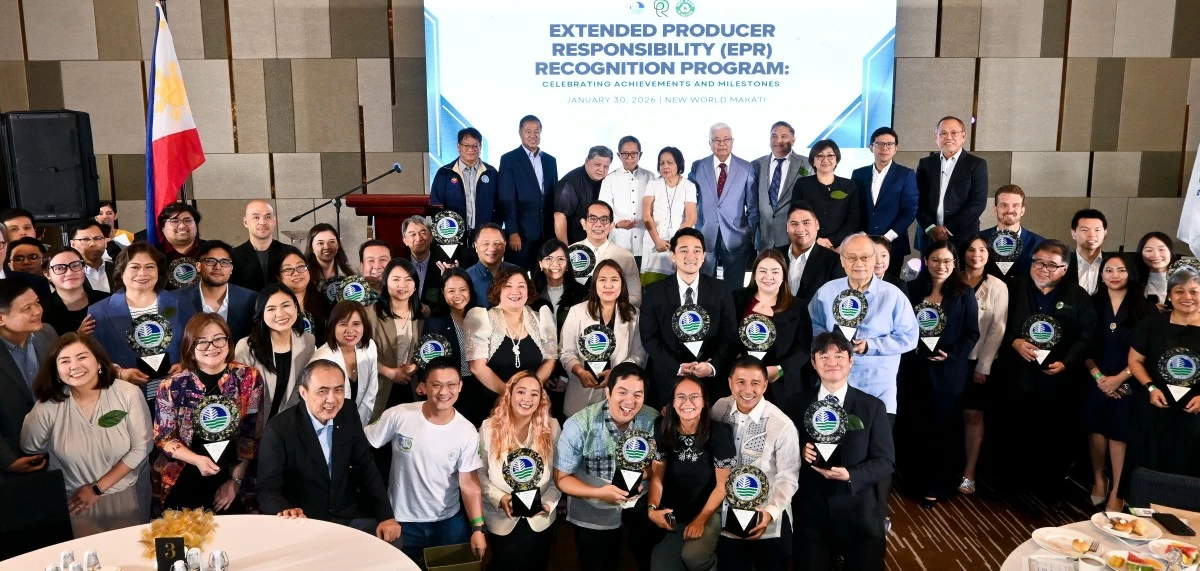
The 2026 EPR Recognition Program celebrates organizations complying with the EPR Law and advancing responsible plastic waste management.
The Department of Environment and Natural Resources (DENR) has recently convened the 2026 Extended Producer Responsibility (EPR) Recognition Program, bringing together government, industry, and other stakeholders to assess progress in the implementation of the EPR Law (Republic Act No. 11898).
Held alongside National Zero Waste Month and the 25th anniversary of the Ecological Solid Waste Management Act (RA 9003), the event focused on the current state of plastic waste recovery and producer compliance, as well as the operationalization of EPR within the country’s solid waste management framework.
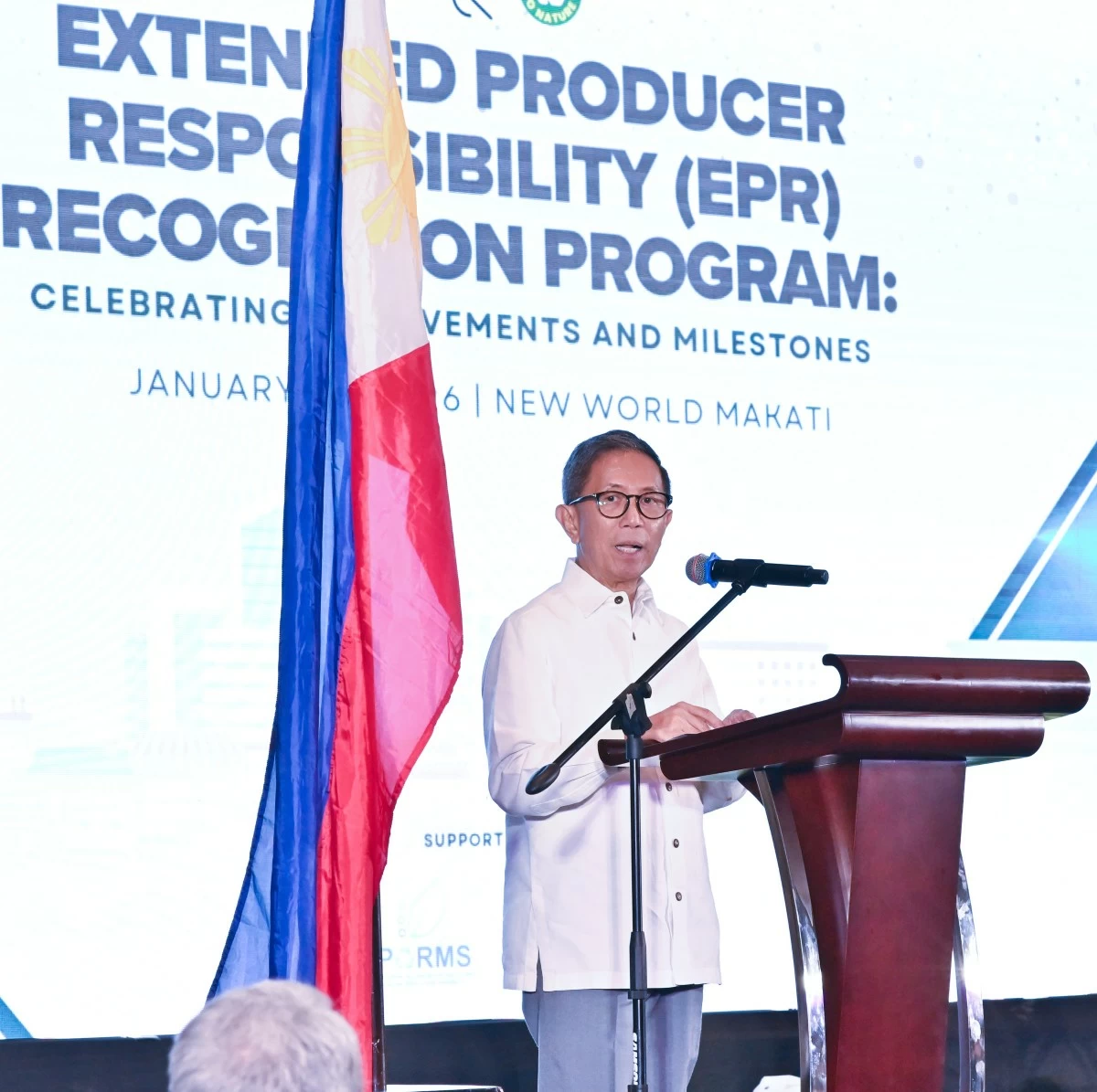
DENR Secretary Raphael P.M. Lotilla at the 2026 Extended Producer Responsibility (EPR) Recognition Program.
DENR Secretary Raphael P.M. Lotilla said the program reflects how EPR is now applied across sectors. "What we celebrate today are not just milestones; they are proof that when government, industry, and communities move together, policy translates into impact and commitment becomes measurable change. The EPR Law is no longer an aspiration. It is alive, operational, and reshaping how we manage waste in this country,” Lotilla said.
The recognition program underscored the complementary roles of RA 9003 and RA 11898. While RA 9003 centers on local government-led waste segregation and disposal, the EPR Law assigns responsibility to producers for the post-consumer phase of their packaging. Together, the two laws establish a framework that links local implementation with producer accountability and national oversight.
Data presented during the event showed significant advancements in sustainable plastic waste management were made during Calendar Year (CY) 2025, among which are:
- Recovery performance: The national diversion rate reached 55.98%, exceeding the mandated recovery target of 40% for the period.
- Material-specific diversion: Recovery rates reached 56.33% for flexible plastics and 55.60% for rigid plastics through recycling, upcycling, and co-processing.
- Expanding Network of Accountability: As of late 2025, the National Ecology Center registered 1,017 entities, including Obliged Enterprises, collectives, and Producer Responsibility Organizations (PROs), across 201 EPR programs.
Lotilla noted that increased private-sector participation reflects broader engagement with compliance requirements, while emphasizing the need for consistent enforcement. He called the growing participation of the private sector in the EPR “reflects not only compliance, but also a growing sense of ownership.”
“These efforts show that the Philippines is not simply complying with global standards; we are helping shape the transition toward a circular economy,” he added.
Looking ahead to 2026, the DENR identified priority areas for strengthening implementation, including improvements in digital monitoring systems, capacity-building within institutions, and public information efforts. Planned measures also include the standardization of audit frameworks to enhance transparency and the development of systems to incentivize more sustainable packaging design.
The 2026 EPR Recognition Program was co-organized by the DENR, through its Environmental Management Bureau, and the Philippine Alliance for Recycling and Material Sustainability (PARMS). Participants included representatives from the diplomatic corps, business sector, academe, recycling industry, and civil society.