






Manila Bulletin
 Philippines
National
DepEd–LGU partnership gains broad support as P9.6 billion classroom program rolls out in 2026
Philippines
National
DepEd–LGU partnership gains broad support as P9.6 billion classroom program rolls out in 2026
Philippines
National
DepEd–LGU partnership gains broad support as P9.6 billion classroom program rolls out in 2026
DepEd–LGU partnership gains broad support as P9.6 billion classroom program rolls out in 2026
Published Feb 12, 2026 02:49 pm



Teachers and other education stakeholders unite behind the DepEd–LGU collaboration, underscoring that improved school facilities are key to delivering quality teaching and shaping better futures for Filipino learners. (Photo from DepEd)
The Department of Education (DepEd) on Thursday, February 12, welcomed support from education stakeholders, including governors and teachers, for its strengthened DepEd–LGU partnership aimed at accelerating classroom construction nationwide following the allocation of P9.6 billion under the 2026 national budget.
In a statement, DepEd said the funding represents the first tranche of the government’s expanded classroom building program, which seeks to address the country’s long-standing classroom shortage and improve learning conditions for millions of Filipino students.
4,000 new classrooms in first phase
Of the P9.6 billion allocation, DepEd said P4.1 billion will be allocated to provincial governments for the construction of approximately 1,200 classrooms.
Meanwhile, more than P5 billion will fund the procurement of around 2,800 prefabricated classrooms to be implemented by DepEd.
The first phase of the program is expected to deliver a total of 4,000 new classrooms nationwide, significantly boosting school infrastructure capacity and easing congestion in public schools, DepEd said.
The initiative is designed to maximize local government capabilities, shorten construction timelines, and ensure a more efficient use of public funds, DepEd added.
Tapping LGU capacity for school infrastructure
On February 11, President Ferdinand R. Marcos Jr. underscored the importance of collaboration between national and local governments during the historic signing of the DepEd–LGU partnership in Malacañang.
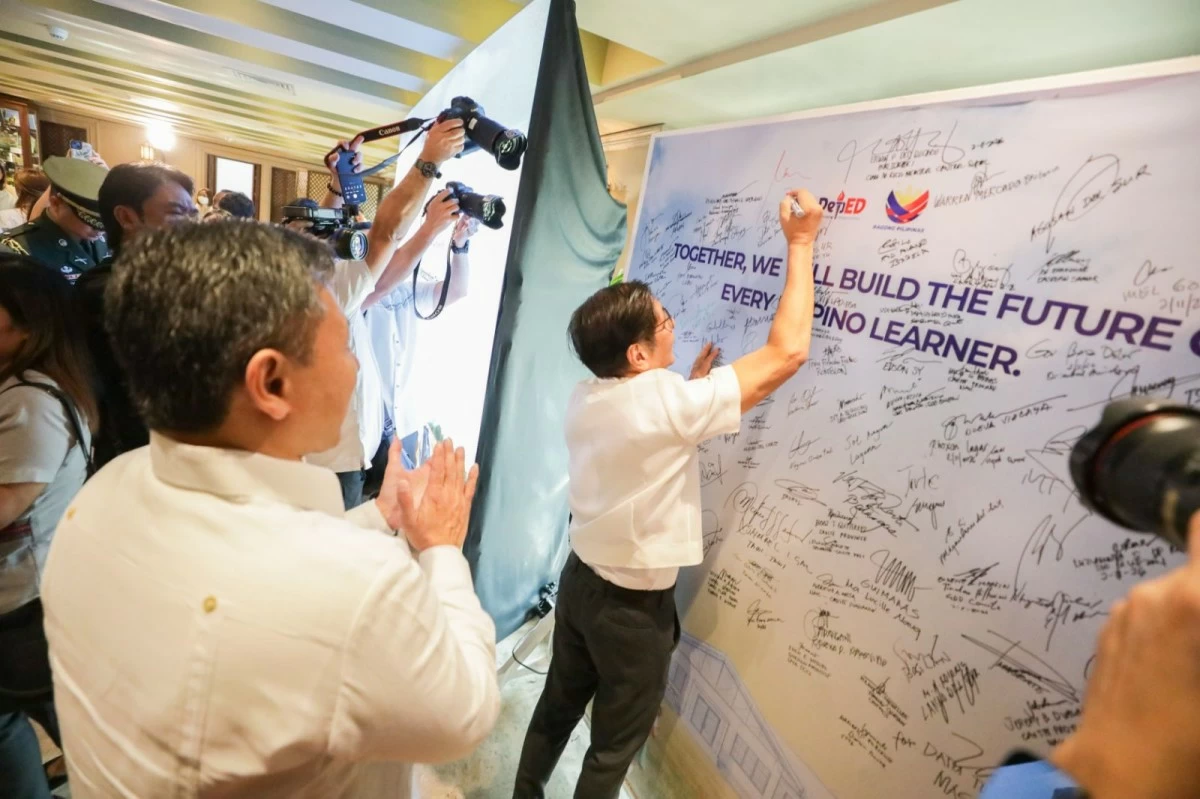
Education stakeholders nationwide express strong support for President Ferdinand R. Marcos Jr.’s directive to prioritize education, backing DepEd Secretary Sonny Angara’s efforts to strengthen LGU partnerships and fast-track classroom construction. (Photo from DepEd)
DepEd Secretary Sonny Angara described the move as the institutionalization of a long-standing plan to leverage the strength of LGUs in infrastructure delivery, with backing from Congress.
“Mr. President, ito talaga ’yong matagal ninyo nang pina-plano at sinasabi na dapat gawin natin (this is really what you have long been planning and saying we should do),” Angara said.
“Being a former governor yourself, alam ninyo ang kapasidad ng ating mga (you know the capacity of our) local chief executives,” he explained.
Angara emphasized that the partnership will allow DepEd to scale up classroom construction more rapidly while ensuring local accountability and responsiveness to community needs.
“Kasama na po natin, kasangga na po natin ang ating mga provincial governors on this historic day (We are now together; we are now allied with our provincial governors on this historic day),” Angara said.
Governors express unified support
DepEd said local leaders welcomed the strengthened collaboration, calling it a critical step toward improving the quality of education nationwide.
Quirino Governor Dax Cua, national president of the Union of Local Authorities of the Philippines (ULAP), described the initiative as an important step toward building a stronger and better education system for Filipino youth.
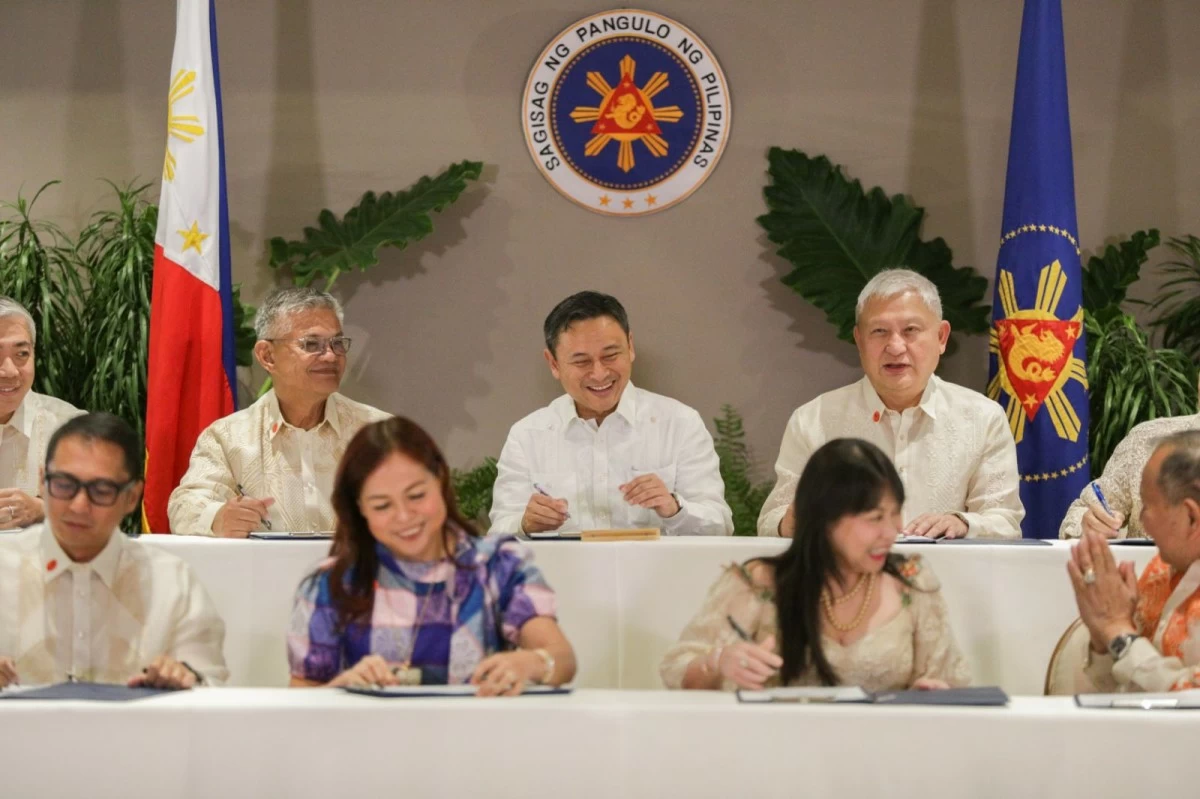
Local chief executives pledge faster, more responsive action on school infrastructure as educators highlight the urgent need for safe, adequate, and conducive classrooms to improve learning outcomes. (Photo from DepEd)
South Cotabato Governor Reynaldo “Jun” Tamayo Jr., president of the League of Provinces of the Philippines (LPP), affirmed the unified commitment of LGUs.
“When national and local governments work together, real progress happens—especially for our learners,” he said.
Teachers welcome improved learning facilities
DepEd said teachers on the ground also welcomed the program, highlighting the direct impact of adequate facilities on student learning outcomes.
Teacher Marlet D. Bongat of Tabaco, Albay, emphasized the importance of conducive classrooms.
“A proper and conducive learning environment is very important for the education of children. Here in Bicol, we are deeply grateful for the government’s continued efforts, led by Secretary Sonny Angara, to find solutions to address the classroom shortage in the country,” she said in a mix of English and Filipino.
Teacher Kisyzl N. Uy of South Cotabato added that insufficient facilities negatively affect both teaching and learning.
“It is difficult for children and teachers when facilities are lacking. Teaching and learning are truly affected. That’s why it is good news for us that new approaches to classroom construction are being promoted by Secretary Angara,” she said.
Addressing the classroom shortage
The expanded DepEd–LGU partnership seeks to fast-track school infrastructure development by decentralizing implementation while maintaining national oversight.
DepEd said that by combining national funding with local execution, the government aims to deliver safe, adequate, and climate-resilient classrooms more efficiently.
As the 2026 classroom construction program rolls out, DepEd, local leaders, and education stakeholders expressed optimism that the strengthened collaboration will help close the infrastructure gap and improve learning environments for Filipino students nationwide.
RELATED STORY: