

ADVERTISEMENT

Demand for love potions in Quiapo and Baclaran increases as Valentine's Day nears

Published Feb 12, 2026 02:03 pm
In the days leading to Valentine's Day, the demand for love potions being sold by vendors in the peripheries of Baclaran and Quiapo churches had surged.
Vendors said people started looking for love potions days before Valentine’s Day for them to use on someone they are attracted to or to keep the ones they are already in a relationship with.
Love potions come in many forms. There is a “love juice” either in powdered or liquid form that costs P150 per bottle and is usually mixed into the food and drinks of the intended. Another form is the “love oil” which allegedly contains a special prayer, several leaves and barks, and which one uses to rub on his/her loved one’s ear or arm. The “love oil” costs P500 per bottle. There are also incantations and “love spells” available. The potions, according to the vendors, usually take effect one week after they are applied or used.
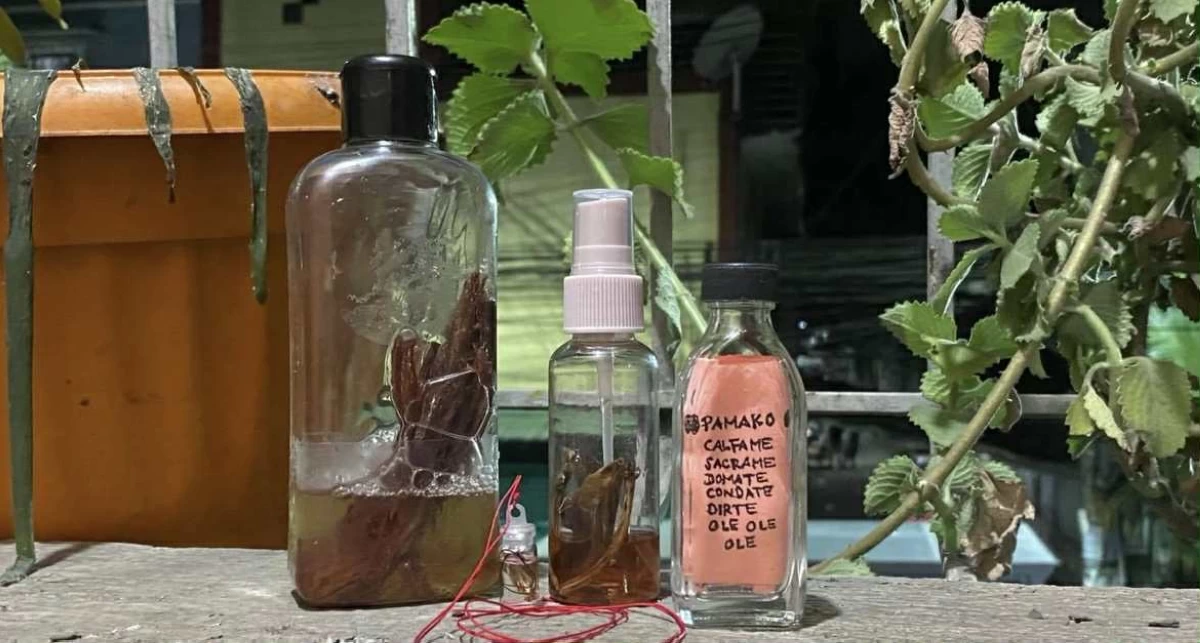
Love potions in bottles (Photo from Radyoman Chziannelle Salazar)
Aside from the love potions, colored candles and charms are also in demand.
“Mas marami ngayon,” one vendor said quietly, declining to be photographed. Valentine’s season, they explained, is good for business. 
“Love has no age,” one seller said with a knowing smile.
But romance is not the only reason customers come. Some return not for passion, but for connection — to strengthen friendships, ease workplace tensions, or simply feel more accepted in their circles.
In Baclaran, where faith and folklore often exist side by side, these potions are sometimes presented as blessed or spiritually empowered. Here, belief itself becomes part of the product.
But the Food and Drug Administration warned that there are no scientific findings that will prove that these potions really work. Some, the FDA warned, could even pose danger to one’s health.
The FDA urged the manufacturers of the love potions to properly label their products and to include the ingredients contained therein.
While love potions may or may not work for some, some couples also go to the Redemptorist Church in Baclaran to “lock their love” with padlocks at the grotto of Saint Therese of Lisieux.
The “love locks” trend started in 2014 and had since gained popularity. According to a report published at the Redemptorists International website, the trend reportedly started when a church worker, while cleaning the church compound, found a padlock and fastened it to the fence around the statue. “In just after a week, we noticed more padlocks attached to the fence and then that’s it, it started there,” said Redemptorist Bro. Ciriaco Santiago III.
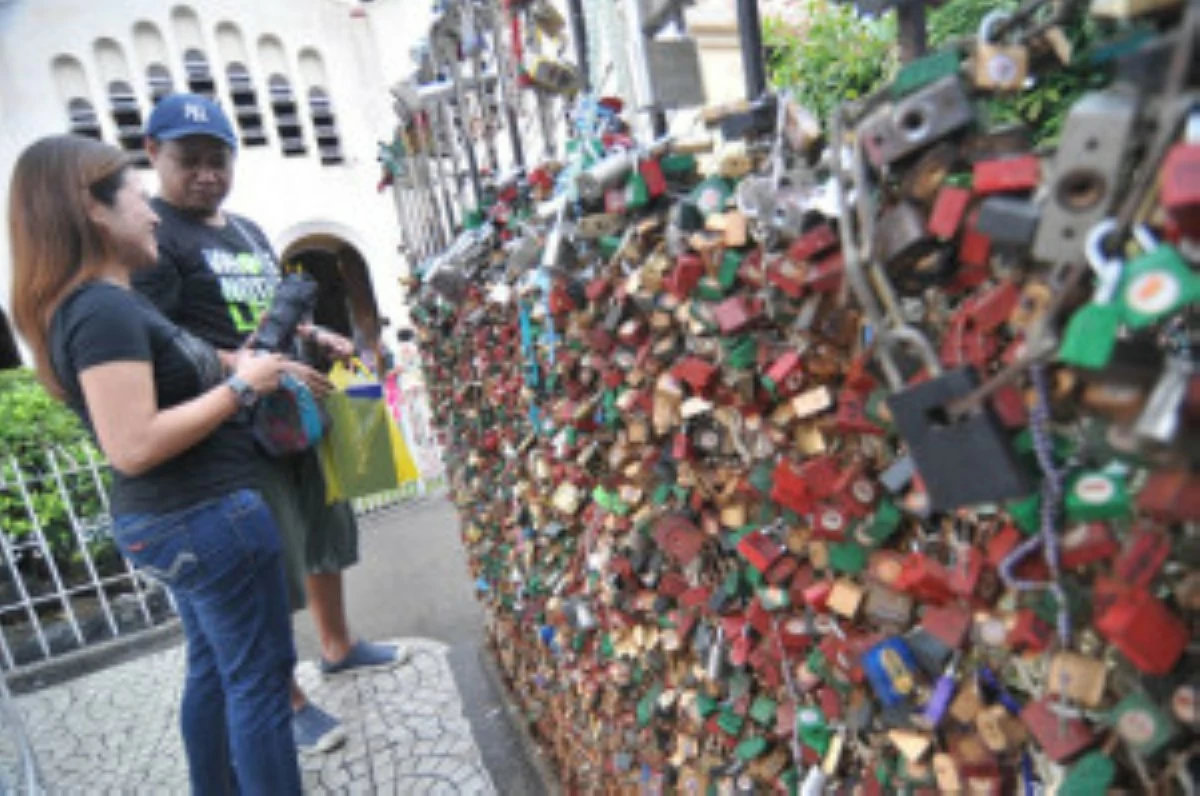
Love lock wall at the Redemptorist Church in Baclaran (Photo from Redemptorists International)
After three months, he said more than 30,000 padlocks were already covering the image of Santa Teresita. As missionaries, the Redemptorists built an image of St. Therese to remember her as one of the patron saints of the missions, not of romantic relationships or marriage.
Ciriaco said the love locks are not exclusive to lovers as it has also been attracting many families. For others, it symbolizes their strong bond as friends. Reaching the tipping point towards the end of 2015, he said the parish finally decided to remove thousands of padlocks over concerns that it might cause the fence to collapse. “We removed around 50,000 locks from one side of the fence,” he added. The locks were relocated to another place within the church’s compound. (With CEFANY AIRA ALARDE)

Related Tags

METRO NEWS VALENTINE\'S DAY love potions
ADVERTISEMENT
.most-popular .layout-ratio{ padding-bottom: 79.13%; } @media (min-width: 768px) and (max-width: 1024px) { .widget-title { font-size: 15px !important; } }

{{ articles_filter_1561_widget.title }}

.most-popular .layout-ratio{ padding-bottom: 79.13%; } @media (min-width: 768px) and (max-width: 1024px) { .widget-title { font-size: 15px !important; } }

{{ articles_filter_1562_widget.title }}

.most-popular .layout-ratio{ padding-bottom: 79.13%; } @media (min-width: 768px) and (max-width: 1024px) { .widget-title { font-size: 15px !important; } }

{{ articles_filter_1563_widget.title }}

{{ articles_filter_1564_widget.title }}

.mb-article-details { position: relative; } .mb-article-details .article-body-preview, .mb-article-details .article-body-summary{ font-size: 17px; line-height: 30px; font-family: "Libre Caslon Text", serif; color: #000; } .mb-article-details .article-body-preview iframe , .mb-article-details .article-body-summary iframe{ width: 100%; margin: auto; } .read-more-background { background: linear-gradient(180deg, color(display-p3 1.000 1.000 1.000 / 0) 13.75%, color(display-p3 1.000 1.000 1.000 / 0.8) 30.79%, color(display-p3 1.000 1.000 1.000) 72.5%); position: absolute; height: 200px; width: 100%; bottom: 0; display: flex; justify-content: center; align-items: center; padding: 0; } .read-more-background a{ color: #000; } .read-more-btn { padding: 17px 45px; font-family: Inter; font-weight: 700; font-size: 18px; line-height: 16px; text-align: center; vertical-align: middle; border: 1px solid black; background-color: white; } .hidden { display: none; }
function initializeAllSwipers() { // Get all hidden inputs with cms_article_id document.querySelectorAll('[id^="cms_article_id_"]').forEach(function (input) { const cmsArticleId = input.value; const articleSelector = '#article-' + cmsArticleId + ' .body_images'; const swiperElement = document.querySelector(articleSelector); if (swiperElement && !swiperElement.classList.contains('swiper-initialized')) { new Swiper(articleSelector, { loop: true, pagination: false, navigation: { nextEl: '#article-' + cmsArticleId + ' .swiper-button-next', prevEl: '#article-' + cmsArticleId + ' .swiper-button-prev', }, }); } }); } setTimeout(initializeAllSwipers, 3000); const intersectionObserver = new IntersectionObserver( (entries) => { entries.forEach((entry) => { if (entry.isIntersecting) { const newUrl = entry.target.getAttribute("data-url"); if (newUrl) { history.pushState(null, null, newUrl); let article = entry.target; // Extract metadata const author = article.querySelector('.author-section').textContent.replace('By', '').trim(); const section = article.querySelector('.section-info ').textContent.replace(' ', ' '); const title = article.querySelector('.article-title h1').textContent; // Parse URL for Chartbeat path format const parsedUrl = new URL(newUrl, window.location.origin); const cleanUrl = parsedUrl.host + parsedUrl.pathname; // Update Chartbeat configuration if (typeof window._sf_async_config !== 'undefined') { window._sf_async_config.path = cleanUrl; window._sf_async_config.sections = section; window._sf_async_config.authors = author; } // Track virtual page view with Chartbeat if (typeof pSUPERFLY !== 'undefined' && typeof pSUPERFLY.virtualPage === 'function') { try { pSUPERFLY.virtualPage({ path: cleanUrl, title: title, sections: section, authors: author }); } catch (error) { console.error('ping error', error); } } // Optional: Update document title if (title && title !== document.title) { document.title = title; } } } }); }, { threshold: 0.1 } ); function showArticleBody(button) { const article = button.closest("article"); const summary = article.querySelector(".article-body-summary"); const body = article.querySelector(".article-body-preview"); const readMoreSection = article.querySelector(".read-more-background"); // Hide summary and read-more section summary.style.display = "none"; readMoreSection.style.display = "none"; // Show the full article body body.classList.remove("hidden"); } document.addEventListener("DOMContentLoaded", () => { let loadCount = 0; // Track how many times articles are loaded const offset = [1, 2, 3, 4, 5, 6, 7, 8, 9, 10]; // Offset values const currentUrl = window.location.pathname.substring(1); let isLoading = false; // Prevent multiple calls if (!currentUrl) { console.log("Current URL is invalid."); return; } const sentinel = document.getElementById("load-more-sentinel"); if (!sentinel) { console.log("Sentinel element not found."); return; } function isSentinelVisible() { const rect = sentinel.getBoundingClientRect(); return ( rect.top < window.innerHeight && rect.bottom >= 0 ); } function onScroll() { if (isLoading) return; if (isSentinelVisible()) { if (loadCount >= offset.length) { console.log("Maximum load attempts reached."); window.removeEventListener("scroll", onScroll); return; } isLoading = true; const currentOffset = offset[loadCount]; window.loadMoreItems().then(() => { let article = document.querySelector('#widget_1690 > div:nth-last-of-type(2) article'); intersectionObserver.observe(article) loadCount++; }).catch(error => { console.error("Error loading more items:", error); }).finally(() => { isLoading = false; }); } } window.addEventListener("scroll", onScroll); });

Sign up by email to receive news.