ADVERTISEMENT

Thinking in the age of AI

Published Feb 11, 2026 12:05 am  |  Updated Feb 10, 2026 05:55 pm
As the world marks the International Day of Women and Girls in Science (IDWGIS) today, under the theme “Synergizing AI, Social Science, STEM and Finance: Building Inclusive Futures for Women and Girls,” artificial intelligence (AI) is perched at the center of both promise and peril. AI is transforming data analytics, healthcare diagnostics, climate modeling, and education itself. Yet, as the United Nations cautions, without deliberate safeguards, its benefits may bypass women and girls—and, more broadly, undermine the very foundations of learning.
Nowhere is this tension more evident than in education. The rapid rise of AI-powered tools has made it easier than ever for students to generate essays, solve equations, or even complete exams. While these technologies can support learning, they also introduce a high risk of plagiarism and academic dishonesty. Governments can no longer treat this as a marginal issue. Clear national frameworks are needed to redefine academic integrity in the age of AI, including updated assessment methods that prioritize critical thinking, oral examinations, project-based learning, and real-time problem-solving over rote submissions easily outsourced to machines.
Beyond cheating lies overdependence, a deeper cause for concern. When AI becomes a crutch rather than a tool, students risk losing the habit of thinking independently. Problem-solving, creativity, and intellectual curiosity—cognitive abilities essential for scientific innovation—cannot be automated. If students rely on algorithms to think for them, they may graduate with credentials but without cognitive resilience. Governments must therefore ensure that AI literacy is paired with “thinking literacy.” This means embedding curricula that teach students not only how to use AI, but when not to use it.
The risk of cognitive atrophy is real. Research already suggests that excessive reliance on automation can weaken memory, attention, and analytical capacity. For young learners, especially girls still navigating confidence gaps in STEM fields, this could be particularly damaging. Governments should invest in policies that protect human cognition: Limiting AI use in early education, promoting hands-on experimentation, and encouraging inquiry-based learning where mistakes are part of the process, not errors to be erased by a prompt.
Equally important is preserving the human relationship at the heart of education. AI must not replace meaningful interaction between students and educators. Teachers do more than deliver information; they mentor, challenge assumptions, and inspire confidence—especially critical for girls and young women entering male-dominated scientific fields. Governments should support professional development for educators so they can integrate AI responsibly while maintaining strong classroom engagement. Smaller class discussions, mentorship programs, and collaborative projects can ensure technology enhances, rather than erodes, human connection.
This is why commemorating the International Day of Women and Girls in Science every Feb. 11 is a good reminder on the crucial need to help girls—and for that matter all young minds—navigate into the STEM (Science, Technology, Engineering, and Mathematics) fields.
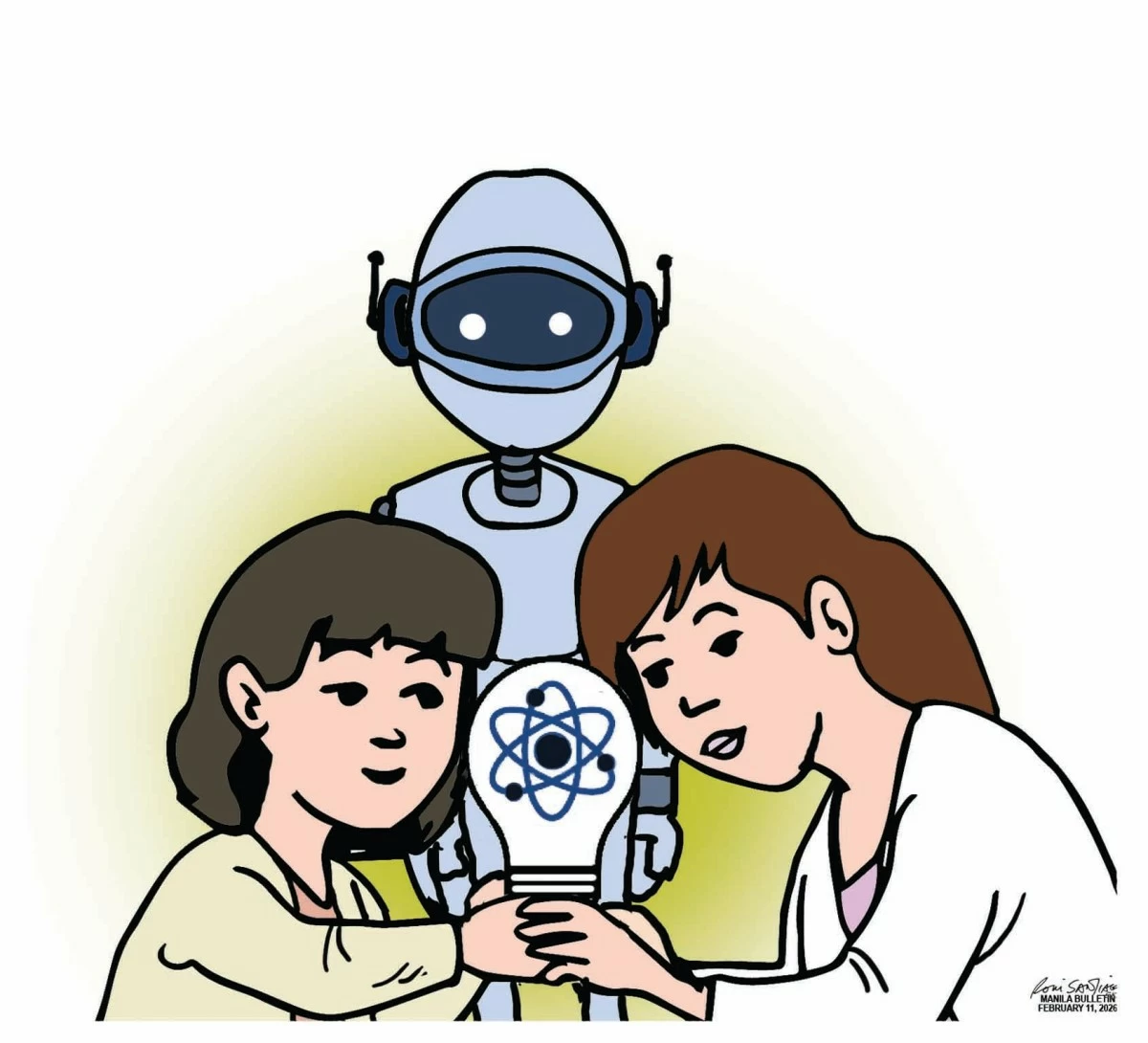
And in this age of technology, balance is the key. Students should be taught to treat AI as a laboratory assistant, not as the scientist; as a calculator, not as the mind behind the solution. Governments can lead by setting ethical standards, investing in inclusive AI education, and ensuring that assessments reward originality, reasoning, and creativity.
As UN Secretary-General António Guterres rightly noted, every girl must be able to imagine a future in STEM—and every student must be able to think their way into that future. In the age of intelligent machines, protecting human intelligence is not resistance to progress; it is the most responsible form of leadership.
ADVERTISEMENT
.most-popular .layout-ratio{ padding-bottom: 79.13%; } @media (min-width: 768px) and (max-width: 1024px) { .widget-title { font-size: 15px !important; } }

{{ articles_filter_1561_widget.title }}

.most-popular .layout-ratio{ padding-bottom: 79.13%; } @media (min-width: 768px) and (max-width: 1024px) { .widget-title { font-size: 15px !important; } }

{{ articles_filter_1562_widget.title }}

.most-popular .layout-ratio{ padding-bottom: 79.13%; } @media (min-width: 768px) and (max-width: 1024px) { .widget-title { font-size: 15px !important; } }

{{ articles_filter_1563_widget.title }}

{{ articles_filter_1564_widget.title }}

.mb-article-details { position: relative; } .mb-article-details .article-body-preview, .mb-article-details .article-body-summary{ font-size: 17px; line-height: 30px; font-family: "Libre Caslon Text", serif; color: #000; } .mb-article-details .article-body-preview iframe , .mb-article-details .article-body-summary iframe{ width: 100%; margin: auto; } .read-more-background { background: linear-gradient(180deg, color(display-p3 1.000 1.000 1.000 / 0) 13.75%, color(display-p3 1.000 1.000 1.000 / 0.8) 30.79%, color(display-p3 1.000 1.000 1.000) 72.5%); position: absolute; height: 200px; width: 100%; bottom: 0; display: flex; justify-content: center; align-items: center; padding: 0; } .read-more-background a{ color: #000; } .read-more-btn { padding: 17px 45px; font-family: Inter; font-weight: 700; font-size: 18px; line-height: 16px; text-align: center; vertical-align: middle; border: 1px solid black; background-color: white; } .hidden { display: none; }
function initializeAllSwipers() { // Get all hidden inputs with cms_article_id document.querySelectorAll('[id^="cms_article_id_"]').forEach(function (input) { const cmsArticleId = input.value; const articleSelector = '#article-' + cmsArticleId + ' .body_images'; const swiperElement = document.querySelector(articleSelector); if (swiperElement && !swiperElement.classList.contains('swiper-initialized')) { new Swiper(articleSelector, { loop: true, pagination: false, navigation: { nextEl: '#article-' + cmsArticleId + ' .swiper-button-next', prevEl: '#article-' + cmsArticleId + ' .swiper-button-prev', }, }); } }); } setTimeout(initializeAllSwipers, 3000); const intersectionObserver = new IntersectionObserver( (entries) => { entries.forEach((entry) => { if (entry.isIntersecting) { const newUrl = entry.target.getAttribute("data-url"); if (newUrl) { history.pushState(null, null, newUrl); let article = entry.target; // Extract metadata const author = article.querySelector('.author-section').textContent.replace('By', '').trim(); const section = article.querySelector('.section-info ').textContent.replace(' ', ' '); const title = article.querySelector('.article-title h1').textContent; // Parse URL for Chartbeat path format const parsedUrl = new URL(newUrl, window.location.origin); const cleanUrl = parsedUrl.host + parsedUrl.pathname; // Update Chartbeat configuration if (typeof window._sf_async_config !== 'undefined') { window._sf_async_config.path = cleanUrl; window._sf_async_config.sections = section; window._sf_async_config.authors = author; } // Track virtual page view with Chartbeat if (typeof pSUPERFLY !== 'undefined' && typeof pSUPERFLY.virtualPage === 'function') { try { pSUPERFLY.virtualPage({ path: cleanUrl, title: title, sections: section, authors: author }); } catch (error) { console.error('ping error', error); } } // Optional: Update document title if (title && title !== document.title) { document.title = title; } } } }); }, { threshold: 0.1 } ); function showArticleBody(button) { const article = button.closest("article"); const summary = article.querySelector(".article-body-summary"); const body = article.querySelector(".article-body-preview"); const readMoreSection = article.querySelector(".read-more-background"); // Hide summary and read-more section summary.style.display = "none"; readMoreSection.style.display = "none"; // Show the full article body body.classList.remove("hidden"); } document.addEventListener("DOMContentLoaded", () => { let loadCount = 0; // Track how many times articles are loaded const offset = [1, 2, 3, 4, 5, 6, 7, 8, 9, 10]; // Offset values const currentUrl = window.location.pathname.substring(1); let isLoading = false; // Prevent multiple calls if (!currentUrl) { console.log("Current URL is invalid."); return; } const sentinel = document.getElementById("load-more-sentinel"); if (!sentinel) { console.log("Sentinel element not found."); return; } function isSentinelVisible() { const rect = sentinel.getBoundingClientRect(); return ( rect.top < window.innerHeight && rect.bottom >= 0 ); } function onScroll() { if (isLoading) return; if (isSentinelVisible()) { if (loadCount >= offset.length) { console.log("Maximum load attempts reached."); window.removeEventListener("scroll", onScroll); return; } isLoading = true; const currentOffset = offset[loadCount]; window.loadMoreItems().then(() => { let article = document.querySelector('#widget_1690 > div:nth-last-of-type(2) article'); intersectionObserver.observe(article) loadCount++; }).catch(error => { console.error("Error loading more items:", error); }).finally(() => { isLoading = false; }); } } window.addEventListener("scroll", onScroll); });

Sign up by email to receive news.