







'The new POGO': Quimbo slams worsening illicit tobacco trade
Published Feb 11, 2026 07:04 pm


At A Glance
- An alarmed Marikina City 2nd district Rep. Miro Quimbo branded the illicit tobacco trade in the country as the "new POGO".
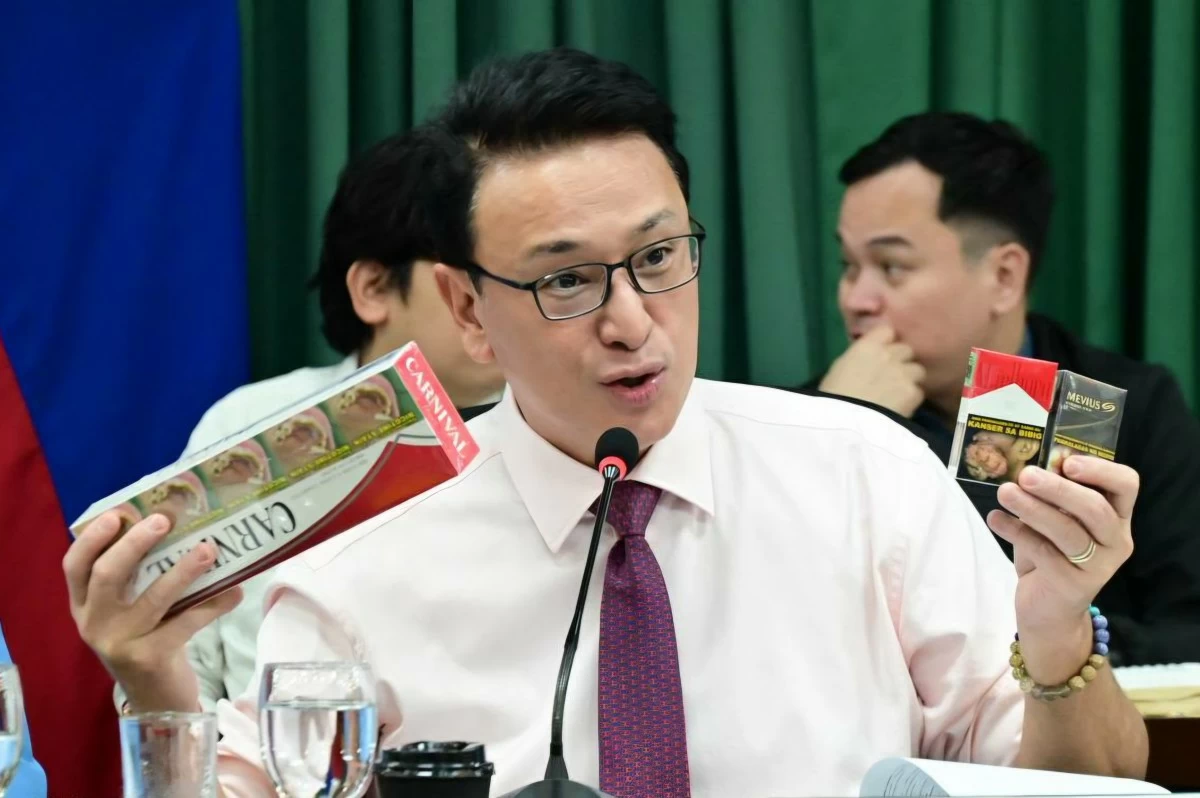
An alarmed Marikina City 2nd district Rep. Miro Quimbo branded the illicit tobacco trade in the country as the "new POGO".
Quimbo made this direct comparison Wednesday, Feb. 11 during the hearing of the House Committee on Ways and Means, as provided for under House Resolution (HR) No. 636. The Marikina lawmaker chairs the panel.
The resolution sought a House inquiry on the worsening proliferation of contraband cigarettes, which had been costing the government billions in lost revenue and endangering public health, with young people especially at risk.
“Contraband cigarettes are not a new problem. However, what is new and deeply alarming is the scale, frequency, and brazenness of the situation today. It has become a major criminal enterprise akin to POGOs: malawak na ang operasyon mula Luzon hanggang Mindanao, may mga banyagang kasangkot, at mga Pilipinong backer (they have widespread operations from Luzon to Mindanao, there are foreigners involved, and there are Filipino backers),” Quimbo said.
POGO stands for Philippine offshore gaming operators. Ilegal POGOs were outlawed last year under the Marcos administration, as lawmakers noted that the industry attracted activities from international crime syndicates.
"Sangkot ang mga banyaga at may mga Pilipinong protektor. Walang buwis, mapaminsala sa kalusugan, at pugad ng kriminalidad. Iyan ang kalakaran ng mura at kontrabandong sigarilyo -- ito na ngayon ang bagong POGO," he added.
(Foreigners are involved, and there are Filipino protectors. No taxes, harmful to health, and a breeding ground for criminality. That is the trade of cheap and contraband cigarettes—this has now become the new POGO.)
Quimbo filed the resolution following the interception of 32 trucks loaded with contraband cigarettes at the start of the year.
The coordinated operations of the Bureau of Customs (BOC) and the Highway Patrol Group of the Philippine National Police (HPG-PNP) in Batangas and Malabon yielded products valued at approximately P2.6 billion. This would have amounted to nearly P1 billion in excise tax losses had these entered the market, the committee chairman noted.
Reports from various regions confirm that the illicit tobacco trade now operates as a three-pronged menace through direct smuggling, transshipment, and illegal manufacturing. Quimbo said it relies on coordinated cross border supply chains, covert production facilities, and networks that thrive on protection and facilitation.
He also highlighted the grave public health implications of the illicit tobacco trade. Citing data from the Food and Nutrition Research Institute (FNRI) of DOST, he noted that youth smoking prevalence nearly doubled from 2.3 percent in 2021 to 4.8 percent in 2023, even as excise tax collections from cigarettes continued to decline year-on-year.
“Habang bumababa ang pagkolekta ng buwis sa sigarilyo, parami nang parami naman ang nagsisigarilyo taon-taon. Ito ay dahil mas maraming tao ang naninigarilyo ng contraband cigarettes na hindi nagbabayad ng buwis. Katulad ng kanser sa baga dulot ng pagsisigarilyo, kapag hindi natin gagamutin ang kanser sa illicit cigarette, kakalat at lalala ang problemang ito,” he added.
(As tax collection from cigarettes declines, more and more people are smoking each year. This is because many are consuming contraband cigarettes that do not pay taxes. Just like lung cancer caused by smoking, if we do not treat the cancer of illicit cigarettes, this problem will spread and worsen.)
Anti-Agricultural Economic Sabotage Law
During the hearing, Quimbo said two packs of legitimate tobacco products amount to roughly P400. But for the same amount, one ream of contraband cigarettes containing 10 packs can now be easily bought, making it more accessible to the youth and the poor.
The Marikina solon says cheap, contraband cigarettes are not just a tax problem, but also a health crisis. Because of cheap contraband, more people smoke and get sick; meanwhile, tax revenues fall and funding for PhilHealth’s health services is reduced.
During the hearing, Tobacco firm JTI Philippines called for more robust prosecution of illegal tobacco cases filed under the Anti-Agricultural Economic Sabotage (AAES) Law or Republic Act (RA) No.12022, to secure convictions against major offenders.
Shaiful Mahpar, director of Corporate Affairs and Communications at JTIP, highlighted that the passage of the AAES law in 2024 marked a significant policy milestone, declaring large-scale smuggling of agricultural products—including tobacco—as economic sabotage.
Despite numerous large-scale confiscation meeting the law’s thresholds, Mahpar noted that these actions have not yet resulted in successful prosecutions for illicit tobacco under the AAES Law.
“Strengthening and focusing on prosecutorial follow-through would be essential to ensure that the law delivers its intended deterrent impact,” Mahpar told the ways and means panel.
The AAES law establishes a threshold of P10 million worth of smuggled agricultural products for cases classified as economic sabotage.
Quimbo says that the inquiry doesn't seek to assign blame but to identify where the system is breaking down. He said that the House of Representatives will review whether current enforcement tools are sufficient, whether penalties deter large-scale operators, and whether coordination among agencies is effective given the increasingly complex nature of the threat.
The solon also emphasized the need to consolidate government efforts to combat illicit trade.