








While the Bangko Sentral ng Pilipinas (BSP) may have shrugged off the faster two-percent inflation rate in January, its chief told the private sector that it bothers him more if price pressures accelerate past three percent.
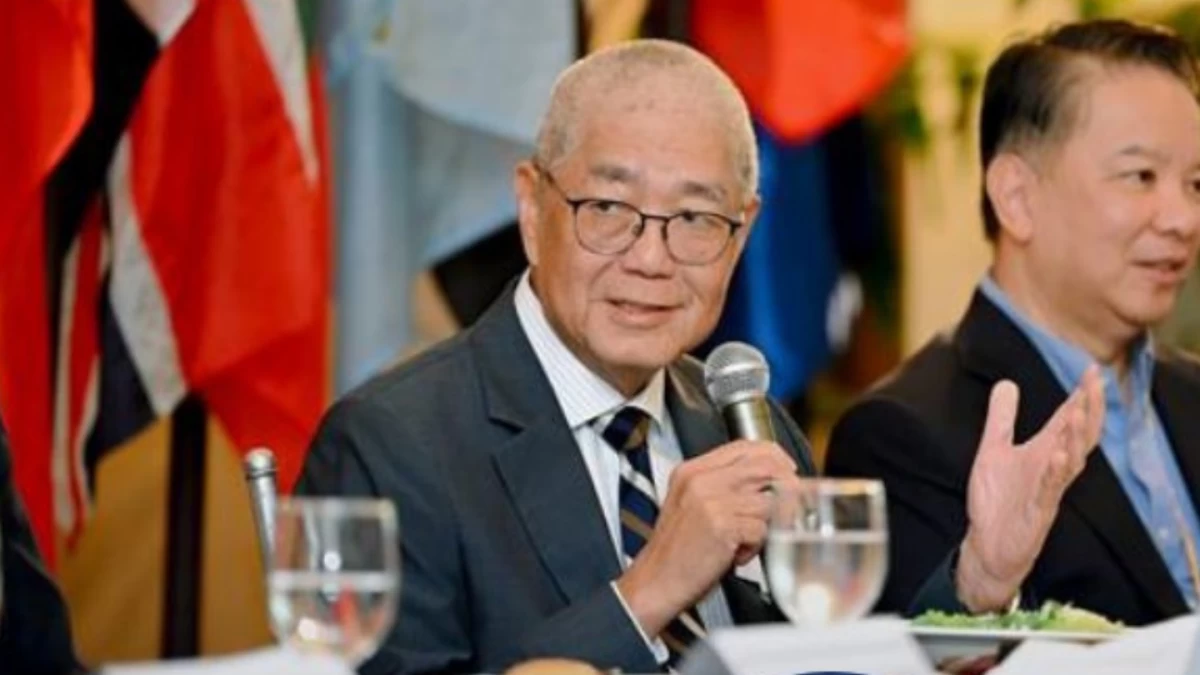
“Three percent is our target. Then we have a tolerance band around three, one percent on each side,” BSP Governor Eli M. Remolona Jr. said during the Management Association of the Philippines (MAP) economic briefing on Wednesday, Feb. 11.
“Although for me, I don’t mind if inflation falls below three percent. I worry more when it goes up beyond three percent,” Remolona said. This suggests that it would be more ideal if inflation falls slightly below the target rather than above it.
He noted that since the 8.7-percent peak in 2023—the year he became central bank governor—inflation has subsided to the one-percent level, closing 2025 at an average of 1.7 percent.
Managing consumer price swings is the main mandate of the BSP, which the governor takes pride in fulfilling. To tame inflation, the central bank adjusts the key policy rate, which it has so far brought down to 4.5 percent from the 6.5-percent peak prior to the easing cycle kickoff in 2024.
“We project that [inflation] will hover around three percent over the next two years,” Remolona said, with price movements seen settling at 3.2 percent in 2026 and three percent in 2027.
“Even more important to us is that for the bottom 30 percent of households, inflation is even lower than it is for the average.” Inflation for the poorest households climbed 1.6 percent in January, up from 1.1 percent in December 2025, mainly due to higher costs for housing, utilities, and fuels.
BSP Deputy Governor Zeno Ronald R. Abenoja told reporters on the sidelines of the event that inflation is expected to pick up in the first half, partly due to higher electricity rates and oil prices, but should stabilize in the second half.
“Inflation has been low for some time, so it should eventually affect consumption, and probably a little bit of investments,” Abenoja, who heads the central bank’s monetary and economics sector, noted. Subdued inflation should eventually prop up private consumption and support investments, which were bruised in the fourth quarter of 2025.
“If we succeed with inflation, it should help growth,” Remolona told reporters on the sidelines of the event. Abenoja noted that the economy this year could expand faster than the 4.4 percent recorded in 2025.
While gross domestic product (GDP) growth is a factor, Remolona reiterated the BSP’s price stability mandate over output growth.
According to the governor, monetary authorities are looking into the recent inflation uptick but maintained a “maybe” stance on the possibility of another cut in the benchmark rate at the upcoming Feb. 19 policy meeting.
Asked whether the BSP can still do more to support the economy amid the recent slump and the lingering risk from contracting government spending, Remolona said: “It’s conceivable. We have to review the data.”