






Manila Bulletin
 Philippines
National
Speaker Dy justifies LEDAC inclusion of anti-fake news, travel tax abolition bills
Philippines
National
Speaker Dy justifies LEDAC inclusion of anti-fake news, travel tax abolition bills
Philippines
National
Speaker Dy justifies LEDAC inclusion of anti-fake news, travel tax abolition bills
Speaker Dy justifies LEDAC inclusion of anti-fake news, travel tax abolition bills
Published Feb 10, 2026 11:23 pm


At A Glance
- House Speaker Faustino "Bojie" Dy III has made an aggressive push to include the proposed Anti-Fake News and Digital Disinformation Act, as well as the Travel Tax Abolition Act in the Marcos administration's list of priority measures under the Legislative-Executive Development Advisory Council (LEDAC).
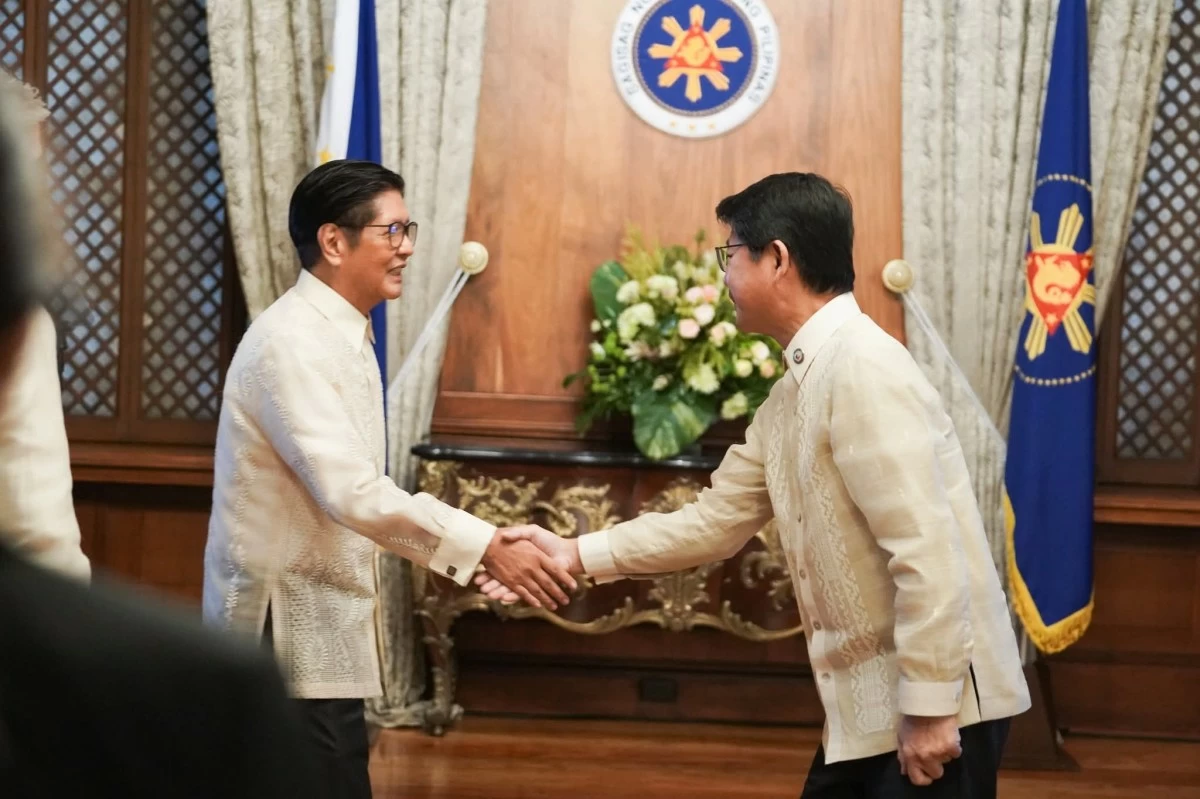
President Ferdinand "Bongbong" Marcos Jr. (left), House Speaker Faustino "Bojie" Dy III (Facebook)
House Speaker Faustino "Bojie" Dy III has made an aggressive push to include the proposed Anti-Fake News and Digital Disinformation Act, as well as the Travel Tax Abolition Act in the Marcos administration's list of priority measures under the Legislative-Executive Development Advisory Council (LEDAC).
Dy's pitch was heeded Tuesday, Feb. 10 during the LEDAC meeting in Malacañang that was presided over by President Marcos.
According to the Speaker, the unchecked spread of digital falsehoods now poses a serious threat to democratic institutions, national security, and the well-being of Filipino youth.
“At this juncture, we believe it is also necessary to raise the importance of passing a law against fake news and digital disinformation. Ang fake news o digital disinformation ay matinding banta sa ating demokrasya (Fake news or disinformation is a great threat to our democracy),” Dy said, as he cited the urgency of adopting a dedicated legal framework to confront what he described as the organized and increasingly dangerous phenomenon.
The Isabela 6th district congressman warned that fake news was deliberately being weaponized to erode public trust, manipulate electoral outcomes, and undermine national security.
"Ginagamit ito ng iba upang pagmulan ng pagkasira ng tiwala ng publiko, impluwensyahan ang pagboto sa halalan, at panghimasukan ang seguridad ng ating bansa (Some use this to erode public trust, influence voting in elections, and interfere with the security of our nation)," he said.
Beyond political and security implications, Dy emphasized the harmful impact of digital disinformation on children and young people. He noted its effects on mental health, social development, and belief formation.
“Nakakalungkot at nakakabahala pa, nagdudulot ito ng masamang epekto sa kabataan (What is even more saddening and alarming is that it brings harmful effects on the youth). Fake news damages children’s mental health, affects their social growth, twists their beliefs, and targets their inherent weaknesses,” he said.
Dy expressed the House of Representatives’ support for House Bill (HB) No. 2697. Authored by House Majority Leader Ilocos Norte 1st district Rep. Sandro Marcos, the bill seeks to establish a comprehensive legal framework to combat fake news and digital disinformation while upholding constitutional guarantees on free expression.
Speaking of the presidential son's measures, Dy also successfully pushed for the inclusion of the abolition of the travel tax among the LEDAC priority measures.
Dy underscored the House’s strong support for the initiative, as embodied in Rep. Marcos' House Bill (HB) No. 7443. The bill cited economic reasons in seeking the outright abolition of the travel tax imposed on outbound Filipino travelers.
“Before ending, Mr. President, we also urge the inclusion of the abolition of the travel tax among the LEDAC priority measures as it is a practical, equitable, and progressive reform that encourages tourism and supports our regional integration efforts,” Dy said.
“It is, in our view, a crucial step toward a more competitive and open Philippines,” the Speaker added.
The travel tax, first instituted under Presidential Decree (PD) No. 1183 and later incorporated into the Tourism Act of 2009, currently requires departing Filipino passengers to pay levies ranging from approximately ₱1,620 for economy class to ₱2,700 for first class.
In filing HB No. 7443, Rep. Marcos argued that the travel tax has outlived its original purpose. He says it now hampers mobility, raises travel costs, and places Filipinos at a disadvantage compared with travelers from neighboring countries that do not impose similar outbound levies.