






Manila Bulletin
 Philippines
Metro Manila
Outreach program empowers Talim Island residents, benefits schools and students
Philippines
Metro Manila
Outreach program empowers Talim Island residents, benefits schools and students
Philippines
Metro Manila
Outreach program empowers Talim Island residents, benefits schools and students
Outreach program empowers Talim Island residents, benefits schools and students
By Nel Andrade
Published Feb 10, 2026 04:50 pm


A recent outreach program of a sustainable energy firm in the Asia-Pacific region has benefited handicraft makers, public schools, and learners on Talim Island in Rizal Province.
Vena Energy, a green energy solutions company in the Asia-Pacific region, turned over 1,000 handcrafted armchairs to elementary schools in the municipalities of Binangonan and Cardona on Talim Island through its “Seats for Sustainability” initiative.
Led by Vena Energy’s subsidiary, Island Wind Energy Corp. (IWEC), the project supports both education and livelihood development.
The chairs were distributed during turnover ceremonies held on Jan. 22 and Jan. 23 in Binangonan and in Cardona in Rizal Province, benefiting Kasile, Bombong, Kinagatan, and Lambac Elementary Schools.
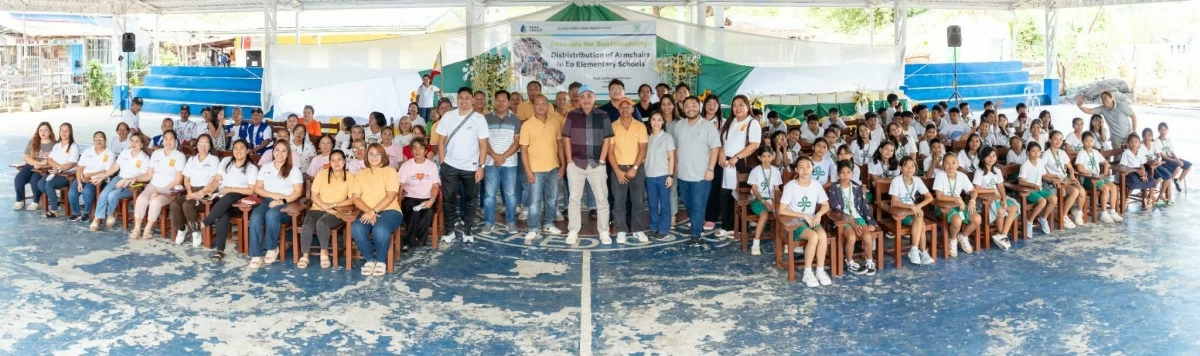
School children from various villages in Talim Island gather with Vena Energy officials and staff and local officials during the outreach program on the island in Rizal Province on Jan. 22.(photo from Vena Energy)
The project organizer said the company's Corporate Social Responsibility (CSR) program initiative addressed a long-standing infrastructure gap in remote island schools in Rizal Province by providing DepEd-standard furniture that will help improve classroom learning conditions in the island villages.
Vena Energy said the project was distinctive for its focus on the local circular economy, as Talim Island residents were trained by the Technical Education and Skills Development Authority (TESDA) to become craftsmen and later employed to manufacture the chairs, thereby generating income for local households.
“Seats for Sustainability” reflects Vena Energy’s commitment to education, infrastructure development, and community well-being.
“This project is special because the parents and neighbors of the students built the chairs their children will use,” said Samrinder Nehria, head of The Philippines at Vena Energy.
The turnover events were attended by IWEC representatives, local government officials, school leaders, and community members, highlighting strong collaboration between the private sector and host communities.