






Manila Bulletin
 Philippines
National
Marcos approves 21 priority bills, including travel tax abolition
Philippines
National
Marcos approves 21 priority bills, including travel tax abolition
Philippines
National
Marcos approves 21 priority bills, including travel tax abolition
Marcos approves 21 priority bills, including travel tax abolition
Published Feb 10, 2026 02:51 pm


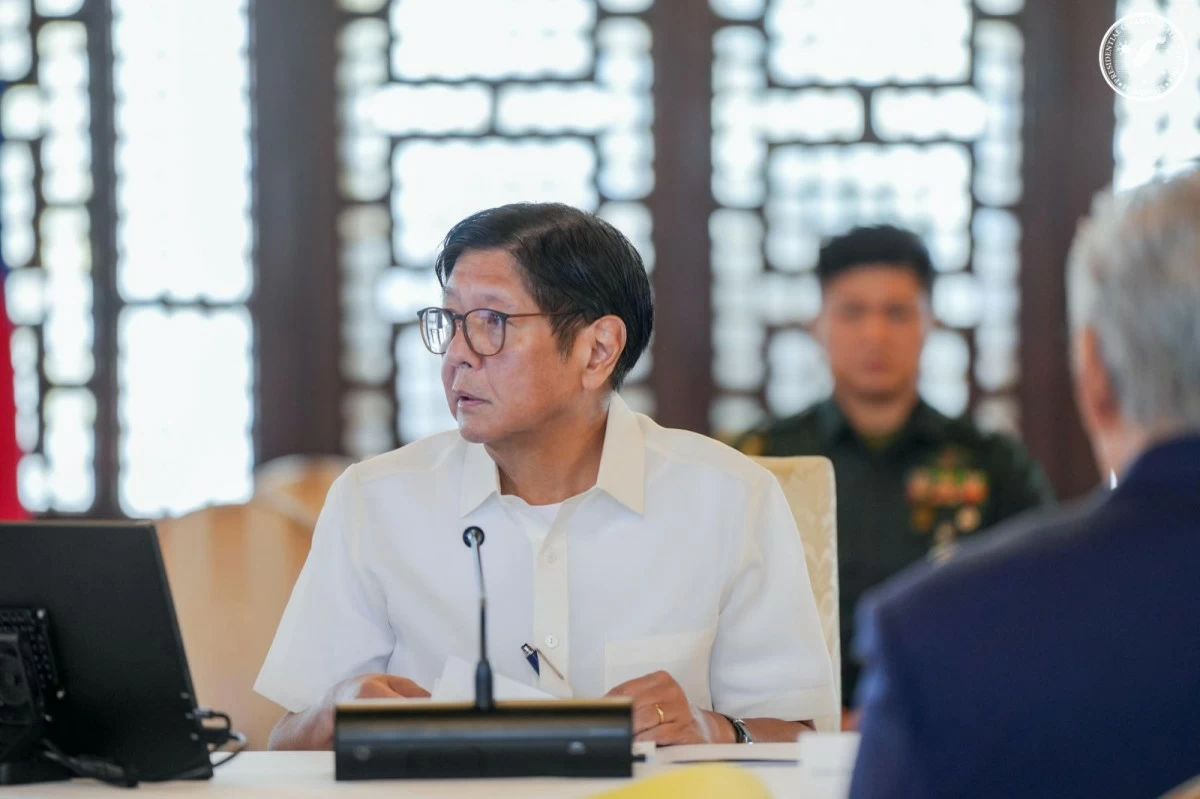
President Ferdinand R. Marcos Jr. (Photo courtesy of PCO)
President Marcos has approved 21 priority measures up for passage in June this year, including the proposal to abolish travel tax, Malacañang said.
Marcos met with the Legislative Executive Development Advisory Council (LEDAC) on Tuesday morning, Feb. 10, to discuss the priority bills that are expected to be passed by June.
Among the approved priority measures were the Travel Tax Abolition, Expanded Anti-Online Sexual Abuse or Exploitation of Children and Anti-Child Sexual Abuse or Exploitation Materials Act of 2026, Fake News and Digital Disinformation and Bangsamoro Autonomous Region in Muslim Mindanao (BARMM) Elections.
According to Palace Press Officer and Communications Undersecretary Claire Castro, the President was "satisfied" with the priority bills.
"Sa kabuuan, natuwa at kuntento naman ang Pangulo sa mga priority bills na inaasahang maipapasa bago mag Hunyo ngayong taon (Overall, the President was pleased and satisfied with the priority bills that are expected to be passed before June this year)," Castro said.
Travel tax abolition
In supporting the passage of the Travel Tax Abolition bill, Marcos cited that Filipinos do not only travel for leisure, but also for work and others for emergency cases. Thus, he said, it is important to ease the expense of tourists.
"Priority bill ng Pangulo ang Travel Tax Abolition upang matulungang maiangat ang turismo ng bansa. Batid din ng Pangulo na ang mga nagbibiyahe na ating mga kababayan ay hindi lang para mamasyal kung hindi ang iba ay para sa trabaho at ang iba naman ay para sa emergency cases din (he abolition of the Travel Tax is a priority bill of the President to help boost the country’s tourism industry. The President also recognizes that our fellow Filipinos who travel do so not only for leisure, but that some travel for work and others for emergency cases as well)," Castro said.
"Nakita po ng Pangulo na mas makakagaan po ito sa ating mga turista at sa ating mga kababayan na nagbibiyahe. Kung ano pong detalye, kung magkano ba ang mawawala, kung magkano ba ang idadagdag na pondo para sa TIEZA ay hindi pa po napag-usapan ang detalye kasi gagawin pa lamang po iyong bill, priority pa lamang po (The President believes that this will further ease the burden on our tourists and on our fellow Filipinos who travel. As for the details—such as how much revenue would be lost and how much additional funding would be allocated to TIEZA—these have not yet been discussed, since the bill has yet to be drafted and is still only being treated as a priority measure)," Castro also said.
According to Castro, of the travel tax being collected from travelers departing the country, 50 percent is intended to fund Tourism Infrastructure and Enterprise Zone Authority (TIEZA) projects, 40 percent goes to education assistance and scholarship under the Commission on Higher Education (CHED), and 10 percent goes to fund the country's promotion of culture and heritage.
If the bill to abolish travel tax is passed, the Palace official said, these projects will source funding from the General Appropriations Act (GAA).
The Palace official also emphasized that the abolition of travel tax would potentially boost Philippine tourism as outbound travel by Filipinos is predicted to increase.
"Outbound travel by Filipinos is predicted to increase with the travel tax abolition which has the potential to significantly boost Philippine tourism by enhancing airline connections, promoting new routes, and fostering bilateral engagement with neighboring nations. High outbound volume can lead to improved air links and regional partnerships, boosting the country's tourist recovery," Castro said.
Anti-fake news and disinformation
Among the priority bills approved by Marcos was the proposed Anti-Fake News and Digital Disinformation Act.
Castro said the President urged lawmakers to clearly define what constitutes fake news and disinformation as he wants to address the spread of fake news with full respect for constitutional rights and civil liberties.
“Hindi hahayaan ng Pangulo na masagasaan ang anumang freedom of expression/ freedom of speech ng ating mga kababayan (The President will not allow any infringement on the freedom of expression or freedom of speech of our fellow citizens)," Castro said.
“Ang sabi lamang ng Pangulo noong nabanggit ito ay dapat balansehin dahil nga baka masagasaan iyong freedom of expression (What the President merely said when this was mentioned was that it should be balanced, because the freedom of expression might be compromised)," Castro added.
Anti-Political Dynasty Bill
The Anti-Political Dynasty Bill was also among those that were discussed during the meeting, Castro said.
Marcos said that the bill, which he labeled as priority last year, must be passed into law as soon as possible.
"Ayon kay Senator Risa Hontiveros na kasama sa mga dumalo kaninang umaga sa meeting, nagsasagawa na ang Senado ng public consultation kaugnay nito kung saan sinimulan nila sa Pasig City. Nakatakda rin silang magsagawa ng konsultasyon sa Luzon, Visayas at Mindanao (According to Senator Risa Hontiveros, who was among those who attended the meeting earlier this morning, the Senate has already begun conducting public consultations on the matter, starting in Pasig City. They are also scheduled to hold consultations in Luzon, Visayas, and Mindanao)," Castro said during a Palace briefing on Tuesday.
The House of Representatives, according to House Speaker Faustino “Bodie” Dy III, will also conduct public consultations nationwide.
During the meeting, the President reiterated the importance of passing other priority bills such as the Citizen Access and Disclosure of Expenditures for National Accountability or CADENA Act, the Independent People’s Commission Act, and the Partylist System Reform Act.
The priority bills expected to be passed by June are the following:
1. Anti-Political Dynasty Law
2. Party-list System Reform Act
3. Citizen Access and Disclosure of Expenditures for National Accountability (CADENA) Act
4. Independent People’s Commission Act
5. Amendments to the Bank Deposits Secrecy Law / Banking Reform for Integrity, Good Governance, Honesty, and Transparency (BRIGHT) Act
6. Right to Information Act
7. Amendments to the Coconut Farmers and Industry Trust Fund Act
8. Amendments to the Pantawid Pamilyang Pilipino Program (4Ps) Act
9. Amendments to the Masustansyang Pagkain Para sa Batang Pilipino Act
10. Amendments to the Government Assistance to Students and Teachers in Private Education (GASTPE) Act
11. Classroom-Building Acceleration Program (CAP) Act
12. Amendments to the Anti-Online Sexual Abuse or Exploitation of Children (OSAEC) and Anti-Child Sexual Abuse or Exploitation Materials (CSAEM) Act
13. National Center for Geriatric Health Act
14. Waste-to-Energy Bill / Waste Treatment Technology Act
15. Amendments to the Electric Power Industry Reform Act (EPIRA) – Energy Regulatory Commission (ERC) Strengthening Bill
16. Amendments to the Rice Tariffication Law / Rice Industry and Consumer Empowerment (RICE) Act
17. Department of Water Resources Bill
18. Estate Tax Amnesty
19. Travel Tax Abolition
20. Anti-Fake News and Disinformation Act
21. Resetting the First Regular Elections in the Bangsamoro Autonomous Region in Muslim Mindanao (BARMM)