






Manila Bulletin
 Business
Trade & Industry
Manila sidesteps US trade deal to focus on tariff resolution
Business
Trade & Industry
Manila sidesteps US trade deal to focus on tariff resolution
Business
Trade & Industry
Manila sidesteps US trade deal to focus on tariff resolution
Manila sidesteps US trade deal to focus on tariff resolution
Published Feb 10, 2026 04:02 pm


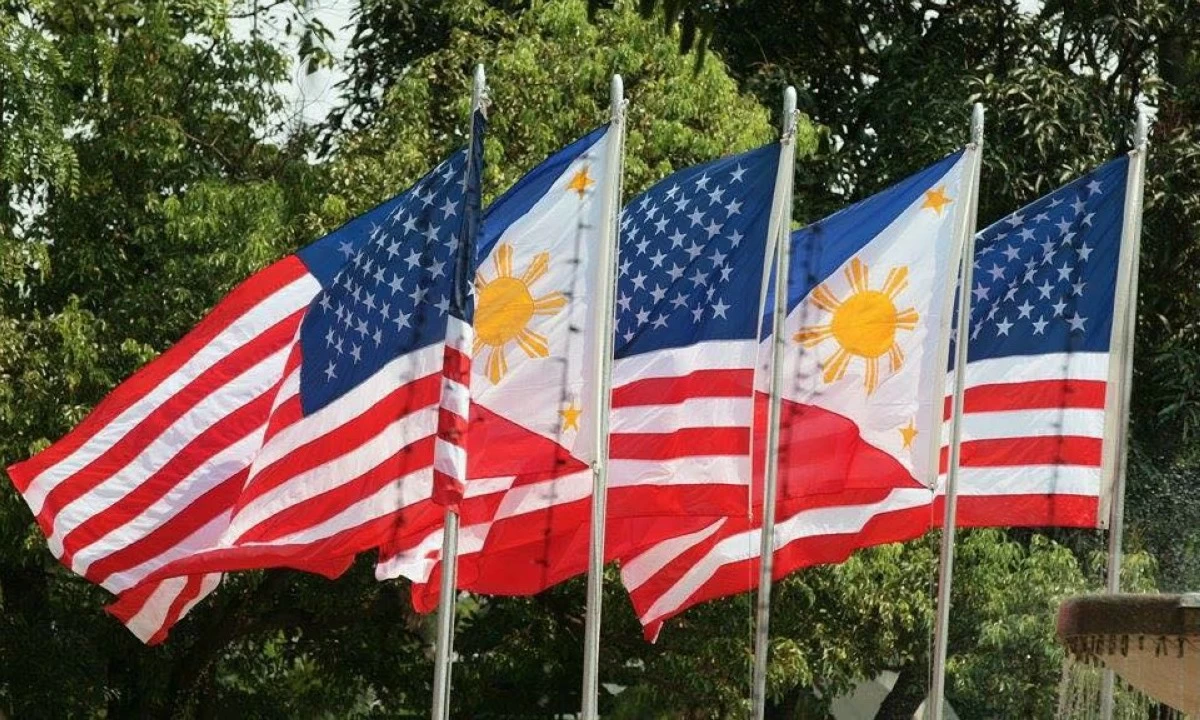
Flags of United States and the Philippines (Photo from US Embassy in Manila)
The Philippines is holding off on pursuing a free trade agreement with the United States (US), prioritizing the resolution of reciprocal tariffs before committing to a broader liberalization pact.
During a forum hosted by the US-Philippines Society, Philippine Ambassador to the US Jose Manuel Romualdez said that while the Trump administration remains open to a deal, Manila is not yet prepared to come to the table.
“They said that they're open, meaning the United States is open for a free trade agreement” said Romualdez.
“But I don't think we're prepared to go into discussions on that one until we have more or less solidified our agreement on the tariffs. But it's open,” he added.
Despite being longtime allies, the Philippines has yet to complete an agreement with the US involving the 19-percent reciprocal tariff imposed in August of last year.
US President Donald Trump began imposing steep tariffs on shipments of foreign goods as he sought to protect US competitiveness and curb what he described as unfair trade practices.
A number of countries, including those in Southeast Asia, have since finalized deals with the US that resulted in tariff reductions in exchange for certain concessions.
Romualdez said tariff negotiations with the Office of the US Trade Representative (USTR) are ongoing, and the completion of a potential agreement remains unclear.
Despite the absence of a finalized deal, Philippine exporters have still managed to post gains following the introduction of exemptions on a wide range of goods, including agricultural products.
Based on data from the Philippine Statistics Authority (PSA), the US was the top export destination for the Philippines last year, with shipments reaching $13.44 billion.
“We’ve been very happy with the exemptions that we've requested because almost all have been granted,” said Romualdez. “So that has already stabilized our basic request for our trade to be more or less balanced.”
The envoy said the most urgent concern at present is the potential imposition of tariffs on semiconductors, which is now being addressed by American companies to ensure that its impact is not too “upsetting.”
Many of these companies are also operating in the Philippines, he said.
Trump floated last year that he plans to impose tariffs on foreign-made semiconductors by as much as 300 percent, with exemptions for those that manufacture in the US or have committed to doing so.
Electronic products, which cover semiconductors, were the country’s top export commodity in 2025 at $49.96 billion.
Romualdez said the business process outsourcing (BPO) sector most recently secured the US’ commitment that it will be exempt from reciprocal tariffs.
“So bottom line is it's pretty stable. We're still continuing to talk about other issues here and there, but at the end of the day, I think we're quite happy,” he said.
Once the tariff deal is reached, Romualdez indicated that the country would be ready to begin negotiations for an FTA, citing recent legislative efforts to ease restrictions on trade and investments.
“But right now at this point in time, we're not really pushing it, in other words, because there are other more important things at this time,” he added.
Since the imposition of US tariffs on Philippine goods, the government has made a strong pivot toward negotiating more FTAs to broaden market access for local exporters.
Last month, the Philippines secured its first FTA with a Middle Eastern country through the signing of the Comprehensive Economic Partnership Agreement (CEPA) with the United Arab Emirates (UAE).
More trade deals are expected within this year and the next, including Chile, Canada, and the European Union.