







Palawan solon eyes House probe on travel tax collections usage
Published Feb 8, 2026 09:48 am


At A Glance
- A ranking congressman is calling for a House inquiry on how travel tax collection--estimated to be worth P4 billion to P5 billion annually--have been utilized, particularly on tourism developing in the countryside.
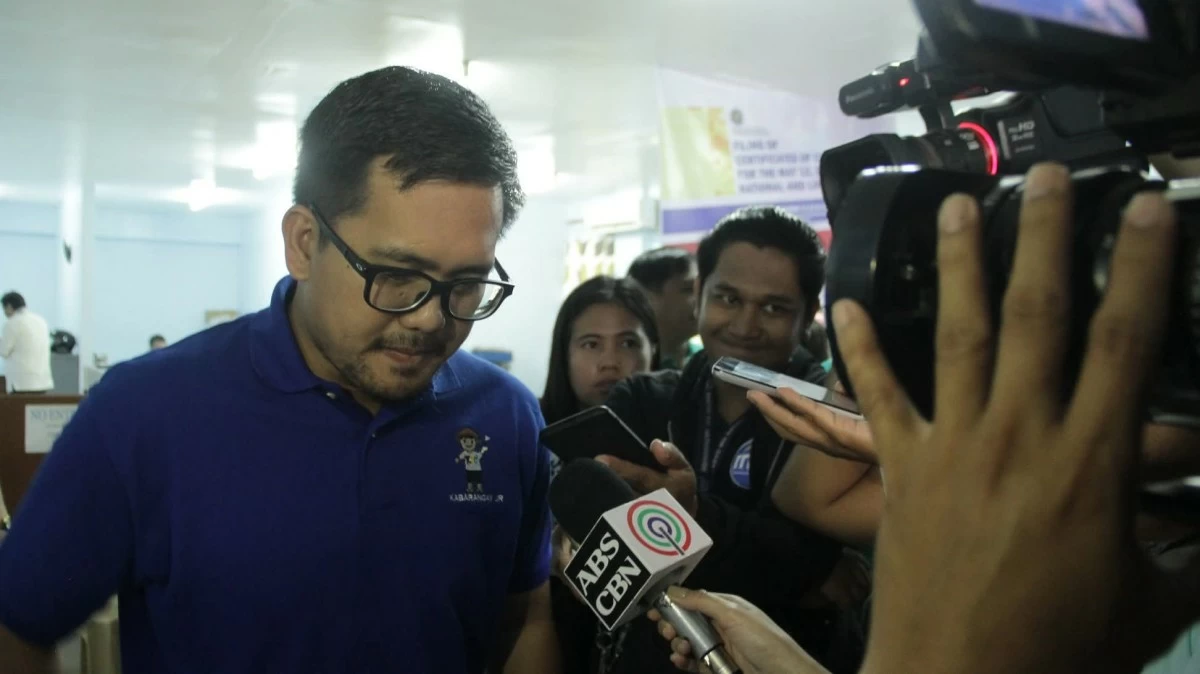
Palawan 3rd district Rep. Gil “KABARANGAYJR” Acosta (Facebook)
A ranking congressman is calling for a House inquiry on how travel tax collection--estimated to be worth P4 billion to P5 billion annually--have been utilized, particularly on tourism developing in the countryside.
Palawan 3rd district Rep. Gil “KABARANGAYJR” Acosta, a vice chairman of the Committee on Tourism in the House of Representatives, called this an "important issue that must be looked into by Congress".
Acosta made the call even as the House leadership--particularly Majority Leader Ilocos Norte 1st district Rep. Sandro Marcos--pushed tor legislation to abolish the travel tax, which had turned into a burden for Filipinos according to him.
“Yes definitely [we have to review in Congress] kung saan napunta [ang travel tax collections], especially pre-pandemic kasi from 2020, 2021, 2022, 2023 wala halos koleksyon in terms of palabas, so dapat natin balikan kung tama ba ’yung nagamit. Kung saan nagamit at kung ano ang naging epekto sa tourism Industry,” Acosta said in a news forum in Quezon City over the weekend.
(Yes, definitely we need to review in Congress where the travel tax collections went, especially before the pandemic, because from 2020, 2021, 2022, 2023 there was hardly any collection from outbound travel. So we should go back and check if the funds were used properly, where they were spent and what impact they had on the tourism industry.)
Acosta said travel tax collections average ranged from P4 billion to P5 billion every year, with proceeds divided among the Tourism Infrastructure and Enterprise Zone Authority (TIEZA), the Commission on Higher Education (CHED), and the cultural sector.
The Palawan solon said the inquiry should cover both pre-pandemic and post-pandemic periods to determine whether travel tax proceeds were properly spent and whether they translated into meaningful improvements for the tourism sector.
He added that the issue also requires closer coordination among government agencies, citing delays and bottlenecks in infrastructure projects.
“’Yan po yung dapat pag-usapan ng mga inter-agency ng ating gobyerno dahil nasabi n’yo na din po ang DPWH (Department of Public Works and Highways) minsan nga po ang project natitigil kasi ‘yung DPWH project walang ECC (Environmental Compliance Certificate), Dapat bago mo i-propose sa DPWH kinunan mo muna ng ECC so dapat kung gobyerno ka ikaw una dapat ang sumunod sa mga patakaran ng ating pamahalaan,” he said.
(That’s what should be discussed among the government’s inter-agency groups, because as you mentioned, sometimes DPWH projects are halted due to the lack of an ECC. Before proposing a project to DPWH, you should first secure an ECC. So if you’re the government, you should be the first to follow the rules of our own administration.)
“In all fairness naman po sa DOT (Department of Tourism), I could only speak of my province, meron hong dalawa, one in the north and one in the south. Maganda naman po, maganda, but sa probinsya ko ho iyon. Dalawa,” he said, referring to tourism comfort room facilities in Palawan," he added.
(In all fairness to the DOT, I can only speak for my province, there are two facilities, one in the north and one in the south. They’re good, they’re well-built, but that’s in my province. Two,” he said, referring to tourism comfort room facilities in Palawan.)
While acknowledging the efforts of the DOT, Acosta stressed that the scale of infrastructure support remains inadequate for a province consistently promoted as a top island destination.
“Kasi ho dapat talagang mag-invest ng malaki. For example kung kayo pupunta sa aming lalawigan, pupunta kayo ng Puerto Princesa, ang akala ng tao ang El Nido ay 30 minutes away. But it’s not. It’s almost four hours. Kung mabagal-bagal mga five hours,” the House leader explained.
(Significant investment is really needed. For example, if you visit our province and go to Puerto Princesa, people often think El Nido is just 30 minutes away. But it’s not. It’s almost four hours. If you travel slowly, it can even take five hours.)
For Acosta, the gap between Palawan’s tourism potential and the actual state of its facilities underscores the need to revisit how travel tax funds are allocated and whether they are reaching destinations that need them most.
Acosta said the tourism panel intends to look closely at these issues to ensure that revenues collected in the name of tourism genuinely support infrastructure, accessibility and long-term growth of the industry.
He has expressed support for Marcos' move to scrap travel tax, embodied in the latter's House Bill (HB) No. 7443.
Under HB No.7443, the travel tax imposed under Presidential Decree (PD) No.1183 and related provisions of the Tourism Act of 2009 would be repealed, ending the collection of charges that now reach P2,700 for first-class passengers and P1,620 for economy travelers.
Marcos says the levy has outlived its purpose and now works against economic recovery, mobility and regional competitiveness.