







These designs give pineapple leaf waste a second life
By John Legaspi
Published Feb 7, 2026 07:32 am


When it comes to truly Filipino materials, one that would dominate the list would be piña. For years, the handwoven textile has been seen as both luxurious and traditional, often used for Filipino garments such as the Barong Tagalog. It has been embedded so much in the Philippines’ rich heritage that it has been touted by many as the “Queen of Philippine Textiles.”
But the life of pineapple fiber doesn’t stop at piña. That is something Hiblatech is pushing forward: innovation that starts from raw materials. To do that, the Philippine-based materials venture looked at the pineapple leaf waste that is produced after the creation of piña. These fiber byproducts of the piña-making process are given new life through collaborations with farmers, manufacturers, and fabricators.
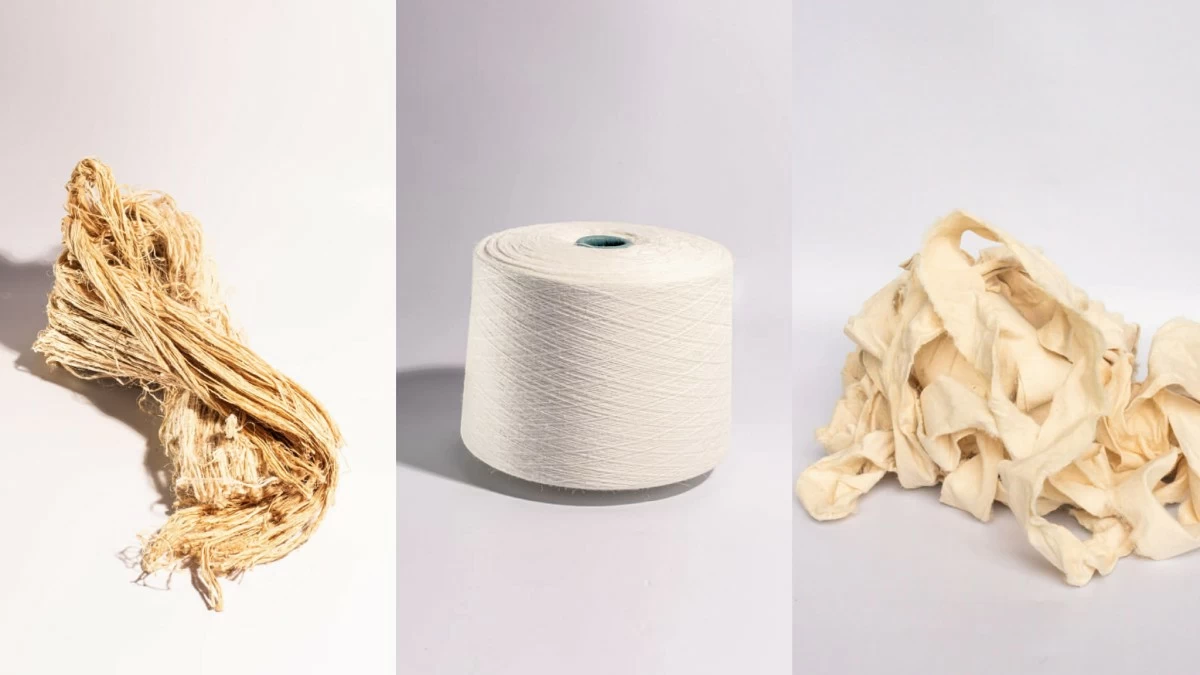
Hiblatech fiber, thread, and pelt
“The fibers come from different farms, largely from Mindanao, South Cotabato, and North Cotabato. We also have farms in the Calamba area,” Tina Sabarra, Hiblatech co-founder, tells Manila Bulletin Lifestyle. “Those are the pineapple plantations. The farmers extract the fibers, and the waste is brought to Laguna to turn them into felt.”
To make them into workable materials, Hiblatech worked with Chuck Lazaro of Asia Textile Mills, a pioneer in natural fiber processing with over 40 years of experience in the industry. One of the products Hiblatech has produced is Hiblafelt. The nonwoven fabric sits within an established textile category but introduces a different material logic. It is designed to be built upon and open pathways for hybrid applications, thus taking pineapple fibers beyond fashion, but also into something that can be used in interiors, furniture, lighting, and experimental design.
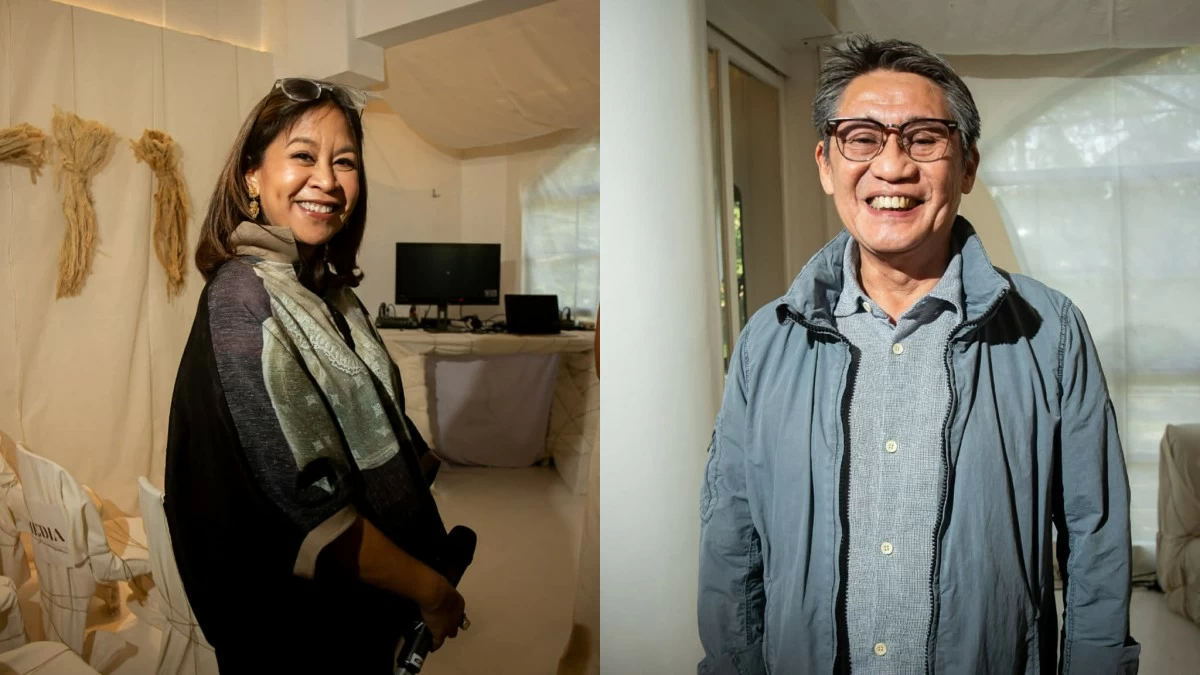
Tina Sabarra and Chuck Lazaro
“New materials tend to unsettle established workflows,” Chuck says. “They resist familiar tools. They don’t behave the way designers expect them to. For some, that friction is reason enough to turn away. Hiblatech sees it as the point. Changing the base material, after all, requires adjusting processes, not just aesthetics.”
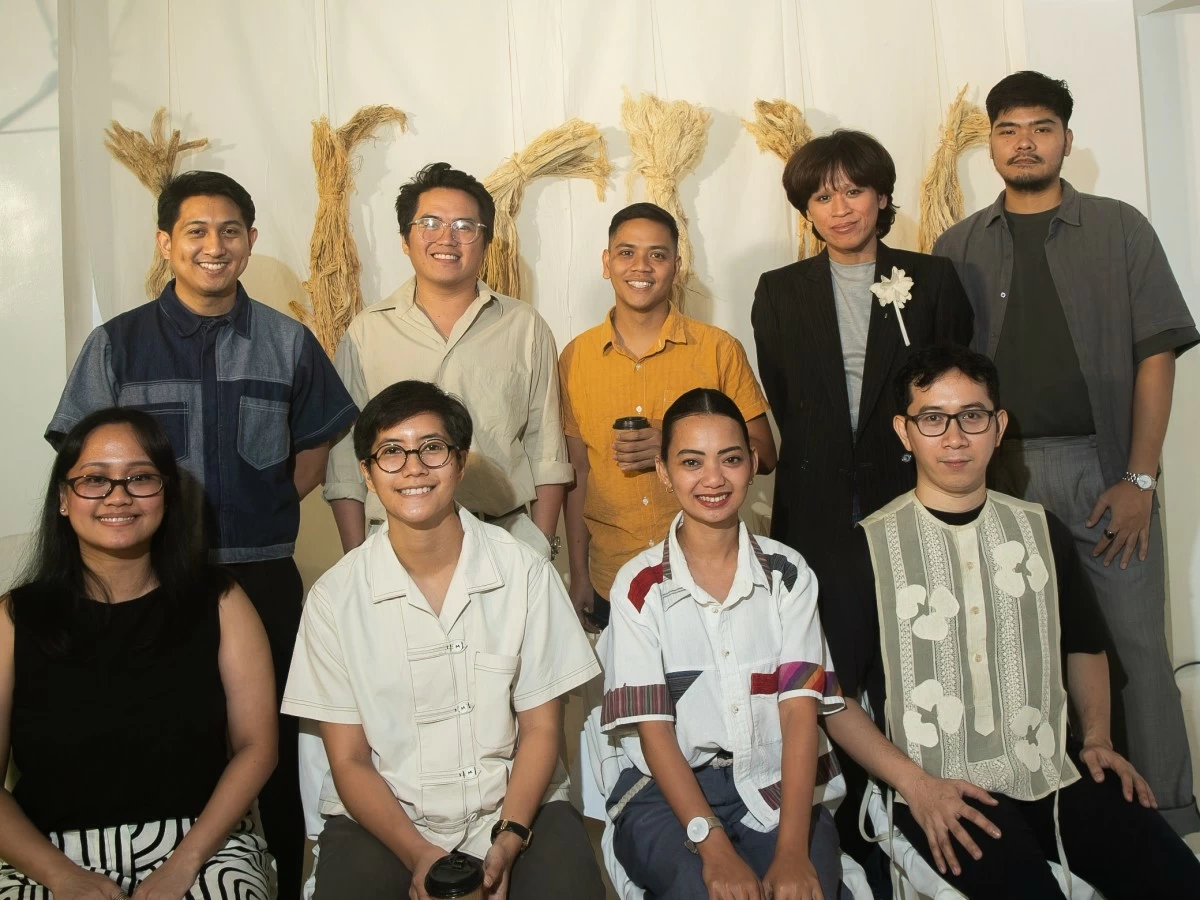
MODERN VISIONARIES (Standing) Daniel Ubas, Jasser Aguila, Razel Mari, Dee Javier, Edward Sibunga, (seated) Viktoria Laguyo, Selena Placino, Jema Gamer, and Marc Carcillar
To present the design possibilities, Hiblatech tapped rising creatives from different fields to produce pieces spotlighting Hiblafelt and other materials. The goal is to create items that would eventually “add value locally through design rather than exporting anonymous raw materials; to expand income opportunities at the source; and to build something that could stand in global conversations about materials, not just local ones,” as Tina puts it. On Jan. 22, 2026, at Vestido Manila in Makati City, the finished products were put on display.
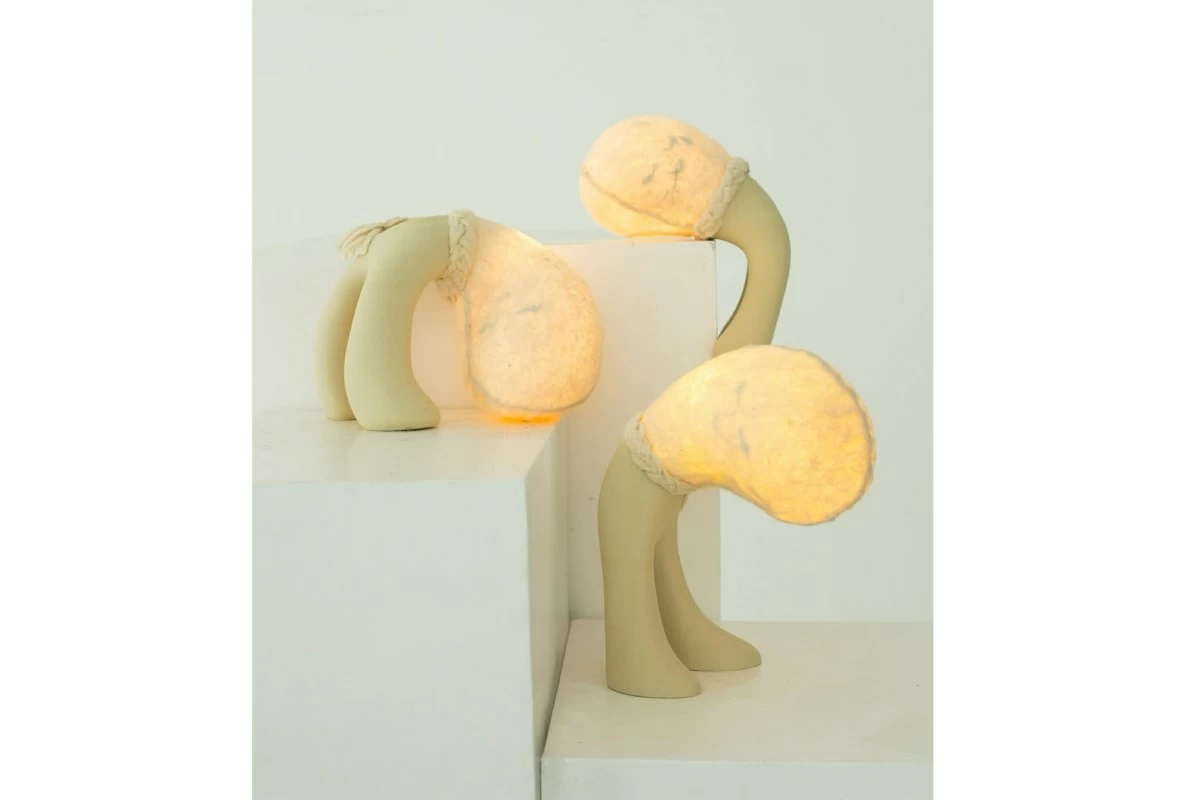
‘It’s Okay’ by Chini Lichangco
‘It’s Okay’ by Chini Lichangco
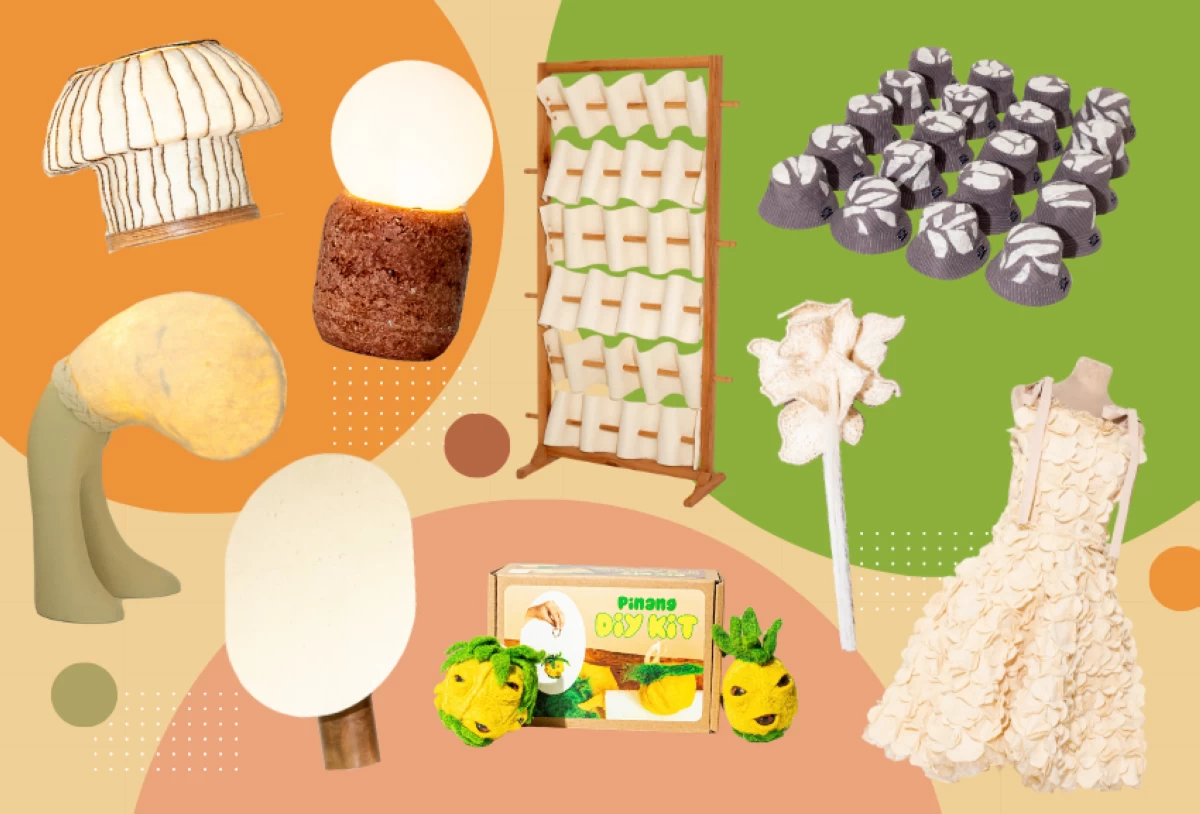
Artist Chini Lichangco presents a collection of rechargeable table lamps. Hand-sculpted in clay and finished with hand-stitched pineapple fiber, the lamps’ tilted forms reflect the quiet weight of anxiety but reveal a smiley face when lit up.
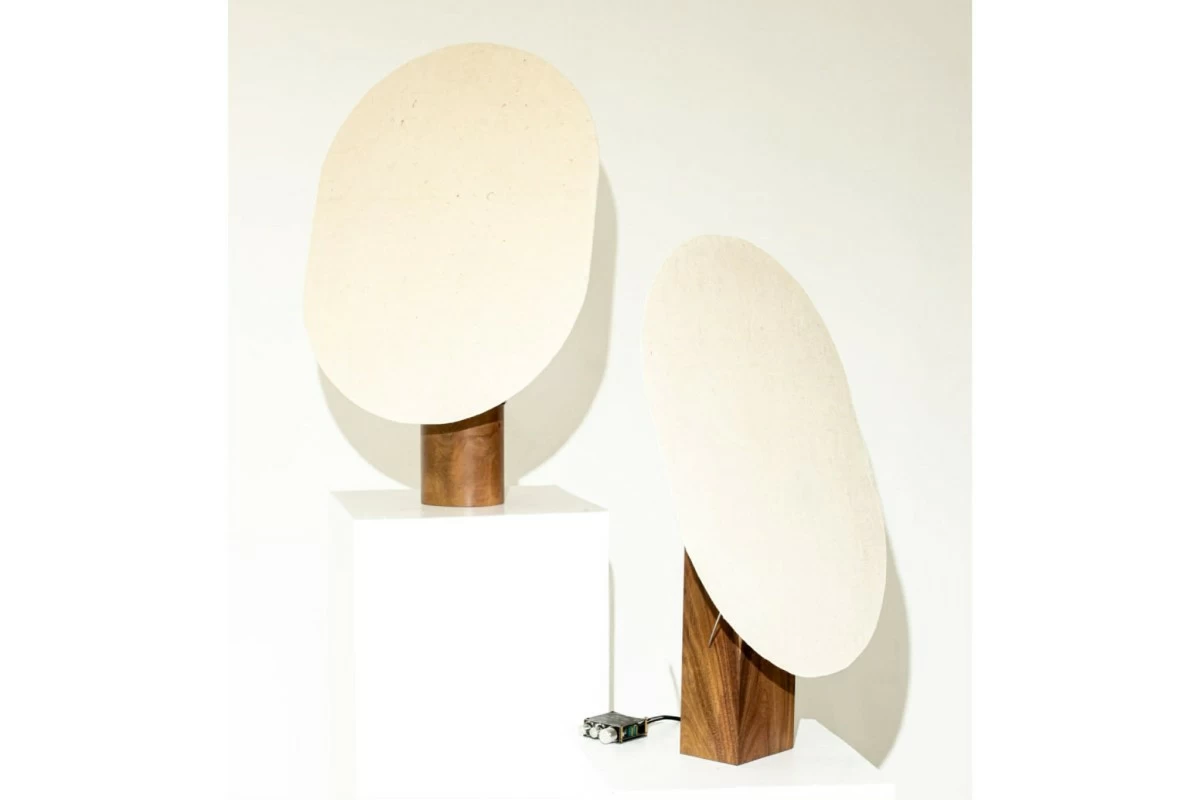
‘Piña Sound Panel’ by E/lou
‘Piña Sound Panel’ by E/lou
Edward Sibunga, the furniture designer behind E/lou, explores how piña felt can carry sound. Designed for ambient listening, the piece sits between material experiment and functional object, where sound and form are inseparable.
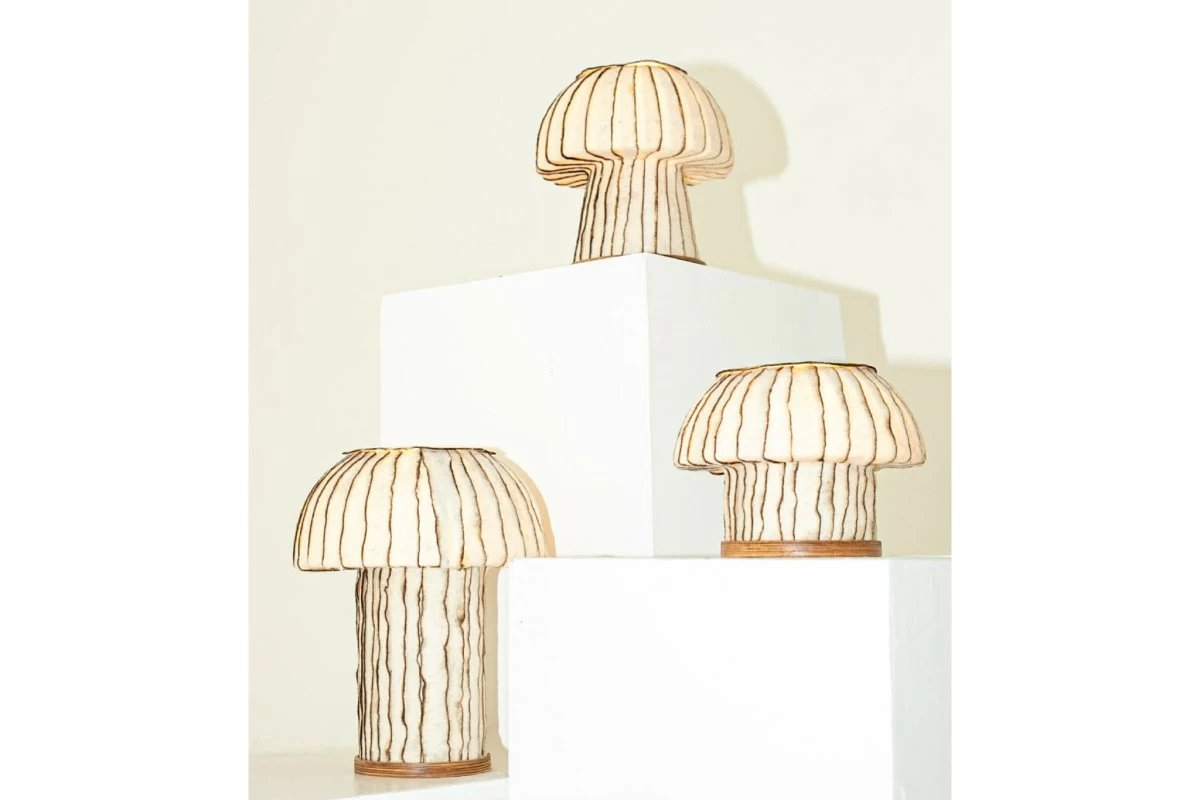
‘Kabu Lamps’ by Jasser Aguila
‘Kabu Lamps’ by Jasser Aguila
Filipino industrial designer Jasser Aguila hand-layered strips of Hiblafelt to create a sculptural lighting collection. He burned the edges of the strips to give contrast to the material’s translucency when it is lit up.
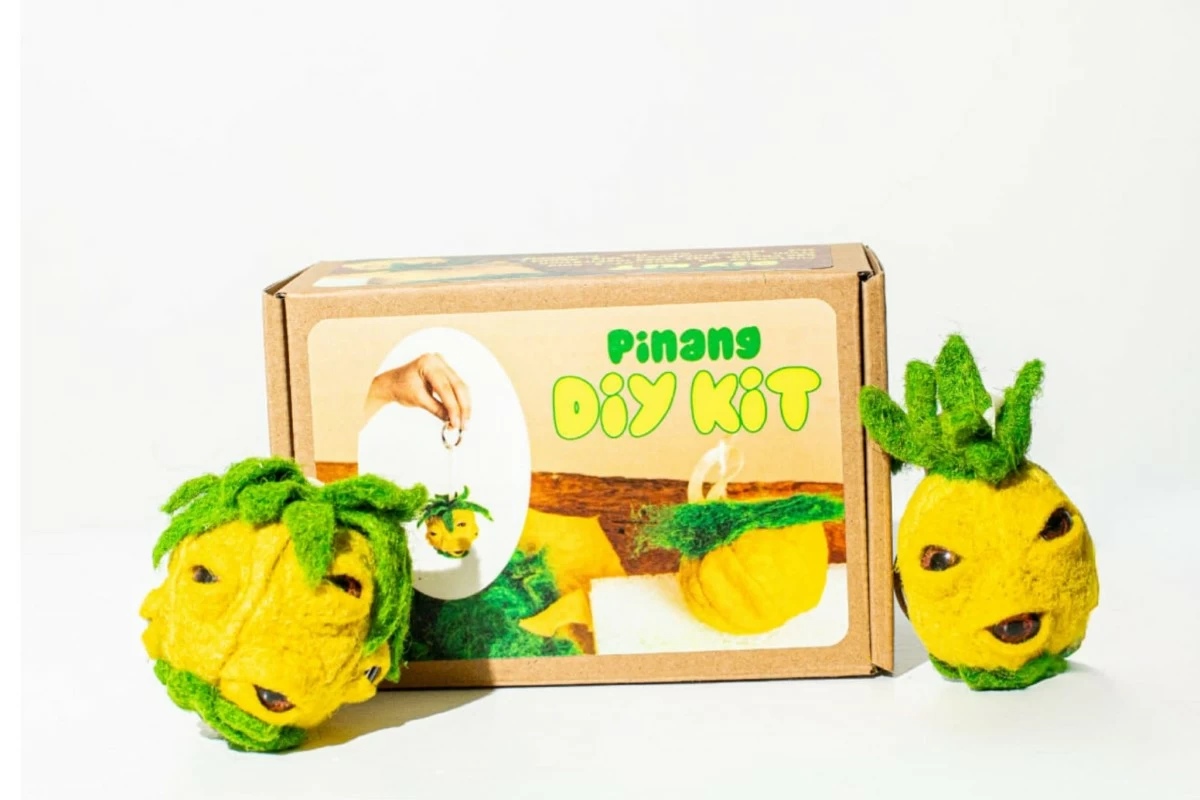
‘Pinang DIY Kit’ by Razel Mari
‘Pinang DIY Kit’ by Razel Mari
Unlike others who produced ready-made items, Bulacan-based artist Razel Mari invites people to experience the creative process through the “Pinang DIY Kit.” It spotlights raw fibers, which people can use to create a one-of-a-kind bag charm through needle felting.
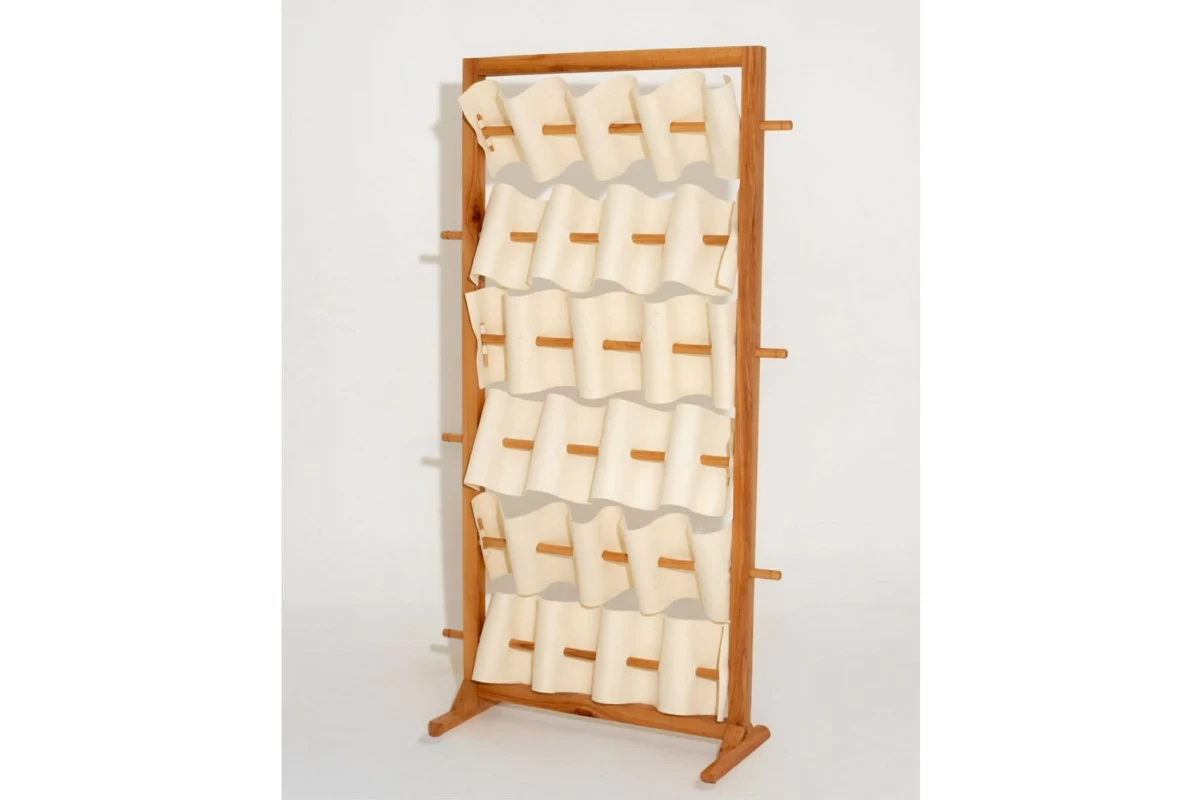
‘Ihawi’ by Selena Placino
‘Ihawi’ by Selena Placino
Filipino industrial designer Selena Placino took inspiration from “ihawan” to create a freestanding room divider. Like the act of cooking skewered food on a grill, the panels can be turned to play with light, shadow, and openness.
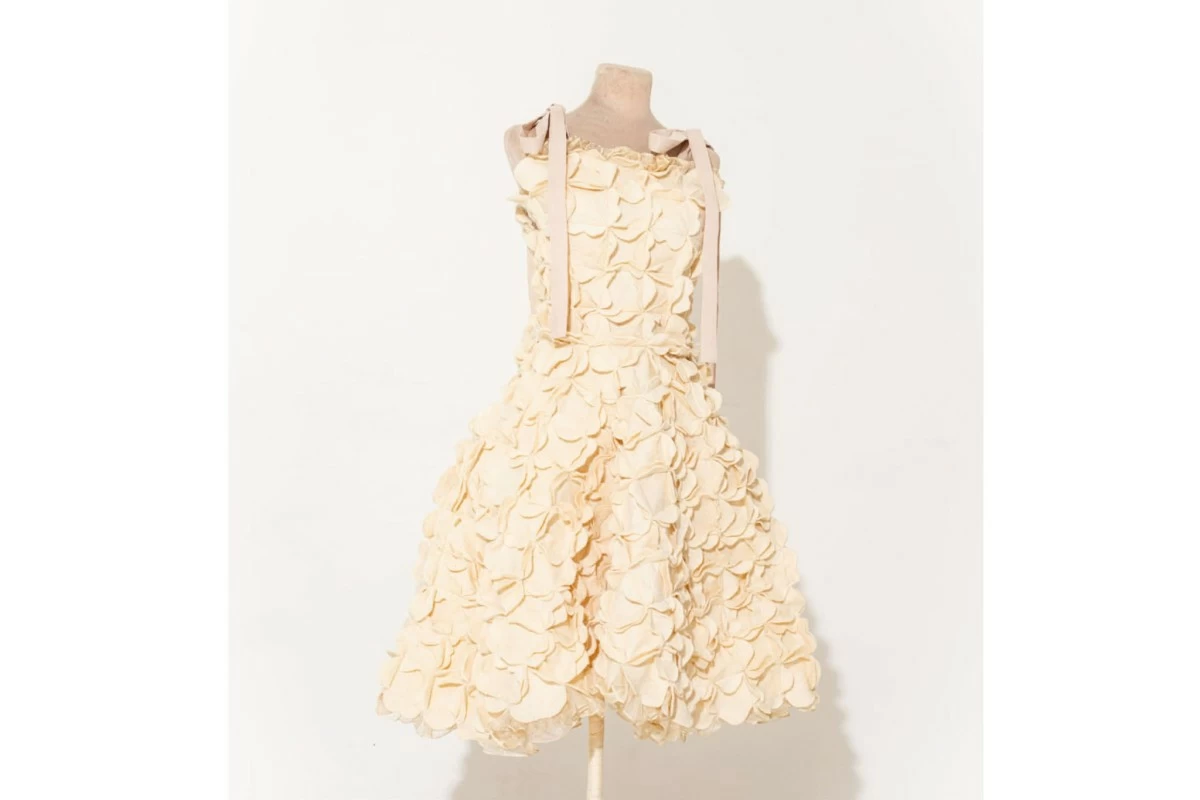
‘Orkilap’ by Modista
‘Orkilap’ by Modista
Fashion designer Jema Gamer used pinyapel from Hiblatech to construct an apron and dress inspired by the organic form of orchids and the softness of clouds. The piece is constructed by cutting flower and concave shapes and sewing them into alternating silhouettes to create a unique 3D effect.
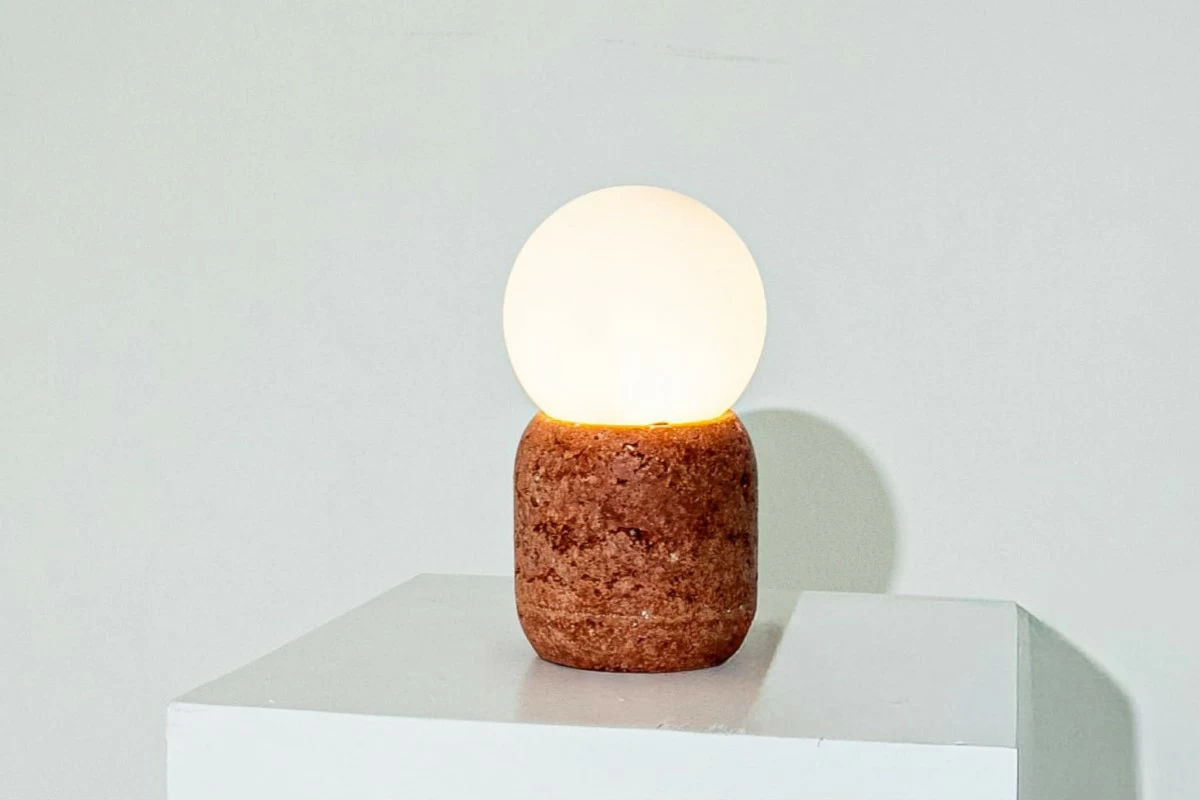
‘Pouf Lamp’ by Krete Manila
‘Pouf Lamp’ by Krete Manila
Daniel Ubas and Viktoria Laguyo of Krete Manila experimented with papercrete, a lightweight composite of recycled paper, to create a minimalist lamp. The papercrete is reinforced with Hiblatech pineapple fiber trims, balancing reduced weight with structural strength.
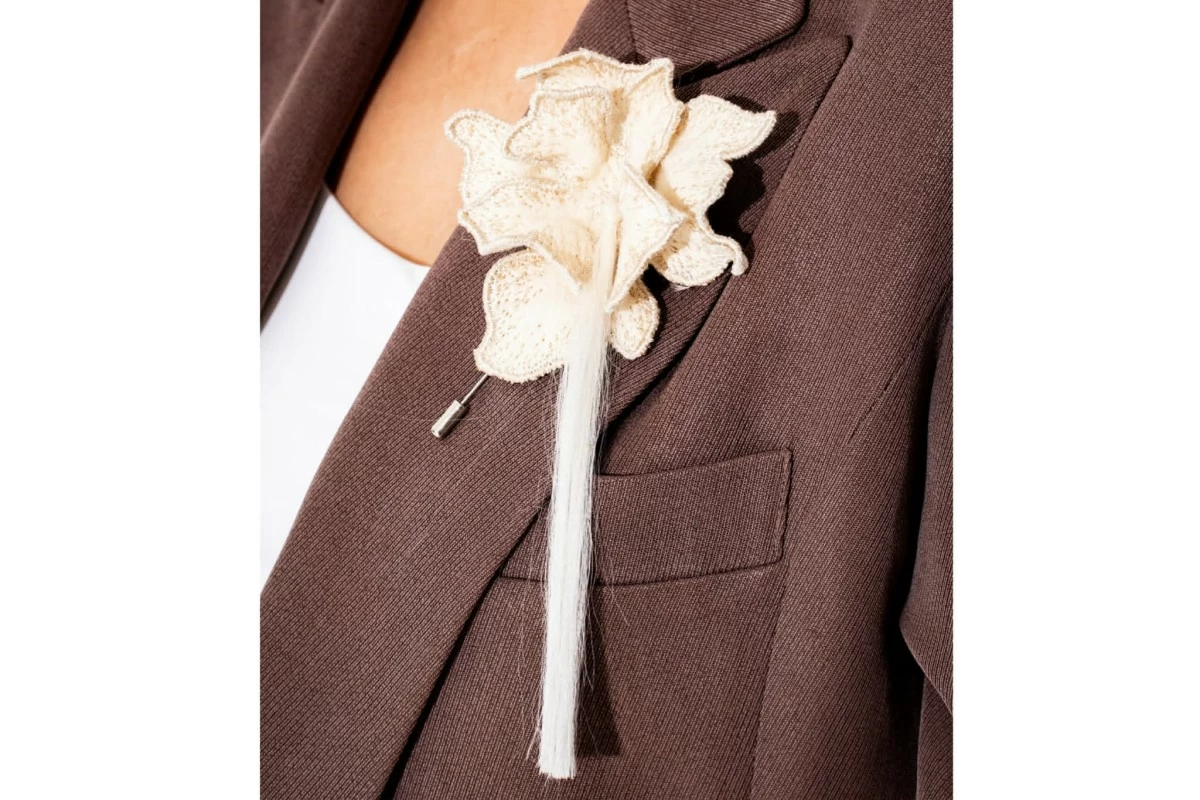
‘Letticia’ by Dee Javier
‘Letticia’ by Dee Javier
Dee Javier’s embroidered tote bag and brooch are made with Hiblafelt and piña fiber tassels. Inspired by a mother’s old garden, it is a gentle ode to her—simple, light, and grounded.
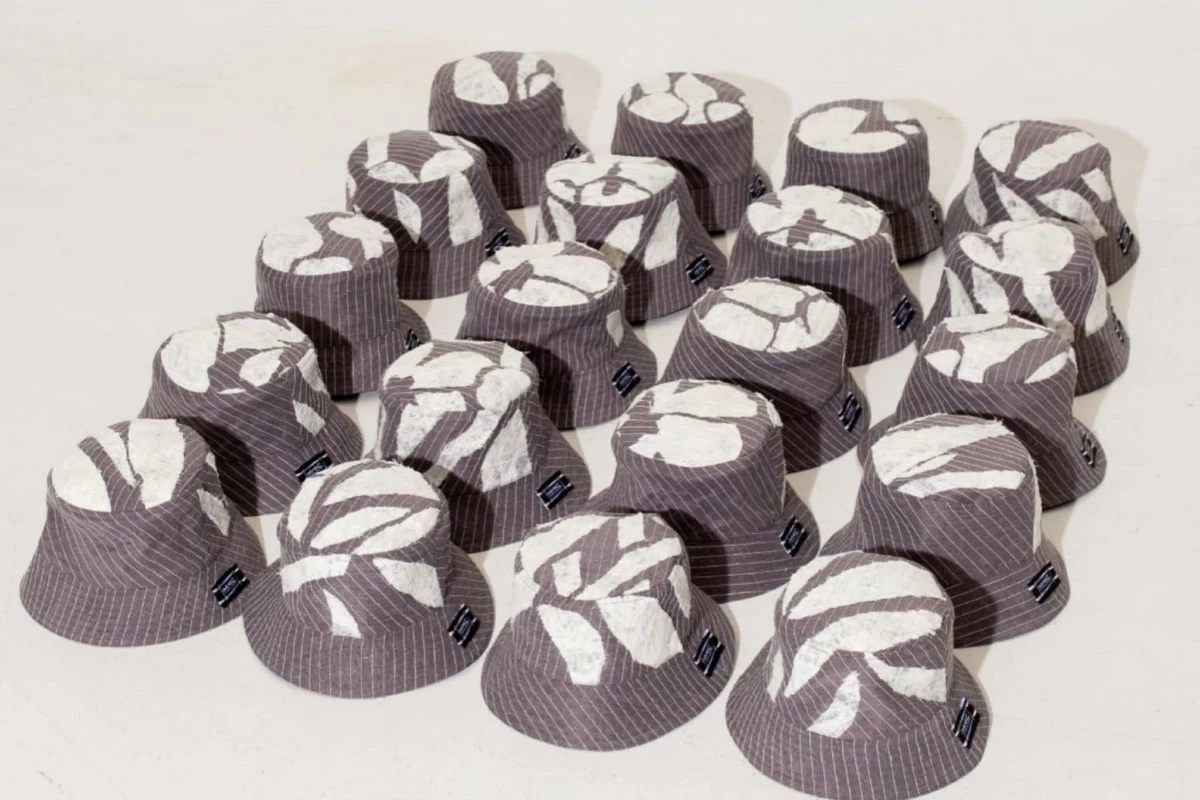
‘Fill in the Gap’ by Marc Carcillar
‘Fill in the Gap’ by Marc Carcillar
Marc Carcillar designed a bucket hat series that incorporates Hiblatech-woven fabric, rugged topstitching, and translucent layers of laminated tulle and lace.
The exhibition is just one of the initial moves of Hiblatech in introducing its materials for design. Its mission is to continue collaborating with creators and manufacturers to fully explore their materials. As part of its continuing education, Hiblatech will also be hosting a series of workshops to deepen the understanding of the materials and their potential applications. For more information, visit www.hiblatech.com.