







National Arts Month: The enduring power of Filipino creativity
Published Feb 7, 2026 12:05 am
|
Updated Feb 6, 2026 04:34 pm


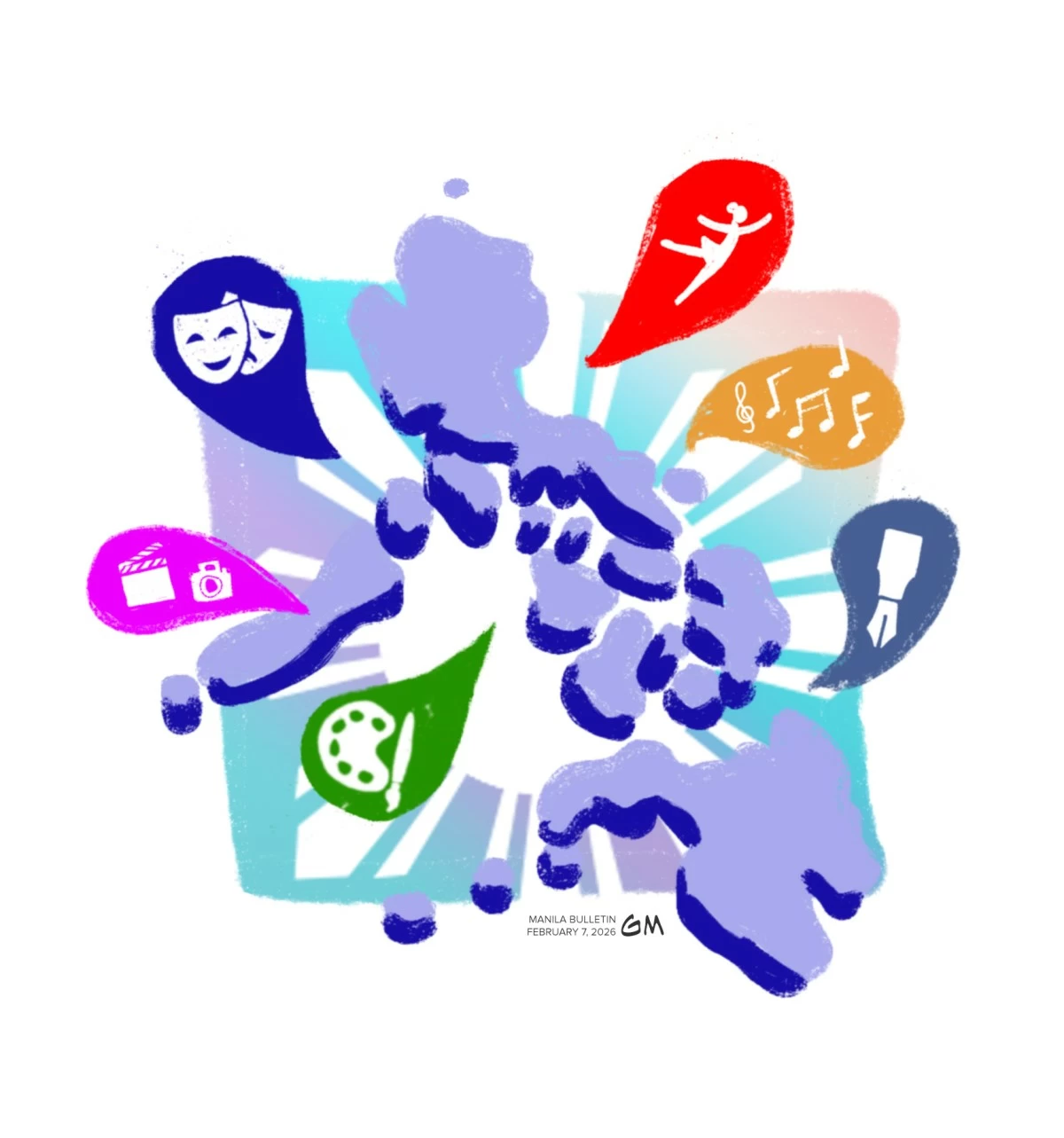
Every February, the Philippines pauses—if only for a moment—to honor the power of imagination, expression, and collective memory through National Arts Month (NAM).
This year’s theme, “Ani ng Sining: Katotohanan at Giting” (Fruits of the Arts: Truth and Bravery), is timely – it reminds us that the arts remain one of the most enduring spaces where truth can be spoken with honesty and courage.
The arts preserve our stories, challenge our complacency, and give form to our collective hopes. They teach us to listen—to histories long silenced, to voices at the margins, and to futures not yet realized.
Art has always carried the Filipino experience—our struggles, joys, indignations, and aspirations—and National Arts Month reminds us that creativity is not an escape from reality but a way of engaging it more deeply.
National Arts Month, instituted by Presidential Proclamation No. 683 in 1991, is far more than a ceremonial tribute to culture. It is a reaffirmation that the arts are essential to who we are as a people and to where we hope to go as a nation.
Throughout history, Filipino artists have used their craft to advocate for social justice, document the struggles of everyday life, and envision a better future. Art gives voice to what words sometimes cannot express and reveals truths that actions alone cannot convey. It fosters empathy, challenges perspectives, and inspires change.
The celebration of NAM 2026, led by the National Commission for Culture and the Arts (NCCA), underscores inclusivity by bringing celebrations to Luzon, Visayas, and Mindanao. This nationwide approach sends the message – art is not confined to galleries in major cities or stages for the privileged few. It belongs to communities, to public spaces, and to everyday life.
The celebration highlights seven art forms—architecture, cinema, dance, dramatic arts, literary arts, music, and visual arts—each reflecting different facets of Filipino life.
The month also emphasizes arts’ role in building livable communities and responsible governance—an often overlooked but crucial contribution. Artistic practice nurtures critical thinking, empathy, and civic imagination. Murals can reclaim neglected spaces, performances can revive communal pride, and films and literature can question systems of power without resorting to violence. In this sense, art is both mirror and compass: it reflects our present conditions while pointing toward more just and sustainable futures.
Around the country this month, initiatives like citywide art walks, museum programs, and open-air concerts reinforce a simple but radical idea –art belongs everywhere. When people encounter creativity in parks, malls, transport hubs, and streets, it ceases to be intimidating or distant. It becomes part of daily life, inviting participation rather than passive admiration.
Ultimately, supporting National Arts Month is about recognizing that nation-building is not achieved by infrastructure and policy alone. It also requires meaning, memory, and imagination.
As February unfolds, National Arts Month calls on us not just to watch or applaud, but to engage: attend a performance, visit a museum, read a poem, support a local artist, or create something of our own. In doing so, we affirm that truth and courage are not abstract ideals, but values we practice together. Through the arts, we harvest not only beauty, but a deeper sense of who we are—and who we can still become.