







Waste in the water, laws on paper
The challenge of making policy work
By Nina Unlay
Published Feb 6, 2026 11:42 am
|
Updated Feb 6, 2026 02:10 pm



Since the deadly landfill collapse in Cebu, discussions around the country’s waste management policies have intensified. Department of Environment and Natural Resources (DENR) Secretary Raphael Lotilla recently said the agency would take a closer look at Republic Act No. 9003, or the Ecological Solid Waste Management Act, passed in 2000, and conduct “a thorough review of its implementation.”
The question of implementation is visible in various parts of the country, including Manila Bay.
Moored in front of the Cultural Center of the Philippines is The SeeCow, a project of the non-profit organization One Earth One Ocean. The solar-powered catamaran is designed to collect up to 500 kilograms of marine litter daily from Manila Bay.
“The ocean is our biggest carbon sink and oxygen producer. By 2030, scientists say there will be more plastic in the water than fish,” said Daniel Scheler, president of One Earth One Ocean Philippines.
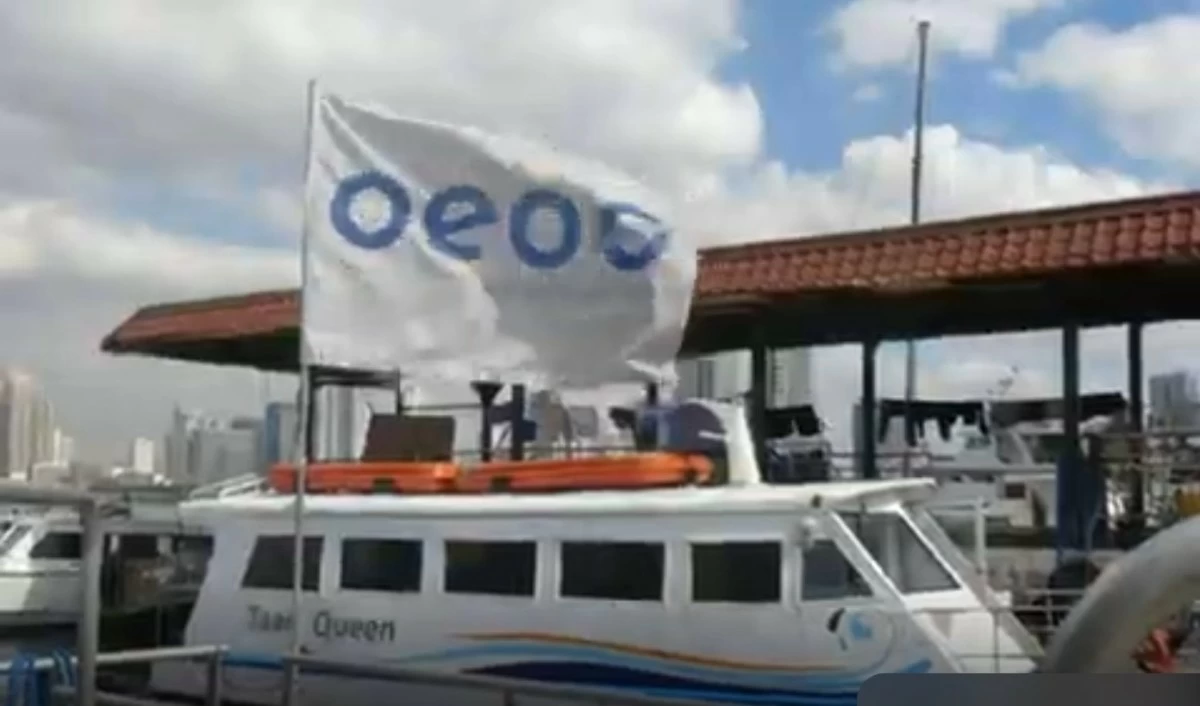
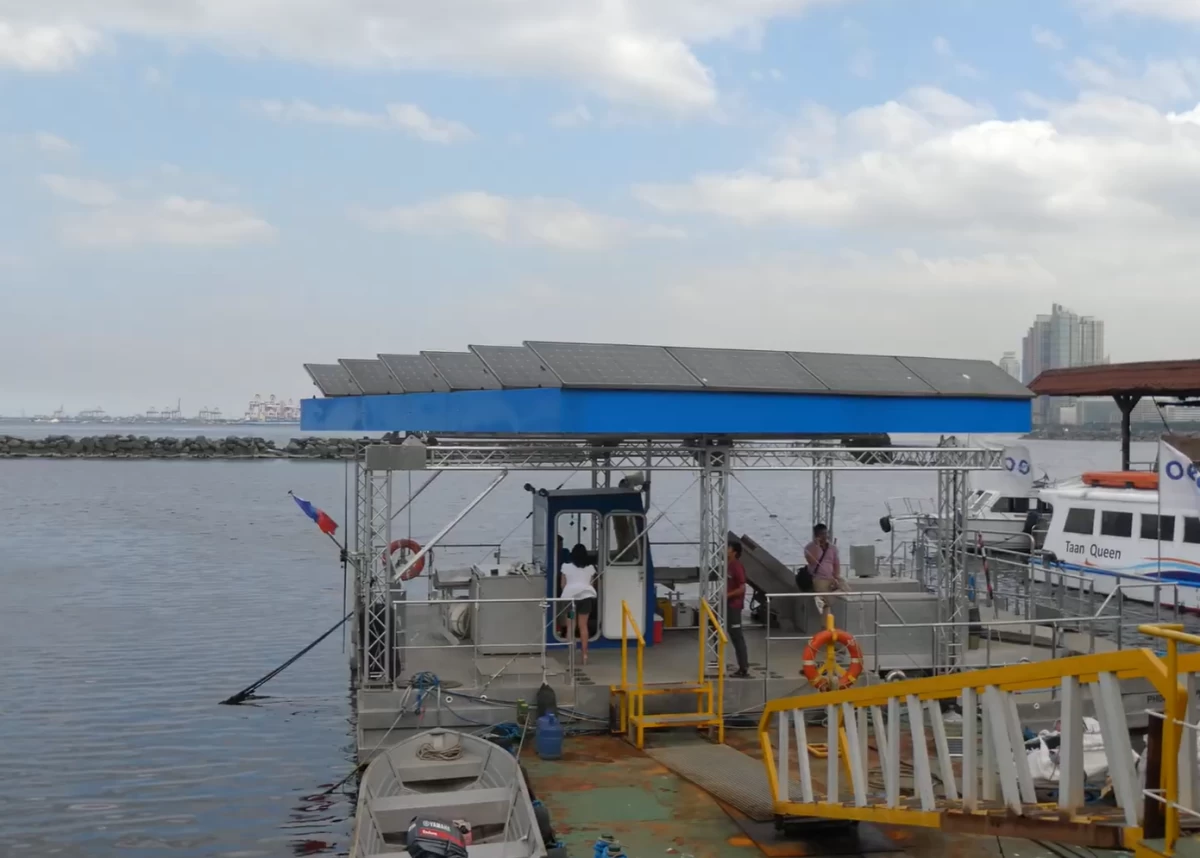
The SeeCow has been operating in Manila Bay since 2021. It was shipped from Germany in parts and assembled locally. Under normal conditions, it operates from 8 a.m. to 5 p.m., with its crew collecting and sorting marine waste. Organic matter is returned to the water, while plastic, glass and other recyclable materials are sent to recyclers.
On the day of the visit, the vessel remained docked as the project was transitioning between funders and required paperwork was still being completed.
According to One Earth One Ocean Philippines, the Manila Bay project currently operates without financial support from local government units. The organization pays a monthly mooring fee to a private contractor to remain stationed in front of the Cultural Center of the Philippines, which is a government-owned property.
“We’ve been cleaning this area daily for the past four years, and we see ourselves as a long-term asset to the city’s environmental goals,” Scheler said. “Our hope is to eventually coordinate with the CCP and the local government units to reduce administrative costs such as mooring and event fees. If we could bridge that gap, it would turn a standard rental agreement into a powerful public-private synergy.”
Waste and policy expert Paulo Burro said challenges in the Philippines’ waste management system have long been linked to local implementation and the limited use of existing facilities.
Burro cited the landmark Manila Bay cleanup case filed in January 1999 by environmental lawyer Antonio Oposa Jr., following complaints from residents about severe pollution. In 2008, the Supreme Court ruled that the government was responsible for rehabilitating Manila Bay and directed 13 government agencies to oversee its cleanup.
“We had to figure out a creative legal strategy to get the LGUs involved,” Burro said. “This resulted in the Manila Bay Mandamus agencies, which audit LGUs in Regions 3 and 4A each year for compliance with waste management laws. LGUs that pass the audit are recognized by the DENR and the Department of the Interior and Local Government, while those that do not may face legal action.”
In recent months, waste-to-energy incineration has been discussed as a possible response to landfill capacity issues. Burro noted that this approach would require revisiting provisions of the Clean Air Act of 1999, which restrict incineration.
“If the Ecological Solid Waste Management Act and materials recovery facilities were fully utilized, landfill pressure would be reduced,” Burro said. “Proper waste segregation allows organic waste to be composted and recyclable materials to be recovered. Residual waste can be treated through different methods.”
Waste-to-energy incineration remains a subject of debate. While it could reduce reliance on sanitary landfills, it also generates hazardous ash that requires specialized disposal. Environmental risks may increase when waste is not properly segregated before processing.
The Philippines has enacted several waste-related policies over the past decades. A recent World Bank study on extended producer responsibility for plastic packaging classified the country as “advanced” in terms of implementation readiness.
In the end, the message is clear: the essential groundwork is already in place and ready for implementation. The next step lies in determining whether the government can focus on strengthening and carrying out existing policies to ensure they deliver the impact they were designed to achieve.