ADVERTISEMENT

UNLEASH Philippines brings together Filipino innovators

Published Feb 6, 2026 10:04 am
UNLEASH Philippines, a program from the Royal Academy of Engineering in the UK, has brought together Filipino innovators, providing a space to exchange insights and strengthen solutions.
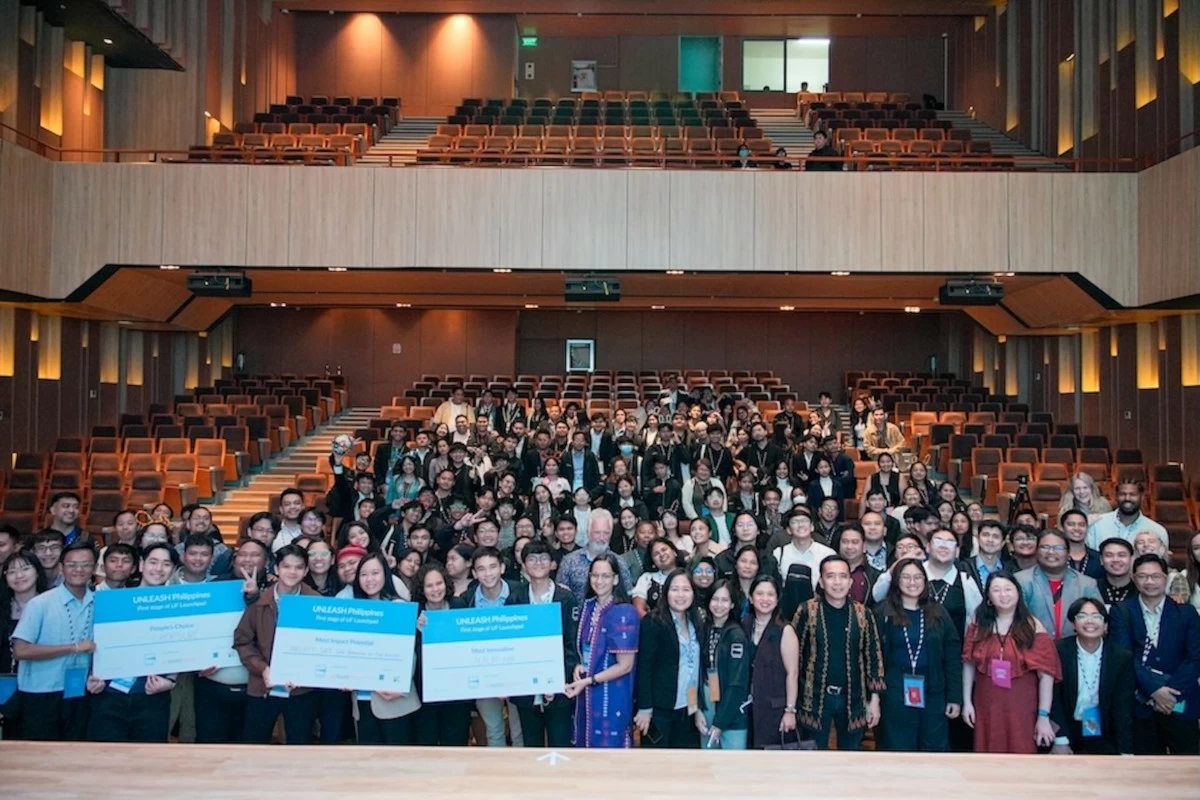
Held at the University of Santo Tomas (UST), the week-long Innovation Lab gathered 150 participants from across the Philippines. Through workshops, field visits, and co-creation sessions, teams refined solutions across three thematic tracks: Health Equity and Biomedical Innovation, Resilient Agriculture and Food Systems, and Sustainable Cities and Communities through Engineering Innovation.
Erica Urquiaga, part of the Resilient Agriculture and Food Systems track, grew up in Zamboanga del Norte in Mindanao. Her team’s project, however, was influenced by the hometown of her teammate, Mariero Gawat, in the Caraga region — known as the country’s soybean capital.
“My groupmate in Caraga encouraged us to speak directly with a soybean farmer to better understand the challenges they face,” Urquiaga said. “That conversation helped us identify areas where improvements in soybean harvesting could make the process more efficient for farmers.”
She also added that meaningful innovation doesn’t always have to be large-scale or complex. “Sometimes impact comes from addressing everyday problems, the kinds of issues people deal with regularly, and finding practical ways to make things better.”
For RVJ Gatchalian, the program reinforced the need to balance technical frameworks with lived realities.
“We often design cities from policy documents and data models. UNLEASH reminded us to sit down with actual communities,” he said.
His team’s project focuses on helping essential workers navigate mobility disruptions during flooding — an issue he observed firsthand while working with labor groups.
For Robert Anlocotan, innovation turned personal after losing an uncle to a preventable heart condition in 2022. His team’s wearable device, Art Sense, detects early signs of cardiovascular irregularities.
“The idea started as a technical solution. But after working with health workers in Navotas and hearing stories just like ours, it stopped being a project and became a responsibility,” he said.
Following the program, teams advance to the UNLEASH Prototyping Program, gaining mentorship, technical guidance, and support as they move toward implementation.
As 2026 unfolds, the challenges facing communities remain complex. But efforts like UNLEASH Philippines continue to show that collaborative, people-centered problem-solving is happening at many levels. More than a year-end milestone, it serves as a reminder that change is already in motion — and it is being built by the people who experience these challenges every day.
ADVERTISEMENT
.most-popular .layout-ratio{ padding-bottom: 79.13%; } @media (min-width: 768px) and (max-width: 1024px) { .widget-title { font-size: 15px !important; } }

{{ articles_filter_1561_widget.title }}

.most-popular .layout-ratio{ padding-bottom: 79.13%; } @media (min-width: 768px) and (max-width: 1024px) { .widget-title { font-size: 15px !important; } }

{{ articles_filter_1562_widget.title }}

.most-popular .layout-ratio{ padding-bottom: 79.13%; } @media (min-width: 768px) and (max-width: 1024px) { .widget-title { font-size: 15px !important; } }

{{ articles_filter_1563_widget.title }}

{{ articles_filter_1564_widget.title }}

.mb-article-details { position: relative; } .mb-article-details .article-body-preview, .mb-article-details .article-body-summary{ font-size: 17px; line-height: 30px; font-family: "Libre Caslon Text", serif; color: #000; } .mb-article-details .article-body-preview iframe , .mb-article-details .article-body-summary iframe{ width: 100%; margin: auto; } .read-more-background { background: linear-gradient(180deg, color(display-p3 1.000 1.000 1.000 / 0) 13.75%, color(display-p3 1.000 1.000 1.000 / 0.8) 30.79%, color(display-p3 1.000 1.000 1.000) 72.5%); position: absolute; height: 200px; width: 100%; bottom: 0; display: flex; justify-content: center; align-items: center; padding: 0; } .read-more-background a{ color: #000; } .read-more-btn { padding: 17px 45px; font-family: Inter; font-weight: 700; font-size: 18px; line-height: 16px; text-align: center; vertical-align: middle; border: 1px solid black; background-color: white; } .hidden { display: none; }
function initializeAllSwipers() { // Get all hidden inputs with cms_article_id document.querySelectorAll('[id^="cms_article_id_"]').forEach(function (input) { const cmsArticleId = input.value; const articleSelector = '#article-' + cmsArticleId + ' .body_images'; const swiperElement = document.querySelector(articleSelector); if (swiperElement && !swiperElement.classList.contains('swiper-initialized')) { new Swiper(articleSelector, { loop: true, pagination: false, navigation: { nextEl: '#article-' + cmsArticleId + ' .swiper-button-next', prevEl: '#article-' + cmsArticleId + ' .swiper-button-prev', }, }); } }); } setTimeout(initializeAllSwipers, 3000); const intersectionObserver = new IntersectionObserver( (entries) => { entries.forEach((entry) => { if (entry.isIntersecting) { const newUrl = entry.target.getAttribute("data-url"); if (newUrl) { history.pushState(null, null, newUrl); let article = entry.target; // Extract metadata const author = article.querySelector('.author-section').textContent.replace('By', '').trim(); const section = article.querySelector('.section-info ').textContent.replace(' ', ' '); const title = article.querySelector('.article-title h1').textContent; // Parse URL for Chartbeat path format const parsedUrl = new URL(newUrl, window.location.origin); const cleanUrl = parsedUrl.host + parsedUrl.pathname; // Update Chartbeat configuration if (typeof window._sf_async_config !== 'undefined') { window._sf_async_config.path = cleanUrl; window._sf_async_config.sections = section; window._sf_async_config.authors = author; } // Track virtual page view with Chartbeat if (typeof pSUPERFLY !== 'undefined' && typeof pSUPERFLY.virtualPage === 'function') { try { pSUPERFLY.virtualPage({ path: cleanUrl, title: title, sections: section, authors: author }); } catch (error) { console.error('ping error', error); } } // Optional: Update document title if (title && title !== document.title) { document.title = title; } } } }); }, { threshold: 0.1 } ); function showArticleBody(button) { const article = button.closest("article"); const summary = article.querySelector(".article-body-summary"); const body = article.querySelector(".article-body-preview"); const readMoreSection = article.querySelector(".read-more-background"); // Hide summary and read-more section summary.style.display = "none"; readMoreSection.style.display = "none"; // Show the full article body body.classList.remove("hidden"); } document.addEventListener("DOMContentLoaded", () => { let loadCount = 0; // Track how many times articles are loaded const offset = [1, 2, 3, 4, 5, 6, 7, 8, 9, 10]; // Offset values const currentUrl = window.location.pathname.substring(1); let isLoading = false; // Prevent multiple calls if (!currentUrl) { console.log("Current URL is invalid."); return; } const sentinel = document.getElementById("load-more-sentinel"); if (!sentinel) { console.log("Sentinel element not found."); return; } function isSentinelVisible() { const rect = sentinel.getBoundingClientRect(); return ( rect.top < window.innerHeight && rect.bottom >= 0 ); } function onScroll() { if (isLoading) return; if (isSentinelVisible()) { if (loadCount >= offset.length) { console.log("Maximum load attempts reached."); window.removeEventListener("scroll", onScroll); return; } isLoading = true; const currentOffset = offset[loadCount]; window.loadMoreItems().then(() => { let article = document.querySelector('#widget_1690 > div:nth-last-of-type(2) article'); intersectionObserver.observe(article) loadCount++; }).catch(error => { console.error("Error loading more items:", error); }).finally(() => { isLoading = false; }); } } window.addEventListener("scroll", onScroll); });

Sign up by email to receive news.