






Manila Bulletin
 Business
Trade & Industry
DA allocates ₱300 million for climate-resilient high-value crop production
Business
Trade & Industry
DA allocates ₱300 million for climate-resilient high-value crop production
Business
Trade & Industry
DA allocates ₱300 million for climate-resilient high-value crop production
DA allocates ₱300 million for climate-resilient high-value crop production
Published Feb 6, 2026 03:01 pm


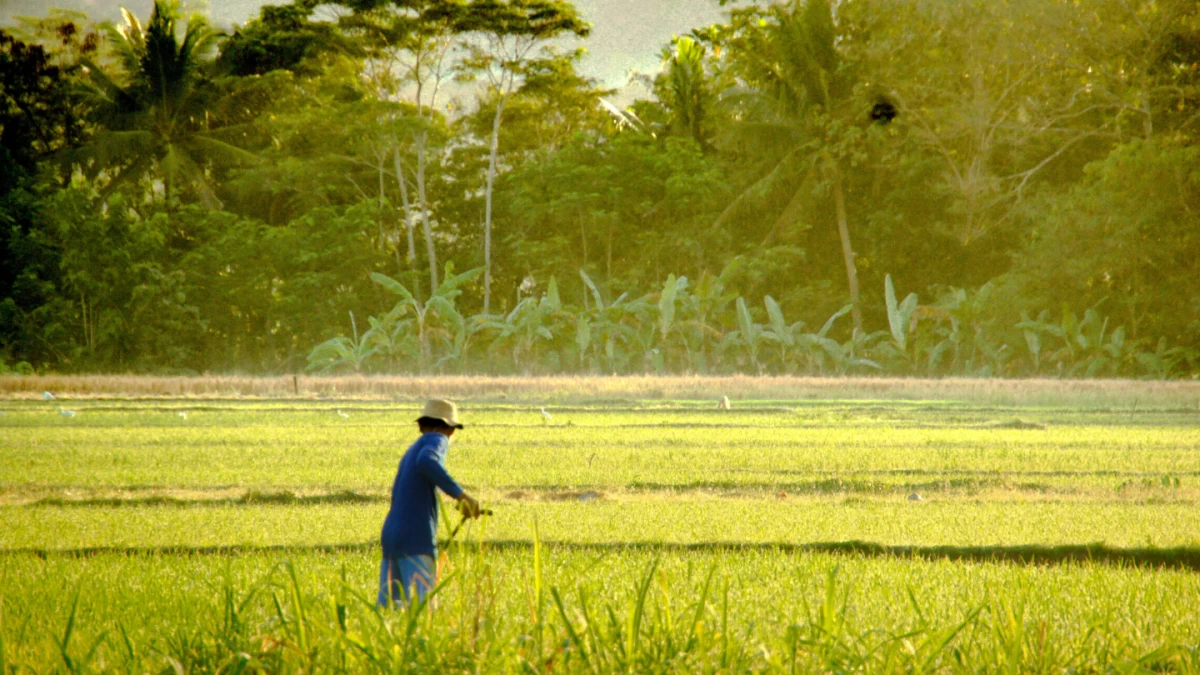
The Department of Agriculture (DA) will allocate ₱300 million this year to expand climate-resilient farming systems, seeking to stabilize the production of high-value crops and mitigate price spikes driven by increasingly volatile weather.
In a statement, Agriculture Secretary Francisco Tiu Laurel said the earmarked funding will help finance a protected cultivation system called the “White Revolution” to boost local vegetable production.
In particular, the program will help build a crop management system through greenhouses, drip irrigation, and water-impounding systems to reduce farmers’ exposure to increasingly volatile weather.
Tiu Laurel said that high-value crops such as tomatoes, chili, and bell peppers experience annual price increases due to production disruptions caused by extreme heat, heavy rains, or flooding.
“What we want is continuous production, year-round whether it’s dry or rainy,” he said.
Through the program, the DA will deploy rain shelters and basic greenhouse structures to provide “partial protection” for crops against weather disturbances while enabling more efficient water use through drip irrigation and misting systems.
These facilities will be located near major consumption centers, such as Metro Manila, Metro Cebu, and Metro Davao, to shorten delivery times and reduce post-harvest losses.
As a complementary measure, the DA will work with cooperatives and farmer associations to establish seed and seedlings production to help equip farmers with the necessary planting materials.
“The department aims to generate stable volumes that can reliably supply major urban markets and dampen the boom-and-bust cycles that hurt both farmers and consumers,” it said.
The DA said the program will be rolled out in selected pilot municipalities, with state-run Food Terminal Inc. (FTI) committing to buy the harvested crops at pre-agreed prices.
Tiu Laurel earlier said that FTI will also invest in processing facilities to convert these crops into processed goods. For one, fresh chili can be converted into flakes or paste, which are widely used by restaurants, food processors, and retailers.
“If this proves successful and farmers earn from it, they will push for its continuation and scale up the system —even under the next administration,” he said.
The investment in high-value crops comes as the DA ramps up efforts to expand the reach of local commodities abroad, after the country reclaimed its position as the world’s second-largest banana exporter.
To formalize this push, the DA recently launched the Agri-Export Help Desk to serve as a one-stop platform to streamline services, strengthen inter-agency coordination, and provide timely assistance to exporters.