






Manila Bulletin
 Environment and Sustainability
Climate Reality PH pushes renewable energy transition, highlights need to strengthen GEOP
Environment and Sustainability
Climate Reality PH pushes renewable energy transition, highlights need to strengthen GEOP
Environment and Sustainability
Climate Reality PH pushes renewable energy transition, highlights need to strengthen GEOP
Climate Reality PH pushes renewable energy transition, highlights need to strengthen GEOP
Published Feb 6, 2026 01:36 pm


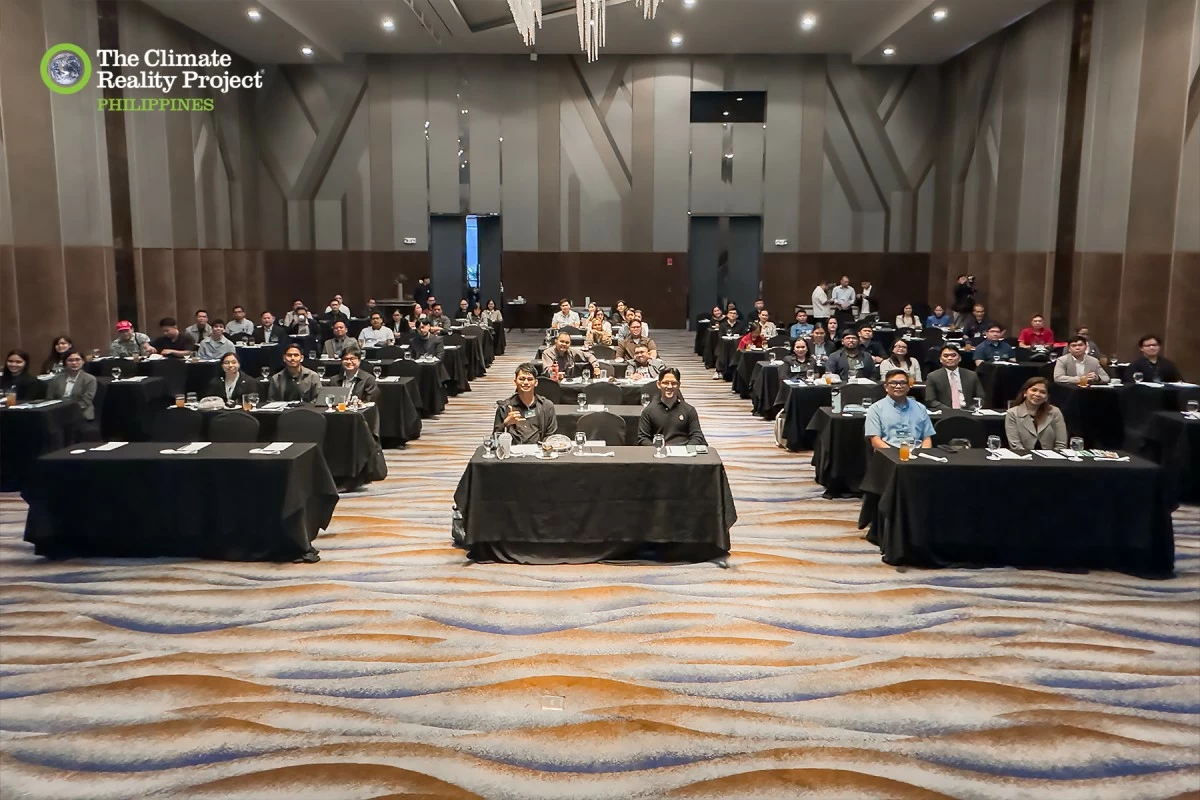
Climate Reality Philippines holds REalize 2026: Advancing a Renewable Energy Future through GEOP Research, Policy, and Market Insights at Novotel Manila, Quezon City.
The Climate Reality Project Philippines held a one-day conference on Jan. 21 to tackle pertinent issues surrounding the country’s renewable energy (RE) transition, with discussions centered on the Department of Energy’s (DOE) Green Energy Option Program (GEOP).
Held at Novotel Manila, the conference was titled REalize 2026: Advancing a Renewable Energy Future through GEOP Research, Policy, and Market Insights.
Part of the program was the launch of two resources developed from Climate Reality Philippines’ work in promoting GEOP—a policy brief on the program and a study on its impact on its end-users.
Climate Reality Philippines Energy Program Lead, Pocholo Enriquez presented the findings to an audience of energy stakeholders, including private businesses, distribution utilities and RE suppliers.
“What we really need to make sure is that GEOP can stand on its own as a market mechanism—one that we don’t have to guide along the way just to make sure it's a viable product,” Enriquez said.
Officials from the DOE’s Renewable Energy Management Bureau (REMB), which oversees GEOP and other voluntary RE policies, also attended the event.
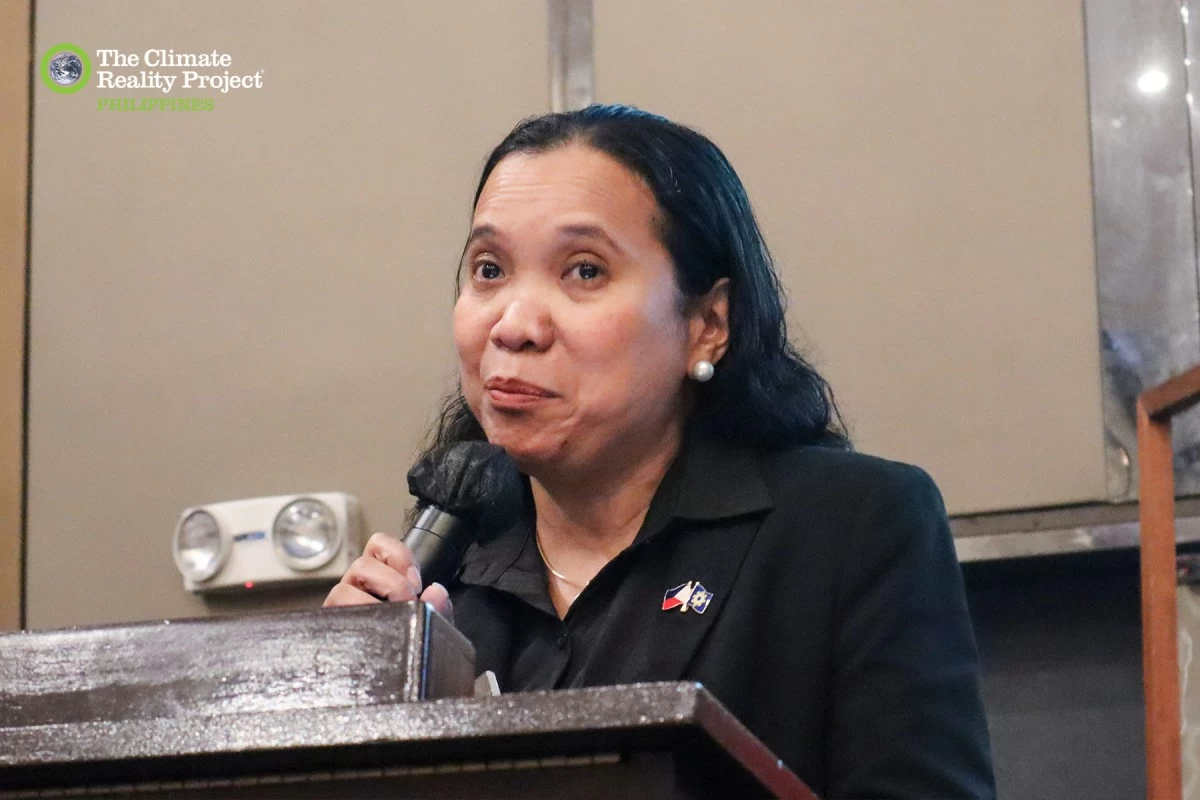
The Department of Energy’s National Renewable Energy Board-Technical Services Management Division Chief, Liza V. Pangilinan.
“We are here not just to improve our Green Energy Option Program, but also to help shape a power system that is cleaner, more competitive and more sustainable. Together, let us realize a future worthy of the next generation,” said Liza V. Pangilinan, division chief at the National Renewable Energy Board-Technical Services Management Division (NREB-TSMD).
GEOP, four years later
Established under the Renewable Energy Act of 2008, or Republic Act No. 9513, GEOP is a voluntary market mechanism that allows end-users to source clean energy directly from renewable energy suppliers. The program requires that energy supplied under GEOP be sourced entirely from renewable energy.
GEOP and similar programs align with the government’s goal of reducing greenhouse gas emissions, particularly as the Philippines remains highly vulnerable to the impacts of climate change.
Emissions reduction has also become a key driver of investment, especially among companies whose parent firms overseas have adopted sustainability as a core business pillar. Combined with the declining cost of renewable energy, this has encouraged more businesses to shift to cleaner power sources through programs such as GEOP.
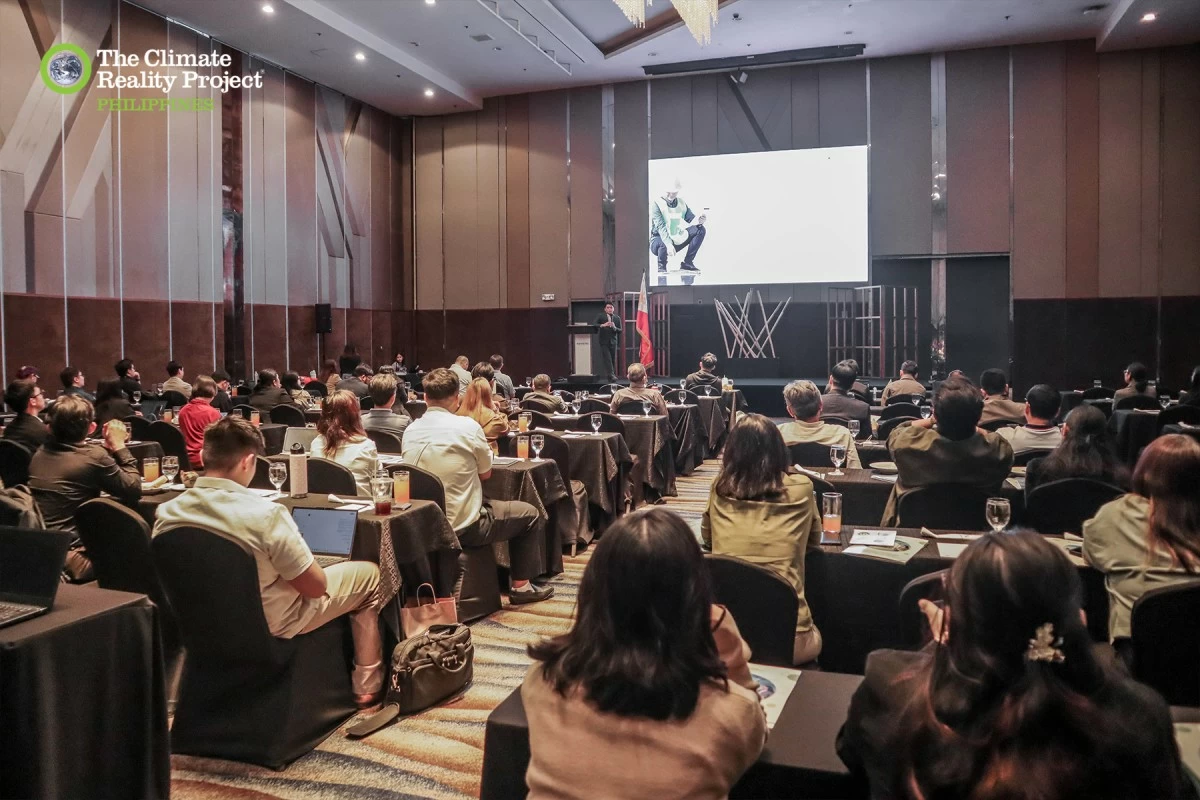
Climate Reality Philippines’ Energy Program Lead Pocholo Enriquez presents the organization’s research on GEOP end-users’ carbon emissions and power savings.
Since its launch in December 2021, GEOP has recorded a total of 833 end-users. In 2025, the program logged its largest annual increase, with 313 new users added to the 520 recorded in 2024.
Based on Climate Reality Philippines’ study, electricity generation costs of GEOP users were, on average, 29 percent lower at P901,724 compared to their business-as-usual costs of P1,269,042.
The program also posted a high retention rate of 97.7 percent and sustained user growth, highlighting its potential as a scalable and cost-effective renewable energy market mechanism.
Despite these gains, Climate Reality Philippines noted that GEOP still faces implementation challenges. Its research cited the need to address supply variability, streamline existing processes and expand access through mechanisms such as retail aggregation.
These findings were further supported by a study conducted by SUSTAINARUMBLE!, a public service media group that focuses on sustainability issues.
SUSTAINARUMBLE! co-founder Jonas Marie Dumdum presented the group’s findings based on discussions with various RE suppliers, many of whom raised concerns similar to those expressed by end-users.
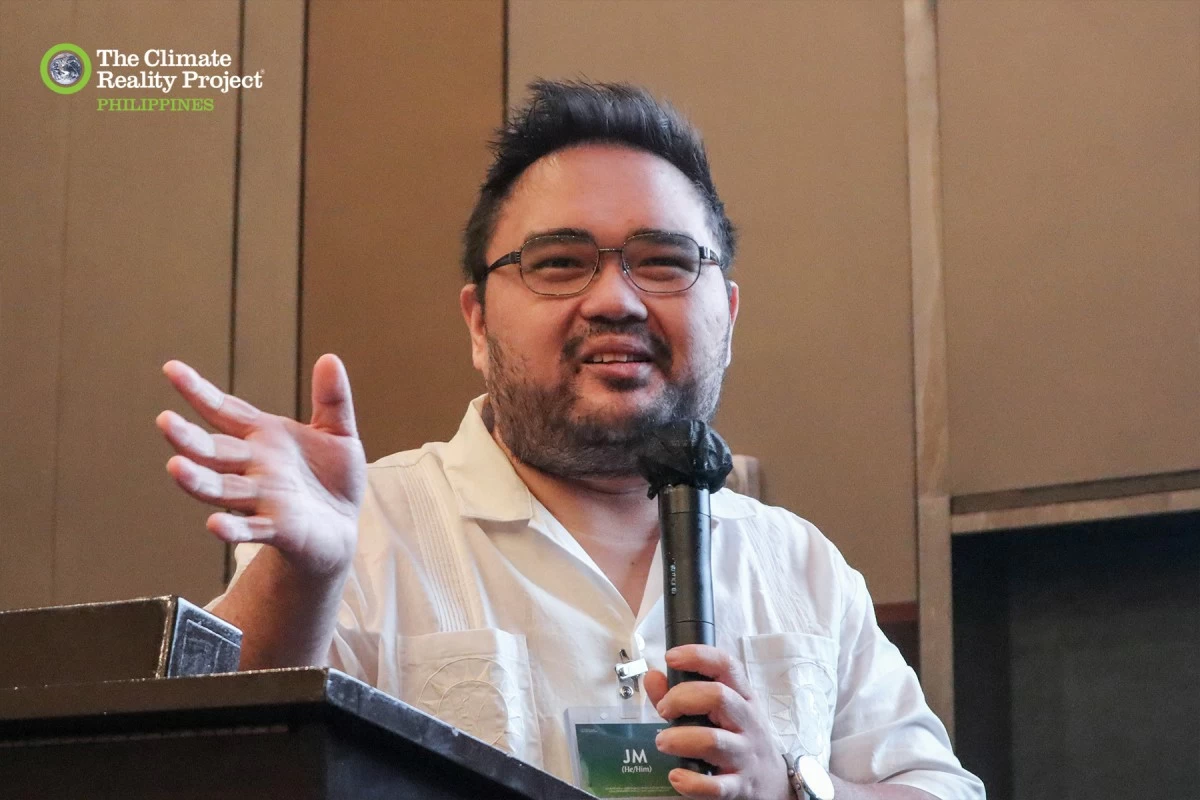
SUSTAINARUMBLE! Co-founder Jonas Marie Dumdum shares their group’s findings from their conversations with RE suppliers participating in GEOP.
“When addressing the issues raised by suppliers, we need to pin down three things: First is a better understanding of GEOP compared with other demand-side programs. Second is not just increasing RE supply, but ensuring reliable supply. Third is clarifying what incentives companies gain by switching to GEOP, “ Dumdum said.
For its part, the DOE said it is open to the recommendations raised during the conference, noting ongoing efforts to improve GEOP rules through platforms such as REalize 2026.
“The demand for clean energy is real and it is growing. So to support this momentum, the DOE has been revisiting and refining the GEOP rules. Last year, we held a series of public consultations to present major amendments, including eligibility criteria, the introduction of retail aggregation and more flexible provisions for replacement power,” Pangilinan said.
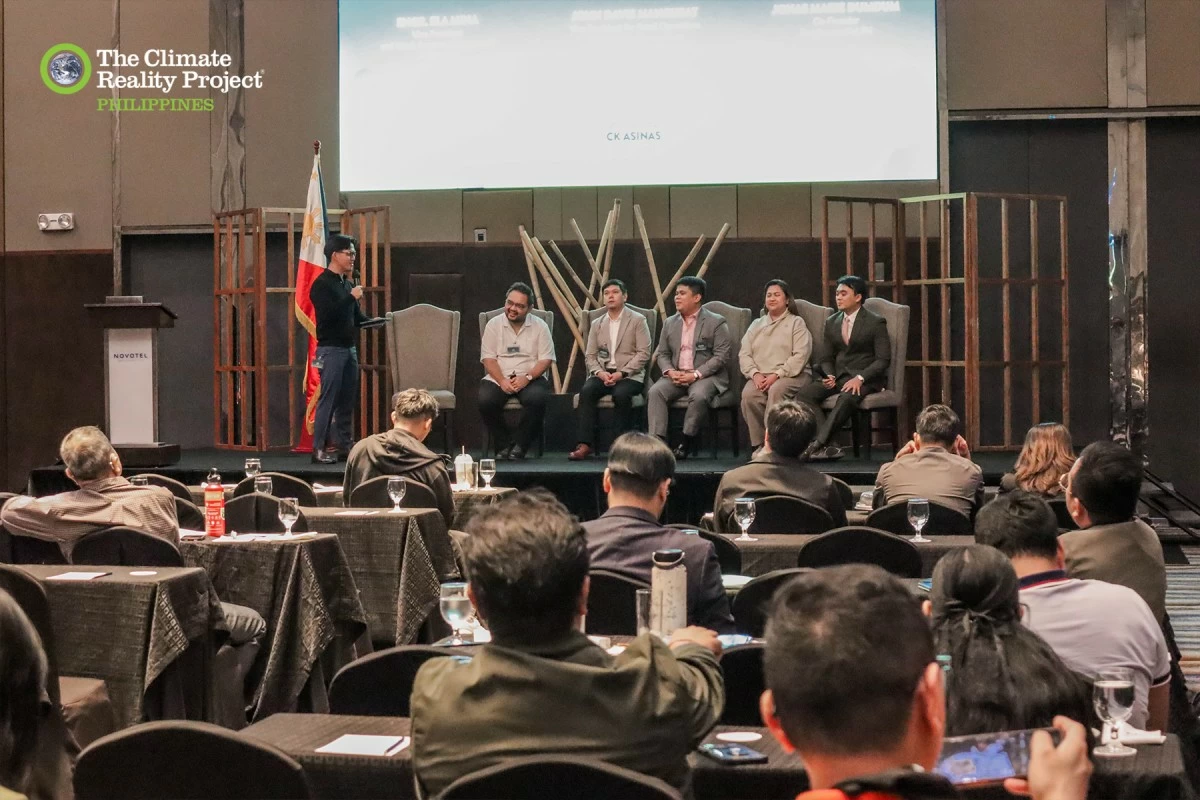
From left: Christopher Klein Asiñas and Jonas Marie Dumdum, SUSTAINARUMBLE!; Engr. Jordan Ballaran, DOE; John Davis Mangubat, Adventenergy, Inc.; Engr. Shiela Mina, ACEN RES; and Pocholo Enriquez, Climate Reality Philippines.
The DOE-REMB added that consultations with various stakeholders are continuing to improve GEOP’s reach and accessibility.
Participants expressed hope that these discussions would lead to timely and crucial amendments to GEOP’s regulations.
“All proposed amendments have trade-offs, which is why we are balancing them. I think the most urgent part is on the supplier side, particularly volume-matching, as this will help us deal with the issue of 24/7 supply variability,” said Jordan Ballaran, senior science research specialist at the DOE.
“The second priority is to create more incentives for our customers to participate in the voluntary RE market—not just under GEOP, but across all customer programs as well,” Ballaran added.