






Manila Bulletin
 Philippines
National
CHED, DSWD launch Project ASCEND to fast-track degrees for over 22,000 social workers
Philippines
National
CHED, DSWD launch Project ASCEND to fast-track degrees for over 22,000 social workers
Philippines
National
CHED, DSWD launch Project ASCEND to fast-track degrees for over 22,000 social workers
CHED, DSWD launch Project ASCEND to fast-track degrees for over 22,000 social workers
New credentialing pathway allows experienced DSWD personnel to earn social work degrees through an equivalency program
Published Feb 6, 2026 08:35 pm


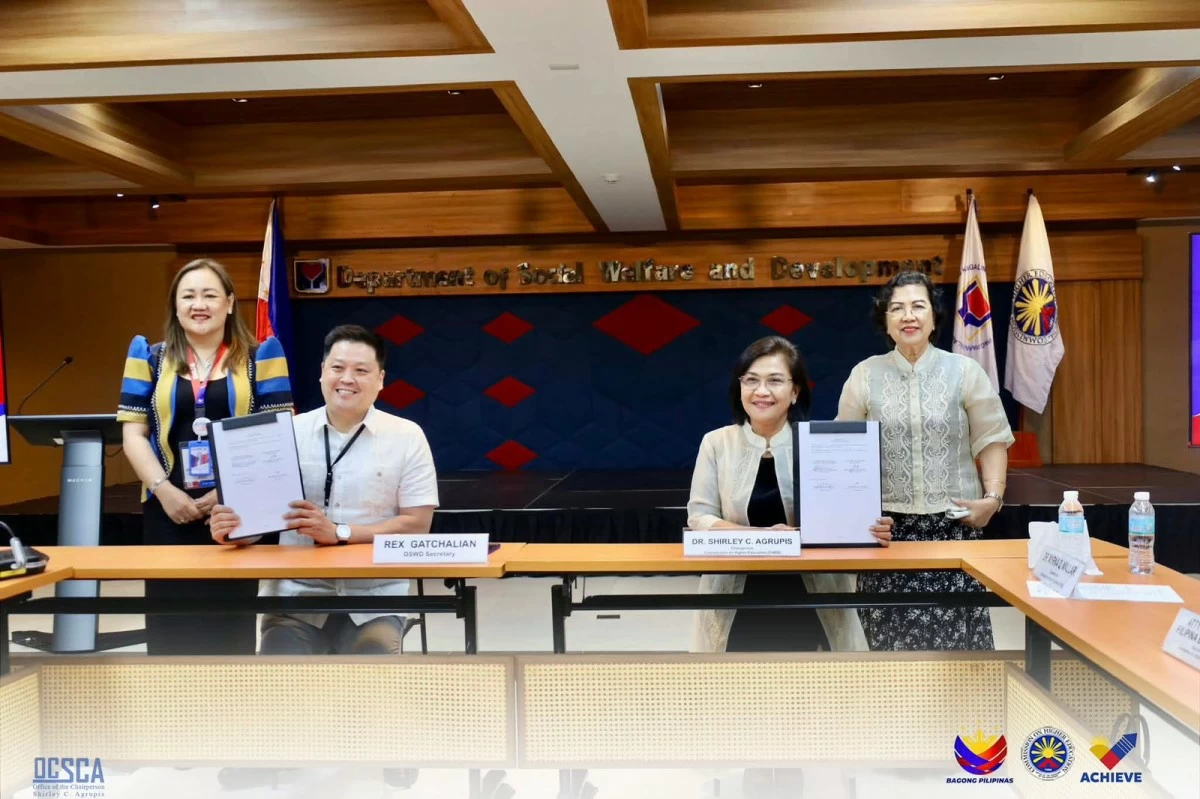
The Commission on Higher Education (CHED) and the Department of Social Welfare and Development (DSWD) launched Project ASCEND, an equivalency program aimed at helping over 22,000 experienced social workers earn formal degrees and qualify for licensure. (Photo from CHED)
The Commission on Higher Education (CHED) and the Department of Social Welfare and Development (DSWD) officially launched Project ASCEND on Friday, February 6, a new academic pathway designed to help thousands of experienced social workers earn college degrees and qualify for professional licensure.
In a statement, CHED said the initiative was formalized through a Memorandum of Understanding (MOU) signed by CHED Chairperson Shirley C. Agrupis and DSWD Secretary Rexlon Gatchalian, emphasizing the partnership’s goal of bridging experience and formal education.
“The direction of this outcome-based partnership is clear,” Agrupis said.
CHED, she explained, will provide “policy leadership, deputization processes, and quality assurance systems to safeguard academic integrity,” while the DSWD will contribute a “mission-critical workforce and a competency architecture shaped by real-world service demands.”
Major step in professionalizing PH’s social welfare workforce
CHED said Project ASCEND, which stands for Accelerated Social Work Credentialing and Equivalency for National Development, targets more than 22,000 Social Work Assistants and Project Development Officers currently working within the DSWD.
While many of them have years of field experience and extensive training from the DSWD Academy, they do not hold the formal degree required to take the Social Worker Licensure Examination.
CHED noted that the program will allow these practitioners to earn academic credits and complete degree requirements through a quality-assured equivalency system that recognizes prior learning, work experience, and professional training.
Project ASCEND serves as a key implementation of Republic Act No. 12124, or the Expanded Tertiary Education Equivalency and Accreditation Program (ETEEAP) Act, signed into law by President Ferdinand R. Marcos Jr. last year.
The law institutionalizes ETEEAP as a national pathway for working professionals to obtain college degrees based on competencies gained through years of service.
Currently, the University of Northern Philippines and La Consolacion University Philippines serve as the primary ETEEAP-deputized institutions for the program.
To ensure wider regional access, CHED also identified 19 additional potential ETEEAP providers across the country based on eligibility requirements and performance in the Social Worker Licensure Examination.
These include the University of the Philippines Diliman, Philippine Women’s University–Manila, Saint Louis University–Baguio City, Pangasinan State University, St. Paul University Philippines, Bulacan State University, Cavite State University, Bicol University–Albay, University of Negros Occidental–Recoletos, Silliman University–Dumaguete City, Eastern Samar State University, Leyte Normal University, Western Mindanao State University, Misamis University, Ateneo de Davao University, Davao del Norte State College, University of Mindanao–Davao City, Cotabato State University–Cotabato City, and Notre Dame of Marbel University–Koronadal City.
Agrupis said the initiative aligns with CHED’s ACHIEVE Agenda, particularly its focus on expanding lifelong learning opportunities and strengthening national human capital development.
This direction also supports the vision of President Ferdinand R. Marcos Jr. to “ensure that no Filipino is left behind in building a more inclusive and future-ready nation.”
Through Project ASCEND, CHED and DSWD aim to empower experienced social workers with formal academic credentials, improve service delivery across communities, and strengthen the country’s social welfare sector.