ADVERTISEMENT

Building without growth: Attaining GDP goal

Published Feb 5, 2026 12:04 am  |  Updated Feb 4, 2026 04:14 pm
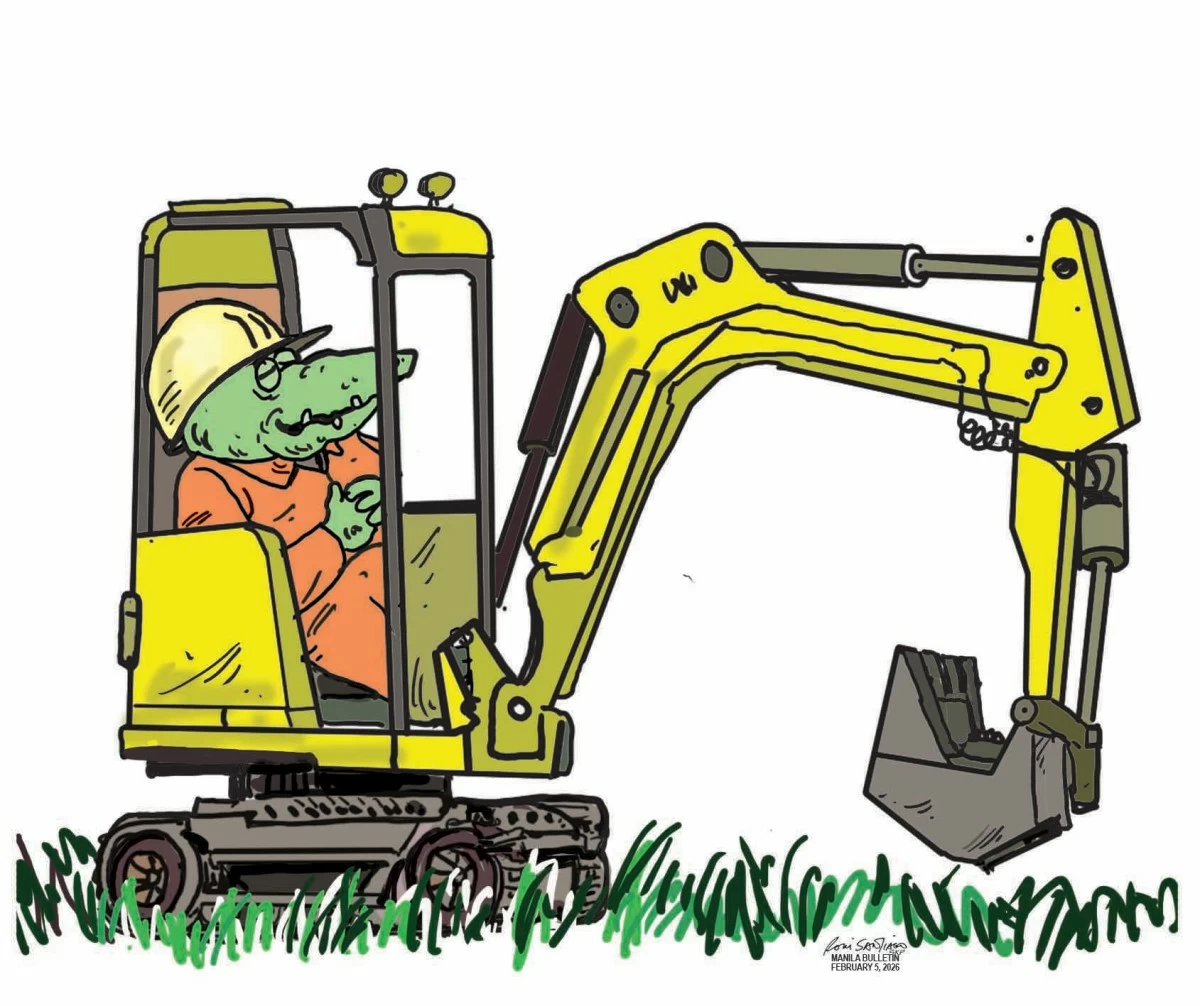
The continuing slowdown in construction activity is no longer just a sectoral concern; it is a mirror reflecting deeper structural and governance problems in the Philippine economy. With economic growth stuck at around four percent — well below both potential and regional peers — the weakness of construction underscores why accelerating its pace remains elusive.
Construction has traditionally been among the most powerful engines of Philippine growth. It creates jobs quickly, stimulates allied industries, and lays the groundwork for long-term productivity. When it falters, growth falters with it. The present slowdown, therefore, helps explain why the economy continues to underperform compared with Vietnam, Malaysia, and other ASEAN neighbors that have sustained growth rates closer to five to six percent despite global uncertainties.
Yet the issue is not merely that construction activity has slowed. It is also what kind of construction has been prioritized.
In recent years, government infrastructure spending has been weighed down by troubling revelations—most notably the proliferation of flood control projects that existed on paper but were nowhere to be found on the ground. These “ghost projects,” exposed amid recurring and devastating floods, point to serious leakages in public spending. Billions of pesos earmarked for protection of lives, livelihoods, and productive areas have been recklessly diverted to the pockets of opportunistic politicians.
Equally concerning is the over-concentration of public infrastructure spending on projects with limited productivity impact. While infrastructure outlays remain sizable in budgetary terms, too much of this spending has been fragmented, poorly sequenced, or politically driven rather than anchored on a clear economic strategy. Roads that do not connect production hubs to markets, flood projects that do not actually mitigate flooding, and facilities that are underutilized do little to raise productivity or investor confidence.
This misallocation has consequences. Construction activity slows not only because of high interest rates or global headwinds, but also because private investors hesitate when public investment appears inefficient, poorly governed, or disconnected from real economic needs. The result is a double whammy: weak public execution and deterrence to private participation.
Contrast this with Vietnam, where infrastructure development is tightly linked to industrial zones, export corridors, and logistics efficiency. Or Malaysia, which has focused on fewer but higher-impact projects, often leveraging public-private partnerships characterized by clearer accountability mechanisms. In these economies, construction spending reinforces competitiveness. In the Philippines, it too often merely stokes the flames of inflation without delivering commensurate growth.
What must happen to reverse this trajectory?
First, there must be a decisive shift from spending more to spending better. Infrastructure must be evaluated on its economic returns, climate resilience, and contribution to productivity—not on political visibility. The era of low-impact, poorly monitored projects must end.
Second, accountability must be non-negotiable. The exposure of ghost flood control projects should not fade from public attention without consequences. Restoring confidence among citizens and investors alike requires credible investigations, prosecutions where warranted, and institutional accountability are the reforms that prevent recurrence.
Third, execution capacity must be strengthened. Delays due to right-of-way issues, weak project preparation, and limited local government absorptive capacity continue to undermine outcomes. Faster, cleaner, and more professional implementation is as important as funding itself.
Finally, construction must once again be aligned with a coherent development strategy, and supporting agriculture, manufacturing, logistics, housing, and climate adaptation. Without this alignment, growth will remain consumption-driven and fragile.
The Philippines does not suffer from a lack of plans or budgets. It suffers from a failure to convert construction spending into real economic momentum. Until that changes, growth will remain stuck at four percent—and the gap with our ASEAN neighbors will only widen.
ADVERTISEMENT
.most-popular .layout-ratio{ padding-bottom: 79.13%; } @media (min-width: 768px) and (max-width: 1024px) { .widget-title { font-size: 15px !important; } }

{{ articles_filter_1561_widget.title }}

.most-popular .layout-ratio{ padding-bottom: 79.13%; } @media (min-width: 768px) and (max-width: 1024px) { .widget-title { font-size: 15px !important; } }

{{ articles_filter_1562_widget.title }}

.most-popular .layout-ratio{ padding-bottom: 79.13%; } @media (min-width: 768px) and (max-width: 1024px) { .widget-title { font-size: 15px !important; } }

{{ articles_filter_1563_widget.title }}

{{ articles_filter_1564_widget.title }}

.mb-article-details { position: relative; } .mb-article-details .article-body-preview, .mb-article-details .article-body-summary{ font-size: 17px; line-height: 30px; font-family: "Libre Caslon Text", serif; color: #000; } .mb-article-details .article-body-preview iframe , .mb-article-details .article-body-summary iframe{ width: 100%; margin: auto; } .read-more-background { background: linear-gradient(180deg, color(display-p3 1.000 1.000 1.000 / 0) 13.75%, color(display-p3 1.000 1.000 1.000 / 0.8) 30.79%, color(display-p3 1.000 1.000 1.000) 72.5%); position: absolute; height: 200px; width: 100%; bottom: 0; display: flex; justify-content: center; align-items: center; padding: 0; } .read-more-background a{ color: #000; } .read-more-btn { padding: 17px 45px; font-family: Inter; font-weight: 700; font-size: 18px; line-height: 16px; text-align: center; vertical-align: middle; border: 1px solid black; background-color: white; } .hidden { display: none; }
function initializeAllSwipers() { // Get all hidden inputs with cms_article_id document.querySelectorAll('[id^="cms_article_id_"]').forEach(function (input) { const cmsArticleId = input.value; const articleSelector = '#article-' + cmsArticleId + ' .body_images'; const swiperElement = document.querySelector(articleSelector); if (swiperElement && !swiperElement.classList.contains('swiper-initialized')) { new Swiper(articleSelector, { loop: true, pagination: false, navigation: { nextEl: '#article-' + cmsArticleId + ' .swiper-button-next', prevEl: '#article-' + cmsArticleId + ' .swiper-button-prev', }, }); } }); } setTimeout(initializeAllSwipers, 3000); const intersectionObserver = new IntersectionObserver( (entries) => { entries.forEach((entry) => { if (entry.isIntersecting) { const newUrl = entry.target.getAttribute("data-url"); if (newUrl) { history.pushState(null, null, newUrl); let article = entry.target; // Extract metadata const author = article.querySelector('.author-section').textContent.replace('By', '').trim(); const section = article.querySelector('.section-info ').textContent.replace(' ', ' '); const title = article.querySelector('.article-title h1').textContent; // Parse URL for Chartbeat path format const parsedUrl = new URL(newUrl, window.location.origin); const cleanUrl = parsedUrl.host + parsedUrl.pathname; // Update Chartbeat configuration if (typeof window._sf_async_config !== 'undefined') { window._sf_async_config.path = cleanUrl; window._sf_async_config.sections = section; window._sf_async_config.authors = author; } // Track virtual page view with Chartbeat if (typeof pSUPERFLY !== 'undefined' && typeof pSUPERFLY.virtualPage === 'function') { try { pSUPERFLY.virtualPage({ path: cleanUrl, title: title, sections: section, authors: author }); } catch (error) { console.error('ping error', error); } } // Optional: Update document title if (title && title !== document.title) { document.title = title; } } } }); }, { threshold: 0.1 } ); function showArticleBody(button) { const article = button.closest("article"); const summary = article.querySelector(".article-body-summary"); const body = article.querySelector(".article-body-preview"); const readMoreSection = article.querySelector(".read-more-background"); // Hide summary and read-more section summary.style.display = "none"; readMoreSection.style.display = "none"; // Show the full article body body.classList.remove("hidden"); } document.addEventListener("DOMContentLoaded", () => { let loadCount = 0; // Track how many times articles are loaded const offset = [1, 2, 3, 4, 5, 6, 7, 8, 9, 10]; // Offset values const currentUrl = window.location.pathname.substring(1); let isLoading = false; // Prevent multiple calls if (!currentUrl) { console.log("Current URL is invalid."); return; } const sentinel = document.getElementById("load-more-sentinel"); if (!sentinel) { console.log("Sentinel element not found."); return; } function isSentinelVisible() { const rect = sentinel.getBoundingClientRect(); return ( rect.top < window.innerHeight && rect.bottom >= 0 ); } function onScroll() { if (isLoading) return; if (isSentinelVisible()) { if (loadCount >= offset.length) { console.log("Maximum load attempts reached."); window.removeEventListener("scroll", onScroll); return; } isLoading = true; const currentOffset = offset[loadCount]; window.loadMoreItems().then(() => { let article = document.querySelector('#widget_1690 > div:nth-last-of-type(2) article'); intersectionObserver.observe(article) loadCount++; }).catch(error => { console.error("Error loading more items:", error); }).finally(() => { isLoading = false; }); } } window.addEventListener("scroll", onScroll); });

Sign up by email to receive news.