






Manila Bulletin
 Philippines
National
Sandro Marcos seeks 'immediate abolition' of travel tax, files bill
Philippines
National
Sandro Marcos seeks 'immediate abolition' of travel tax, files bill
Philippines
National
Sandro Marcos seeks 'immediate abolition' of travel tax, files bill
Sandro Marcos seeks 'immediate abolition' of travel tax, files bill
Published Feb 4, 2026 09:16 am
|
Updated Feb 4, 2026 01:52 pm


At A Glance
- House Majority Leader Ilocos Norte 1st district Rep. Sandro Marcos is batting for the "immediate abolition" of the travel tax, which he has described as a huge burden to Filipinos.
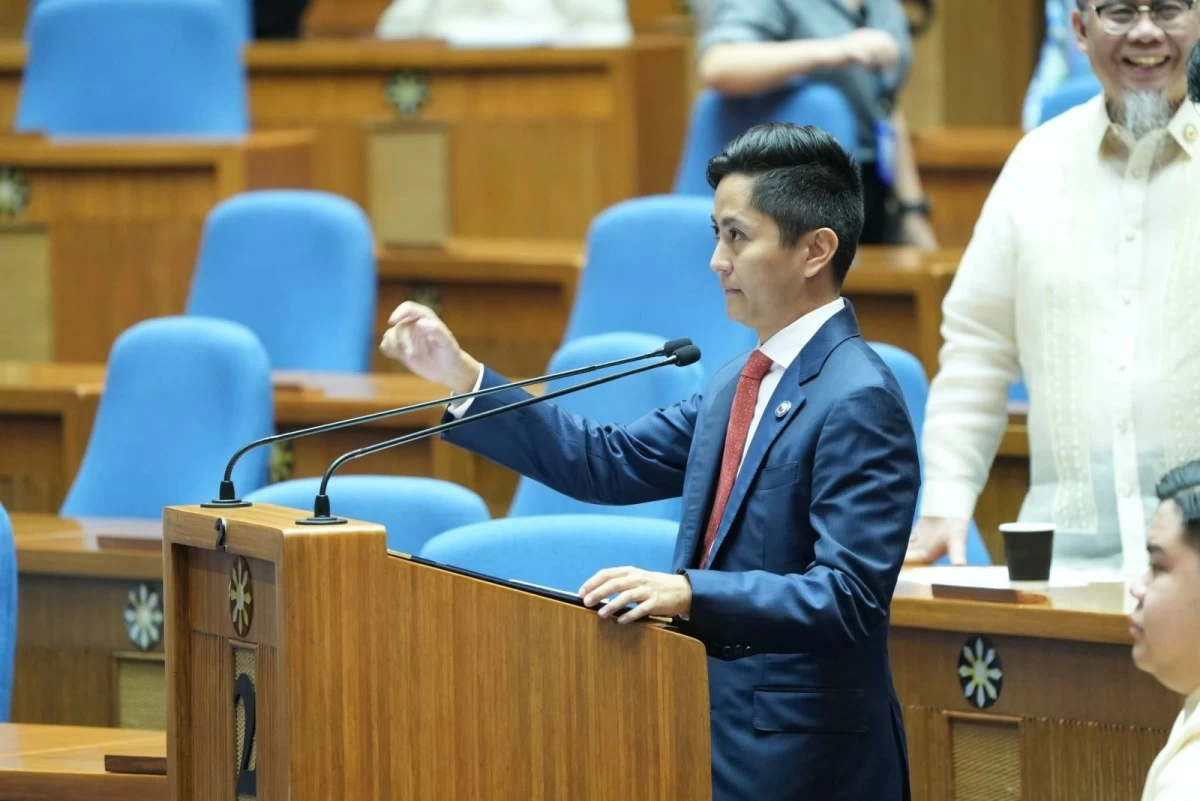
Ilocos Norte 1st district Rep. Sandro Marcos (Facebook)
House Majority Leader Ilocos Norte 1st district Rep. Sandro Marcos is batting for the "immediate abolition" of the travel tax, which he has described as a huge burden to Filipinos.
Doing away with the travel tax, as provided for under Marcos' House Bill (HB) No.7443, is seen to uphold Filipinos' constitutional right to travel and at the same time stimulate economic growth.
"At present, the Philippines imposes a fiscal burden on travelers by charging P2,700.00 for first-class passage and P1,620,00 for economy class. These rates disproportionately affect lower-income households. For a family of four, the travel tax may reach P6,480.00," Marcos said in the explanatory note of his bill.
"This amount could have been be allocated to essential household needs or reinvested in the local economy," noted the presidential son.
Marcos said that although the travel tax has long formed part of the country`s regulatory framework as a revenue-generating mechanism, it has also become a deterrent to travel.
"Taxation on personal travel and online bookings suppresses demand, dampens tourism growth, and discourage mobility," he said.
The House majority leader said that abolishing the partcular tax will reduce travel costs and encourage more frequent domestic international travel by Filipinos.
"Increased traveler volume will stimulate tourism-dependent sectors, including hotels, transportation services, tour operations, and retail establishments, resulting in broader economic activity and job creation," Marcos said.
ASEAN outlier
He said that unfortunately, the Philippines has become an outlier in the Association of Southeast Asian Nations (ASEAN), wherein most member-states have already abolished similar levies to promote tourism and regional integration.
"The continued imposition of the travel tax runs counter to the ASEAN Tourism Agreement of 2002, which obligates member states to progressively eliminate travel-related levies on ASEAN nationals," Marcos further said.
"Lower travel costs will likewise expand opportunities for cultural exchange by enabling more Filipinos to access domestic and international destinations. At the same time, the removal of the travel tax will improve the country's attractiveness as a travel and business destination," he said.
The measure abolishes the travel tax as imposed unde Presidential Decree (PD) No. 1183, as amended, and Section 73 of Republic Act (RA) No. 9593, otherwise known as the "Tourism Act of2009".
"No government agency or private entity shall collect travel taxes upon the effectivity of this Act. For flights scheduled on or after the date o effectivity, the collecting authority shall immediately refund any previously paid trave taxes to the passenger," the bill stated.
HB No.7443 also provides for alternative funding for programs previously bankrolled by travel tax collections.
"The national government shall provide the necessary funding for the following agencies through the annual General Appropriation Act (GAA): 1. The Tourism Infrastructure and Enterprise Zone Authority (TIEZA) fo tourism development projeecs; 2. The Commission on Higher Education (CHEd) for tourism-related higher education development funds; and 3. The National Commission for Culture and the Arts (NCCA) for the National Endowment Fund for Culture and the Arts."