






Manila Bulletin
 Philippines
National
Majority, minority solons unite behind Sandro Marcos' 'no work, no pay' in Congress pitch
Philippines
National
Majority, minority solons unite behind Sandro Marcos' 'no work, no pay' in Congress pitch
Philippines
National
Majority, minority solons unite behind Sandro Marcos' 'no work, no pay' in Congress pitch
Majority, minority solons unite behind Sandro Marcos' 'no work, no pay' in Congress pitch
Published Feb 4, 2026 01:48 pm


At A Glance
- Both majority and minority solons have expressed support for House Majority Leader Ilocos Norte 1st district Rep. Sandro Marcos' move to institutionalize a "no work, no pay" scheme for congressmen and senators.
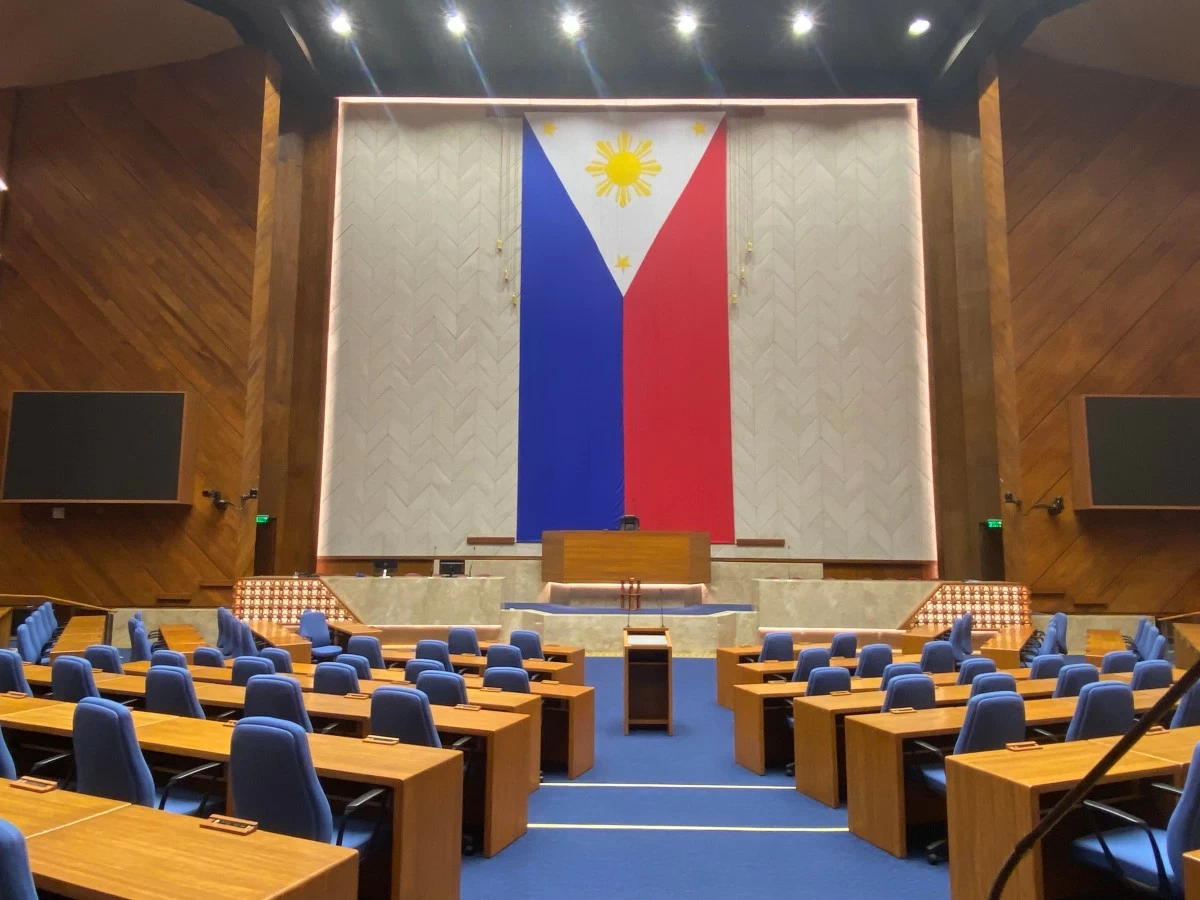
The House plenary (Contributed photo)
Both majority and minority solons have expressed support for House Majority Leader Ilocos Norte 1st district Rep. Sandro Marcos' move to institutionalize a "no work, no pay" scheme for congressmen and senators.
Finding both wisdom and practicality in Marcos' House Bill (HB) No. 7432 or the proposed "No Work, No Pay for Members of Congress Act" were Deputy Speakers La Union 1st district Rep. Paolo Ortega V, Zambales 1st district Rep. Jay Khonghun; Deputy Majority Leader 1-Rider Party-list Rep. Rodge Gutierrez, Assistant Majority Leader Lanao del Sur 1st district Rep. Zia Alonto Adiong; and minority member Kamanggagawa Party-list Rep. Eli San Fernando.
“This bill simply ensures that public money is spent only when public work is done,” Ortega said in a joint statement Wednesday, Feb. 4 with Khonghun, Adiong, and Gutierrez. He noted that compensation in public office should correspond to actual legislative service rendered.
Ortega noted that the proposal is not directed at any individual or political group. “This is an institutional reform, not a partisan measure. Clear rules that apply to everyone protect both the institution and its members.”
Adiong says Marcos' proposal seeks to place lawmakers under the same standards as ordinary Filipino workers. “If this principle applies to workers nationwide, it should apply even more to those crafting the laws."
Adiong says HB No.7432 reinforces the core meaning of public service. “Public service begins with showing up and doing the work,” stressed that the solon, who noted that representation requires presence and participation.
According to Khonghun, the measure strengthens discipline within Congress (composed of the House of Representatives and Senate) without limiting legitimate legislative work.
“This is not about punishment—it is about professional discipline in lawmaking,” Khonghun said. He added that attendance remains a basic measure of responsibility.
Khonghun also underscored the bill’s transparency provisions, which require public access to attendance records. “When attendance is visible, accountability naturally follows,” he reckoned.
Gutierrez, a lawyer, said the proposal was firmly grounded in the Constitution. “This is firmly within Congress’ constitutional authority,” he said.
Though the proposed statute, Congress will be able o regulate its own compensation and help protects public funds by ensuring that salary releases are tied to verified legislative work.
“The measure closes gaps where public funds could be released without public service,” Gutierrez said.
Khonghun said the proposal fairly recognizes the full scope of legislative work, including committee hearings, bicameral conferences, and official missions. “This bill recognizes that legislative work goes beyond the session hall,” he said.
San Fernando, in a separate statement, hailed Marcos for pursuing the measure.
“Kapag ang ordinaryong manggagawa hindi pumasok, 'matik na walang sahod. Kapag na-late naman makakaltasan, at pag nag-OT (overtime), kadalasan walang OT pay. Bakit kapag members of Congress umabsent, na-late, o hindi nagrereport sa opisina e buo pa ring nakukuha ang sahod at benepisyo? What makes us so special? Dapat i-apply ang nararanasan ng ordinaryong manggagawa sa mga halal na opisyal," he said.
(When an ordinary worker doesn’t show up, automatically there's no pay. If they’re late, their salary gets deducted. And when they work OT, most of the time there’s no OT pay. But why is it that when members of Congress are absent, late, or don’t report to the office, they still receive their full salary and benefits? What makes them so special? The same rules that apply to ordinary workers should also apply to elected officials.)
"This is the reason why Kamanggagawa fully supports and will rally behind [HB] No. 7432 filed by Majority Leader Sandro Marcos," he noted.
"Napakalaking bagay na ang presidential son at majority floor leader ang nagpanukala ng batas (It's a big deal that the presidential son and the majority floor leader was the one who proposed the law). At this point in time where our institution is beleaguered, this move sends a message to ordinary Filipino workers that we are serious in bringing reforms from within our ranks," San Fernando said.
The monthly salary of House members and senators is around P300,000.