ADVERTISEMENT

Human fraternity endures when we opt for dialogue over division

Published Feb 4, 2026 12:05 am  |  Updated Feb 3, 2026 05:48 pm
Today, Feb. 4, we mark the International Day of Human Fraternity.
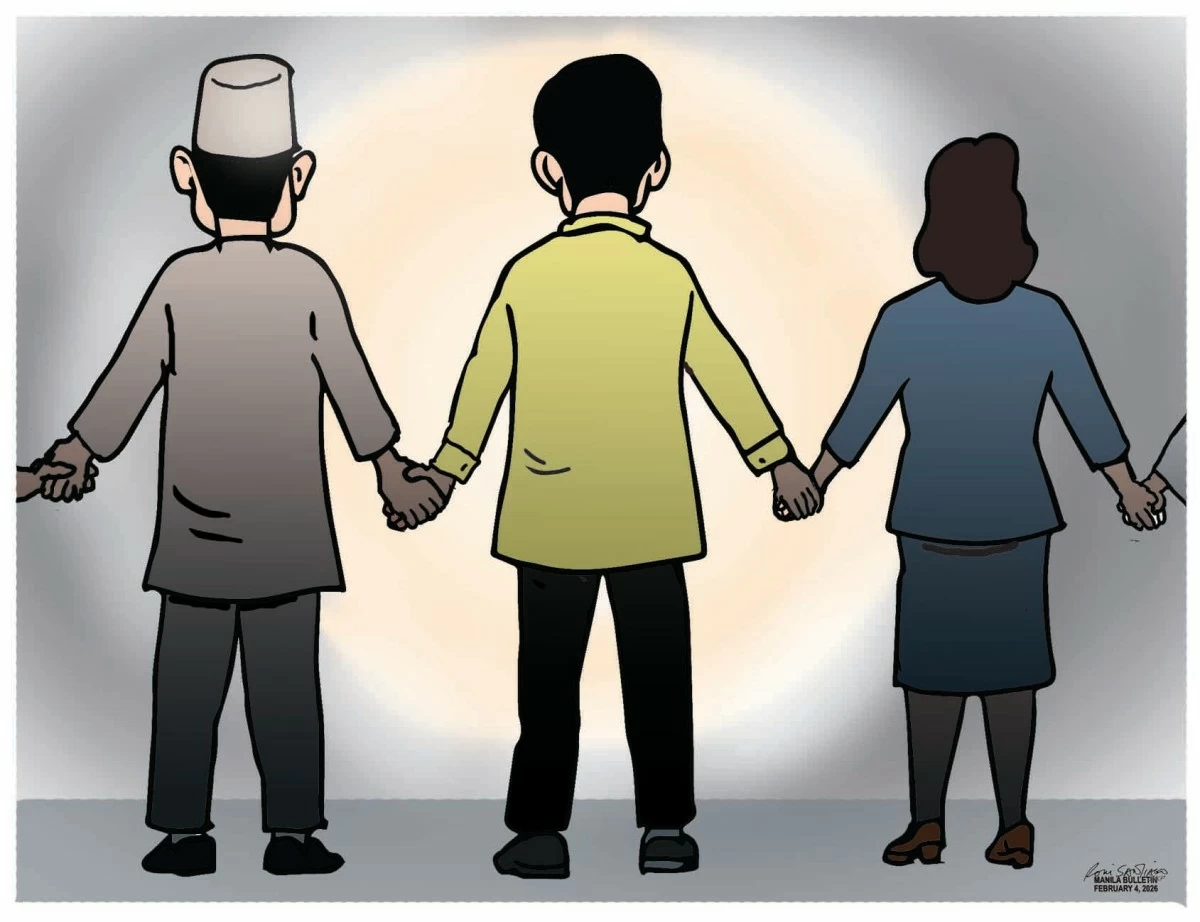
Human fraternity is a demanding moral discipline—one that becomes most essential precisely when societies are strained by fear, polarization, and distrust. In an era marked by widening divisions, the International Day of Human Fraternity reminds us that humanity is one family, diverse in culture and belief, equal in dignity, and bound by a shared responsibility to live together in peace.
At the heart of this responsibility lies a clear choice. We must opt for dialogue over division. Dialogue does not require uniformity of thought, nor does it dilute conviction. Rather, it requires the maturity to listen attentively, to speak with restraint, and to recognize the humanity of those with whom we disagree. It is a deliberate rejection of the logic that disagreement must lead to hostility. When dialogue collapses, polarization hardens, and societies begin to fracture not because differences exist, but because dignity is denied.
The erosion of dialogue is particularly dangerous in times of fear and uncertainty. Fear simplifies complex realities and encourages suspicion; dialogue restores perspective. It creates space for understanding without demanding consensus. In both physical and digital spaces, preserving this space is essential. Public discourse must be shaped so that disagreement does not devolve into dehumanization, and differences can be expressed without becoming instruments of harm. Rejecting racism, xenophobia, discrimination, and hate speech is a moral stance and a prerequisite for social cohesion.
Human fraternity also demands contentment over greed. Greed fractures the human family by promoting success that is measured by accumulation and dominance rather than shared wellbeing. It deepens inequality, fuels resentment, and undermines trust between communities and nations. Contentment, by contrast, is not resignation or stagnation; it is ethical restraint. It calls individuals and institutions alike to consider not only what is profitable, but what is just—and at whose expense prosperity is pursued. A world driven solely by excess cannot remain harmonious. Fraternity requires economies and policies anchored in fairness and inclusion.
Beyond dialogue and contentment, other virtues are indispensable. Humility reminds us that no single culture, ideology, or belief system holds an exclusive claim to truth. Justice ensures that peace is not superficial, but sustained by fairness and equal rights. Solidarity transforms coexistence into shared responsibility, compelling societies to stand with those marginalized or targeted. Responsibility governs how words are spoken, power is exercised, and influence is used. And hope, disciplined and realistic, sustains the belief that coexistence is possible—not because conflict is absent, but because cooperation is chosen.
The practice of human fraternity begins not in grand declarations, but in everyday conduct: in how disagreements are handled, how differences are taught, how leadership is exercised, and how citizenship is lived. It is strengthened when institutions model respect, when education fosters critical thinking and empathy, and when communities collaborate across lines of belief for the common good.
Preserving fraternity is not about pretending we are the same. It is about protecting the bonds that allow difference to exist without violence. The world needs more compassion. It needs thicker relationships.
Human fraternity endures when we choose dialogue over division, contentment over greed, dignity over dominance. These choices will not trend. They will not always feel satisfying. But they defne how harmony is built—one conversation, one restraint, one act of recognition at a time.
As United Nations Secretary-General António Guterres stressed: “Together, we can build a world based on equal rights for all and compassion—and live in peace as one human family.”
ADVERTISEMENT
.most-popular .layout-ratio{ padding-bottom: 79.13%; } @media (min-width: 768px) and (max-width: 1024px) { .widget-title { font-size: 15px !important; } }

{{ articles_filter_1561_widget.title }}

.most-popular .layout-ratio{ padding-bottom: 79.13%; } @media (min-width: 768px) and (max-width: 1024px) { .widget-title { font-size: 15px !important; } }

{{ articles_filter_1562_widget.title }}

.most-popular .layout-ratio{ padding-bottom: 79.13%; } @media (min-width: 768px) and (max-width: 1024px) { .widget-title { font-size: 15px !important; } }

{{ articles_filter_1563_widget.title }}

{{ articles_filter_1564_widget.title }}

.mb-article-details { position: relative; } .mb-article-details .article-body-preview, .mb-article-details .article-body-summary{ font-size: 17px; line-height: 30px; font-family: "Libre Caslon Text", serif; color: #000; } .mb-article-details .article-body-preview iframe , .mb-article-details .article-body-summary iframe{ width: 100%; margin: auto; } .read-more-background { background: linear-gradient(180deg, color(display-p3 1.000 1.000 1.000 / 0) 13.75%, color(display-p3 1.000 1.000 1.000 / 0.8) 30.79%, color(display-p3 1.000 1.000 1.000) 72.5%); position: absolute; height: 200px; width: 100%; bottom: 0; display: flex; justify-content: center; align-items: center; padding: 0; } .read-more-background a{ color: #000; } .read-more-btn { padding: 17px 45px; font-family: Inter; font-weight: 700; font-size: 18px; line-height: 16px; text-align: center; vertical-align: middle; border: 1px solid black; background-color: white; } .hidden { display: none; }
function initializeAllSwipers() { // Get all hidden inputs with cms_article_id document.querySelectorAll('[id^="cms_article_id_"]').forEach(function (input) { const cmsArticleId = input.value; const articleSelector = '#article-' + cmsArticleId + ' .body_images'; const swiperElement = document.querySelector(articleSelector); if (swiperElement && !swiperElement.classList.contains('swiper-initialized')) { new Swiper(articleSelector, { loop: true, pagination: false, navigation: { nextEl: '#article-' + cmsArticleId + ' .swiper-button-next', prevEl: '#article-' + cmsArticleId + ' .swiper-button-prev', }, }); } }); } setTimeout(initializeAllSwipers, 3000); const intersectionObserver = new IntersectionObserver( (entries) => { entries.forEach((entry) => { if (entry.isIntersecting) { const newUrl = entry.target.getAttribute("data-url"); if (newUrl) { history.pushState(null, null, newUrl); let article = entry.target; // Extract metadata const author = article.querySelector('.author-section').textContent.replace('By', '').trim(); const section = article.querySelector('.section-info ').textContent.replace(' ', ' '); const title = article.querySelector('.article-title h1').textContent; // Parse URL for Chartbeat path format const parsedUrl = new URL(newUrl, window.location.origin); const cleanUrl = parsedUrl.host + parsedUrl.pathname; // Update Chartbeat configuration if (typeof window._sf_async_config !== 'undefined') { window._sf_async_config.path = cleanUrl; window._sf_async_config.sections = section; window._sf_async_config.authors = author; } // Track virtual page view with Chartbeat if (typeof pSUPERFLY !== 'undefined' && typeof pSUPERFLY.virtualPage === 'function') { try { pSUPERFLY.virtualPage({ path: cleanUrl, title: title, sections: section, authors: author }); } catch (error) { console.error('ping error', error); } } // Optional: Update document title if (title && title !== document.title) { document.title = title; } } } }); }, { threshold: 0.1 } ); function showArticleBody(button) { const article = button.closest("article"); const summary = article.querySelector(".article-body-summary"); const body = article.querySelector(".article-body-preview"); const readMoreSection = article.querySelector(".read-more-background"); // Hide summary and read-more section summary.style.display = "none"; readMoreSection.style.display = "none"; // Show the full article body body.classList.remove("hidden"); } document.addEventListener("DOMContentLoaded", () => { let loadCount = 0; // Track how many times articles are loaded const offset = [1, 2, 3, 4, 5, 6, 7, 8, 9, 10]; // Offset values const currentUrl = window.location.pathname.substring(1); let isLoading = false; // Prevent multiple calls if (!currentUrl) { console.log("Current URL is invalid."); return; } const sentinel = document.getElementById("load-more-sentinel"); if (!sentinel) { console.log("Sentinel element not found."); return; } function isSentinelVisible() { const rect = sentinel.getBoundingClientRect(); return ( rect.top < window.innerHeight && rect.bottom >= 0 ); } function onScroll() { if (isLoading) return; if (isSentinelVisible()) { if (loadCount >= offset.length) { console.log("Maximum load attempts reached."); window.removeEventListener("scroll", onScroll); return; } isLoading = true; const currentOffset = offset[loadCount]; window.loadMoreItems().then(() => { let article = document.querySelector('#widget_1690 > div:nth-last-of-type(2) article'); intersectionObserver.observe(article) loadCount++; }).catch(error => { console.error("Error loading more items:", error); }).finally(() => { isLoading = false; }); } } window.addEventListener("scroll", onScroll); });

Sign up by email to receive news.