






Manila Bulletin
 Philippines
National
DepEd eyes sweeping education reforms, program priorities at 2026 National Planning Conference
Philippines
National
DepEd eyes sweeping education reforms, program priorities at 2026 National Planning Conference
Philippines
National
DepEd eyes sweeping education reforms, program priorities at 2026 National Planning Conference
DepEd eyes sweeping education reforms, program priorities at 2026 National Planning Conference
Published Feb 4, 2026 05:58 pm


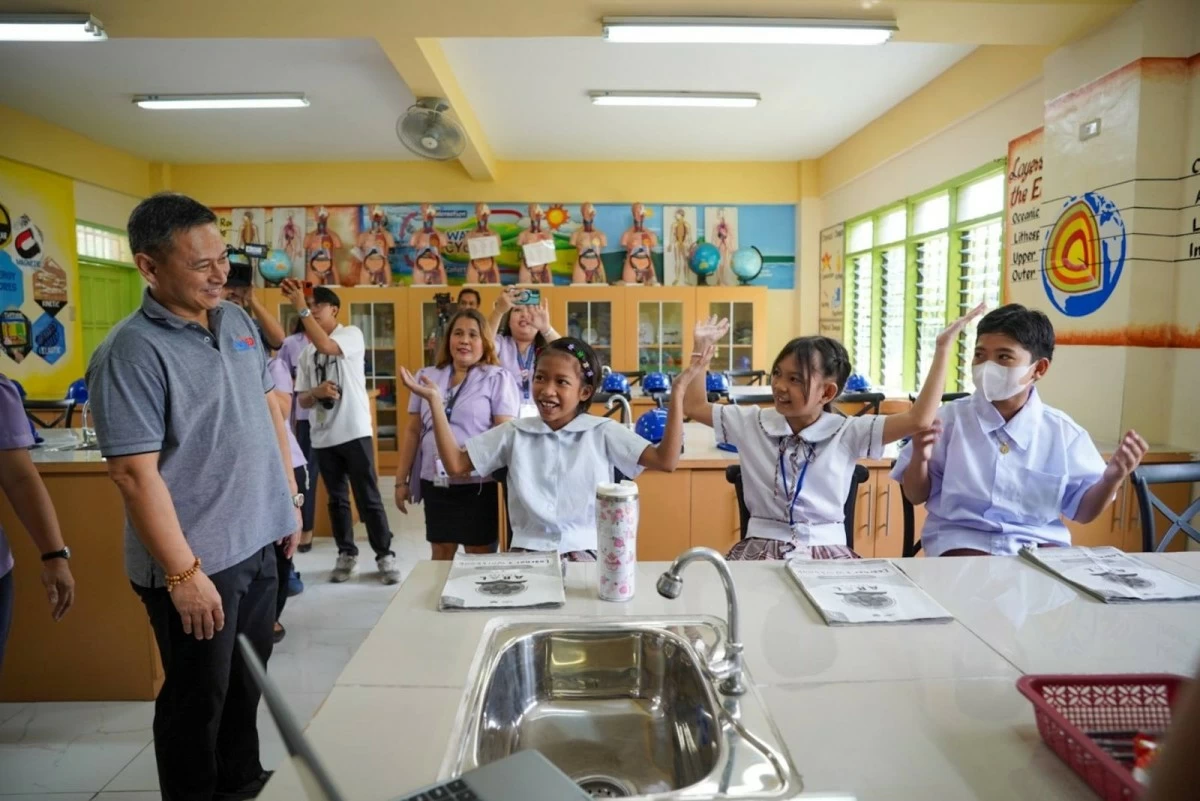
Department of Education (DepEd) Secretary Sonny Angara highlighted the need for a clearer, data-driven roadmap to advance system-wide education reforms guided by the EDCOM II recommendations. (DepEd photo)
The Department of Education (DepEd) has set its sights on accelerating system-wide reforms and delivering on key program commitments by anchoring its 2026 strategic plans on the recommendations of the Second Congressional Commission on Education (EDCOM II).
During the National Planning Conference held on Wednesday, February 4, DepEd Secretary Sonny Angara emphasized the need to align policy directions, priorities, and implementation roadmaps to ensure the efficient use of the agency’s 2026 budget.
“Para sa taong ito, kinakailangan nating ilatag ang ating mga prayoridad upang masigurong bawat sentimo sa ating 2026 budget ay magagamit nang wasto (For this year, we need to lay out our priorities to ensure that every centavo in our 2026 budget is used properly),” Angara said in a message. “We owe it to our teachers and learners to deliver the highest quality education possible,” he added.
Strengthening the learning system
DepEd underscored the importance of reinforcing the country’s learning system through the seamless integration of curriculum development, teaching and learning processes, assessments, learning materials, teacher training, and alternative learning delivery modalities.
For 2026, DepEd said it will prioritize the review and consolidation of Special Curricular Programs while continuing the rollout of the strengthened Senior High School (SHS) curriculum.

DepEd convened Central and field office leaders at the National Planning Conference to align programs and priorities under the Five-Point Reform Agenda and the Quality Basic Education Development Plan. (DepEd photo)
This, DepEd said, includes expanding Grade 12 elective offerings and providing learners with clearer post–K to 12 pathways through the National Entrepreneurship Challenge.
Textbook delivery, SHS expansion
In terms of learning resources, DepEd reported that most textbooks have already been procured and are expected to be delivered by June, ahead of the opening of the next school year.
This move, DepEd said, is crucial in supporting the full nationwide implementation of the strengthened SHS program in public schools.
Thousands of new teaching and non-teaching positions
A major focus for 2026, DepEd said, is the enhancement of school-based staffing.
DepEd is targeting the filling of 32,916 new teaching positions; 6,000 Principal I items; 11,268 Administrative Officer II items; 5,000 Project Development Officer I items; and 10,000 School Counselor Associate I items.
Moreover, DepEd announced that over 100,000 teachers are set to receive long-awaited promotions under the Expanded Career Progression (ECP) System.
AI-driven workforce reforms
DepEd said human resource reforms will also shift toward transformational workforce development, supported by artificial intelligence (AI)-powered platforms.
These systems, DepEd explained, will assist in workforce planning, school head applicant assessments, human resource deployment, and the streamlining of school forms—part of the agency’s broader push to integrate technology into basic education.
Learning recovery, learner welfare
To maintain a learner-centered approach, DepEd said it will intensify learning recovery and continuity initiatives to address challenges such as natural disasters, classroom congestion, malnutrition, absenteeism, and bullying.

Officials from across DepEd gathered for the National Planning Conference to underscore resilient and coherent strategies to strengthen the country’s education system in line with the EDCOM II Final Report. (DepEd photo)
Higher school maintenance budget
DepEd also highlighted a significant increase in Maintenance and Other Operating Expenses (MOOE) for schools—from P48 billion in 2025 to P60 billion in 2026—to better support school heads, teachers, and personnel in implementing education programs on the ground.
“Sa tulong ng pondong ipinagkaloob sa atin ng ating mahal na Pangulo, President Bongbong Marcos, at ng Kongreso, patuloy nating isusulong ang mahahalagang reporma sa edukasyon—para sa Bagong Pilipinas (With the help of the funds granted to us by our beloved President, Bongbong Marcos, and by Congress, we will continue to advance vital reforms in education—for a New Philippines),” Angara said.
Focus on reform agenda
The National Planning Conference, attended by officials from DepEd’s central and field offices nationwide, centered on in-depth discussions of the Five-Point Reform Agenda and the Quality Basic Education Development Plan (QBEDP).
DepEd emphasized that all reforms moving forward must be coherent, data-driven, and resilient, ensuring strong alignment across policy formulation, planning, and on-the-ground execution.